Self-Hosted Outreach Software: Pros and Cons
Quick Summary: Self-hosted outreach software runs on your own servers instead of a vendor's cloud, giving B2B teams full control over prospect data, stronger compliance posture, and lower costs at scale since you pay for infrastructure rather than per-seat licenses. The tradeoffs are real: your team handles server maintenance, backups, IP warming, and authentication, and bugs are yours to fix without a 24-hour support SLA. Platforms like AgentSDR offer open-source, self-hosted options for agencies and compliance-heavy teams, while solo founders without dev support usually do better sticking with cloud tools like Lemlist or Instantly.
Most sales leaders never think about where their cold email vendor stores data. Then procurement asks, a security review stalls, or the per-seat bill lands, and the question gets urgent. That is when teams start weighing self-hosted outreach software against cloud tools. This guide breaks down the real pros and cons: control, compliance, cost, setup effort, and deliverability risk. We work in outbound sales tooling every day, so this is a practical verdict, not theory. If you are new to the category, start with our sales outreach software pillar, then check the fit criteria at the end.
What Self-Hosted Outreach Software Actually Means
Self-hosted outreach software runs on servers you control, not on a vendor's cloud. You install it on your own infrastructure, manage the database, and decide exactly where your prospect and customer data lives.
Data and infrastructure ownership
With self-hosting, you own the full stack: the servers, the database, the sending logs, and every reply your campaigns generate. That matters for teams with data residency rules or strict privacy requirements. An open-source, self-hosted platform like AgentSDR keeps AI usage and customer records under your control.

How it differs from a standard SaaS outreach tool
Cloud tools like Lemlist or Instantly host everything for you, which is convenient but means your data sits on their servers. Self-hosted software flips that: you trade some maintenance work for full control over security, backups, and export freedom. Most teams keep using email sequences the same way; the difference is who holds the keys.
The Real Pros: Why B2B Teams Choose Self-Hosted Outreach
Self-hosted outreach software runs on your own servers, so your prospect data, sequences, and reply history never sit in a vendor's cloud. For teams under compliance pressure, that alone justifies the move. Here are the three benefits that come up most often.

Data sovereignty and compliance posture
When prospect records live in your infrastructure, you decide where they are stored, who can see them, and when they are deleted. That makes GDPR audits and data residency rules far easier to handle. For healthcare, finance, and public-sector sales teams, on-premise setups offer a clearly stronger compliance posture than shared cloud tools.
Lower total cost once you scale seats
Most SaaS outreach tools charge per seat. At ten reps the price looks fine; at fifty, it hurts. Self-hosted platforms flip the model: you pay for infrastructure, not per-user licenses, and cloud subscriptions often cost more over three to five years. Teams also avoid surprise vendor price hikes.
Deeper integration and no vendor lock-in
With self-hosted software, you get the full database, open APIs, and the freedom to modify workflows. Connect your CRM, data warehouse, or internal tools without waiting on a vendor's roadmap. If the vendor disappears, your data and setup remain. Open-source options remove per-seat fees entirely, which is how platforms like AgentSDR keep growing teams on one workspace.
The Real Cons: What Self-Hosted Outreach Costs You
Ops, infrastructure, and uptime risk
When you self-host, you become the sysadmin. Server patches, database backups, SSL certificates, and version upgrades all land on your team. If the box goes down mid-sequence, replies stall and prospects wait. You also need monitoring, so a crashed mail worker gets noticed in minutes, not days. Budget real hours every month for this.
Deliverability, warming, and IP reputation you now own
Hosted tools like Smartlead handle IP rotation and inbox warming for you. Self-hosting means your servers build sender reputation from zero, and one misconfigured SPF, DKIM, or DMARC record can push you to spam. Get the fundamentals right with our cold email setup for Google Workspace before scaling volume.
Slower releases and DIY support
Open-source communities ship fast, but bugs are yours to fix. There's no support ticket with a 24-hour SLA. If a sequence breaks at 9 pm, you debug it, not a vendor. Teams without a developer on staff feel this cost most.
Who Self-Hosted Outreach Is (and Isn't) Right For
A quick fit check before you commit
Self-hosting fits teams with strict data residency rules, in-house technical help, and steady sending volumes that justify server upkeep. It's a strong match for agencies and compliance-heavy B2B sellers who want full control over customer data, the same reason many teams look at a self-managed customer database. It isn't right for solo founders who want zero maintenance, no dev support, or a two-person team that would rather pay a vendor than debug a broken sequence at 9 pm.
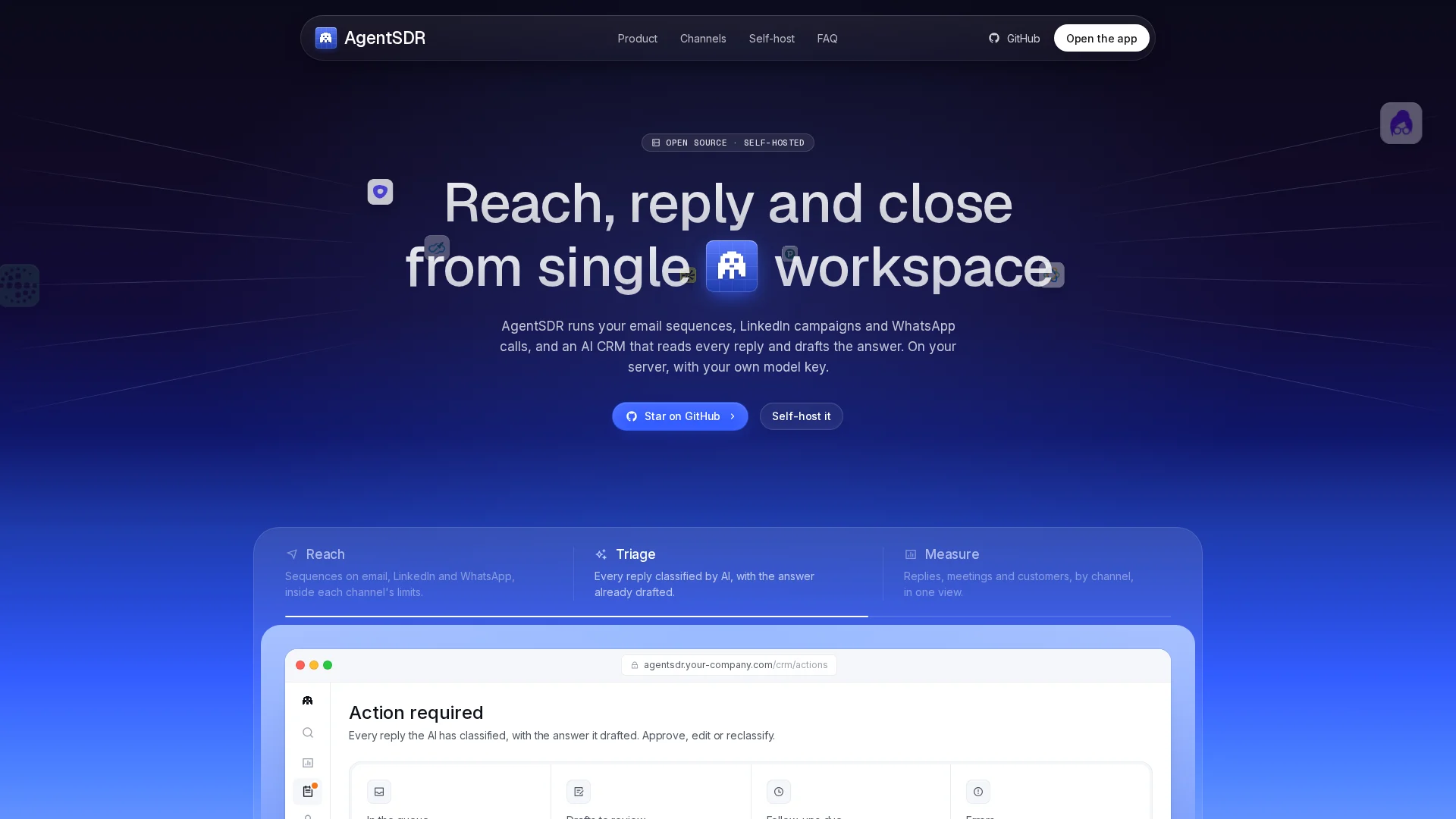
If control over your data and pipeline matters more than a vendor hotline, AgentSDR gives you open-source, self-hosted outreach in one workspace. See how it fits your team.
Frequently Asked Questions
Q1: How do I choose sales outreach software for my team?
Check three things: where your data must live, whether you have someone to maintain servers, and how many seats you need. Compliance-heavy or large teams lean self-hosted.
Q2: Do I need a developer to self-host?
Yes, or at least someone comfortable with server upkeep, backups, and email authentication.
Q3: Is self-hosted outreach cheaper?
Usually at scale, since you pay for infrastructure instead of per-seat licenses.
The Bottom Line
Self-hosted outreach software buys you data control, compliance confidence, and no per-seat fees, at the cost of maintenance and deliverability work. Teams with technical help and residency requirements gain most; solo founders usually don't. Match the fit check above to your team, then decide.