Personalized Email Sequences: Automate Your B2B Followups
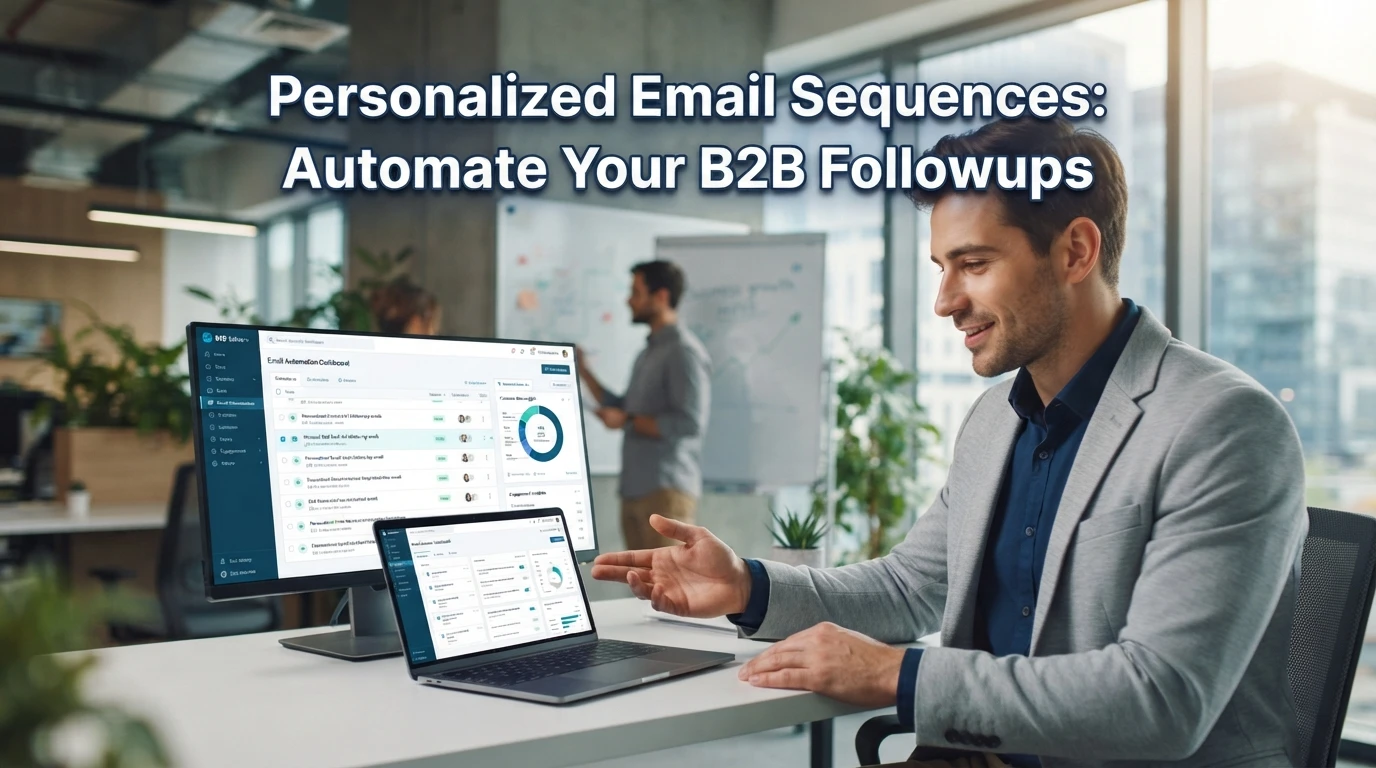
Quick Summary: Most B2B replies come on the second through fourth email touch, yet most SDRs stop after the first, leaving deals on the table. A high-converting sequence layers real buyer context, merges behavioral triggers, and spaces 10-14 touches across email, LinkedIn, and WhatsApp, pausing the moment a prospect replies. AgentSDR stands out by combining all three channels with an AI-powered CRM in a single open-source, self-hosted workspace, so prospect data and AI drafts stay under your control.
Forty-two percent of B2B email replies arrive on the second, third, or fourth touch. Most SDRs never send the fourth. That gap costs you deals that were already within reach, and personalized email sequences close it automatically.
This guide treats personalization as a four-layer system, not a single feature. You'll learn how to build personalized email sequences that coordinate email, LinkedIn, and WhatsApp followups, so every prospect gets the right message at the right time.
What Counts as Personalized in a B2B Email Sequence
A personalized email uses real buyer context: their company, role, and recent actions. Swap "Hi {{first_name}}" for signals that prove you did research, and replies go up.

Merge Tags vs. Dynamic Content: A Practical Distinction
Merge tags fill in simple fields like a name or company. They're table stakes, not personalization. Dynamic content changes whole blocks based on data: a different case study for a fintech lead than for a retailer. Tools like Clay and lemlist support both, but the split matters because tags alone read as mail merge. Start with tags, then layer dynamic blocks per segment. An open-source platform such as AgentSDR lets you build these segments yourself and keep prospect data on your own server.
Behavioral Triggers That Turn a Sequence into a Conversation
Behavioral triggers fire based on what a lead does, not just who they are. Someone opens twice, visits pricing, or clicks your case study link? That action moves them into a tailored follow-up. Most platforms trigger on email opens, link clicks, and replies. Pairing those signals with LinkedIn touches and replies makes a sequence feel like a live exchange instead of a broadcast.
Anatomy of a High-Converting B2B Follow-up Sequence
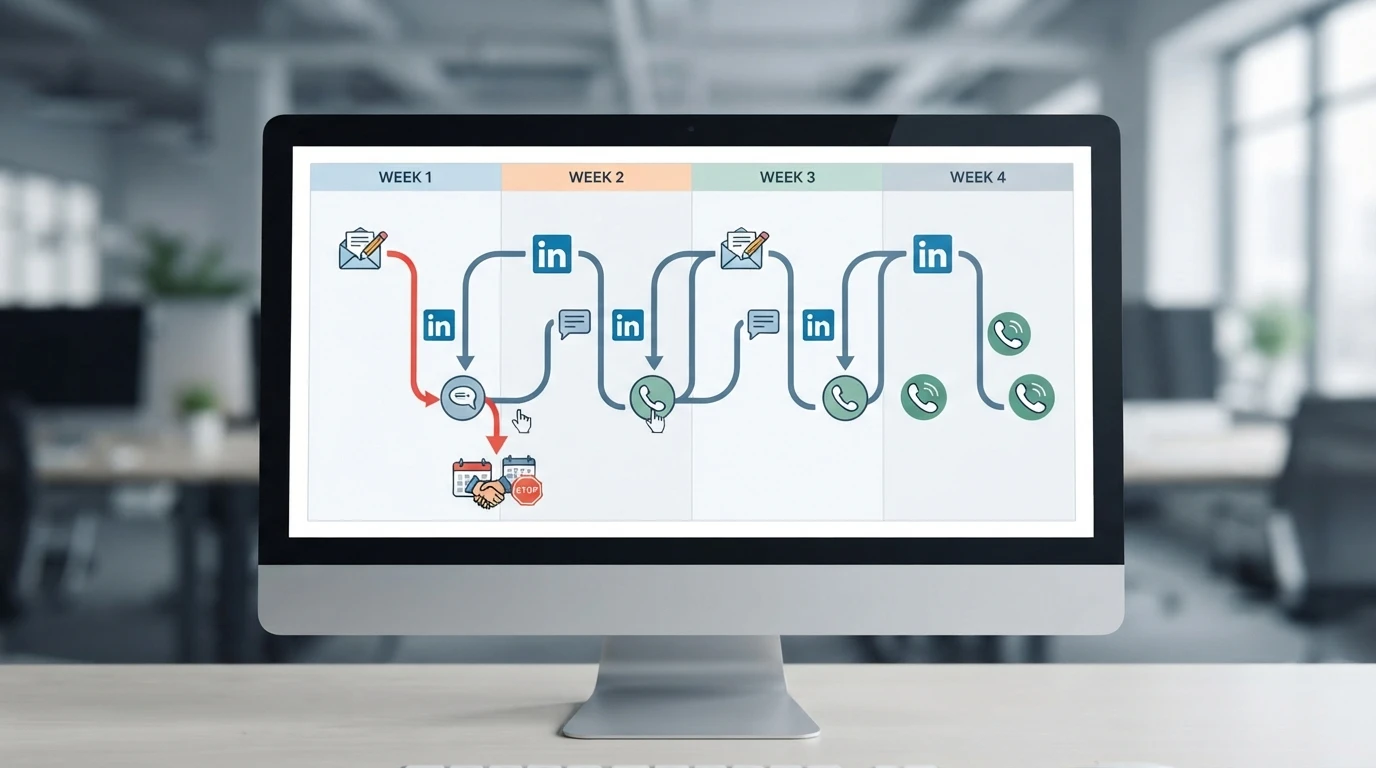
A strong sequence mixes channels, spaces touches 2-3 days apart, and stops the moment a prospect replies or opts out.
Touch Frequency, Spacing, and Stop Conditions
Most B2B outbound works best with 10 to 14 touches spread over three to four weeks, split roughly between email, calls, and LinkedIn, according to SalesHive's cadence research. Front-load the first three touches within four days, then slow down. Wait two or three days between later touches so you stay visible without burning the domain or the relationship.
Every touch needs one job: earn a reply, not just a view. Stop the sequence the instant someone answers, books a call, or asks to be removed, and route that reply to a human within hours. Automation without a clean exit rule reads as spam.
Coordinating Email With LinkedIn and WhatsApp in One Sequence
Email starts the conversation, but prospects often respond faster elsewhere. A common pattern: email on day 1, a LinkedIn view and connection on day 2, a WhatsApp nudge after a warmed-up reply. Running each channel in a separate tool breaks the timing and risks double-touching the same prospect on the same day. Platforms like AgentSDR keep email, LinkedIn, and WhatsApp steps in one sequence so a reply on any channel pauses the rest automatically.
Tip: Cap the sequence at one email and one social touch per day. Two messages in one inbox looks desperate, not diligent.
Top Tools That Automate Personalized B2B Follow-ups
Evaluation Criteria for Any Sequence Platform
Judge every tool against five tests. Does it cover email, LinkedIn, and calls in one cadence, or force separate subscriptions? How does it handle deliverability, inbox rotation, and warmup? Can it pull real prospect data, the way Clay does enrichment, instead of inserting stale tokens? Does it classify replies automatically and pause the sequence when someone answers? And who controls the data? Tools like Smartlead and Instantly are strong cold-email senders, while full-stack guides show how stitching five tools together raises cost and fragility. Pricing per seat matters too, so read how platforms differ on flat fee versus per-seat models before you commit.
Where AgentSDR Fits in the 2026 Landscape
AgentSDR takes a different path: it is open-source and self-hosted. Email sequences, LinkedIn campaigns, WhatsApp calls, and an AI-powered CRM sit in one workspace, so customer data and AI usage stay under your control, and AI drafts get human review before sending. For teams managing outreach in India, that removes the multi-vendor patchwork entirely.
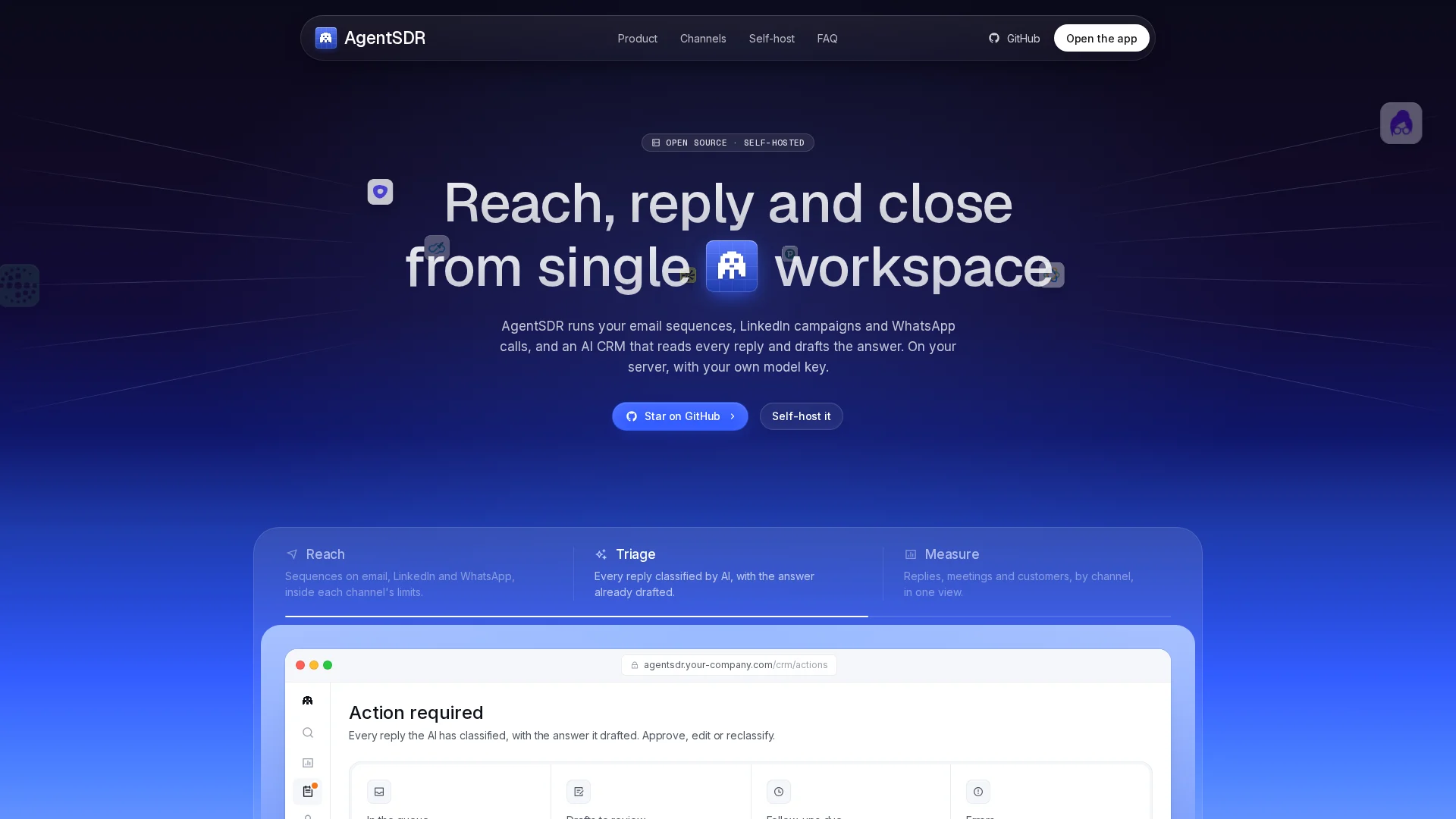
Ready to run followups that land on the right channel at the right time? AgentSDR gives you open-source, self-hosted sequences across email, LinkedIn, and WhatsApp, with your data fully in your control. Try it today.
Frequently Asked Questions
Q1: Which top tools automate personalized B2B follow-ups?
Smartlead and Instantly lead cold email; Clay handles data enrichment; lemlist covers email plus LinkedIn. AgentSDR combines email, LinkedIn, and WhatsApp in one open-source, self-hosted workspace.
Q2: How many touches should a B2B sequence have?
Aim for 10 to 14 touches over three to four weeks, front-loading the first three touches within four days.
Q3: When should a sequence stop running?
The moment a prospect replies, books a call, or opts out. Route answers to a human within hours so automation never reads as spam.
Conclusion
Personalized sequences work when you layer real context, space 10-14 touches across email, LinkedIn, and WhatsApp, and stop the moment a reply arrives. Choose a tool that keeps all channels and your data in one place, then let automation handle the repetition while humans handle conversations.