Lead Response Management: Speed to Lead Strategies
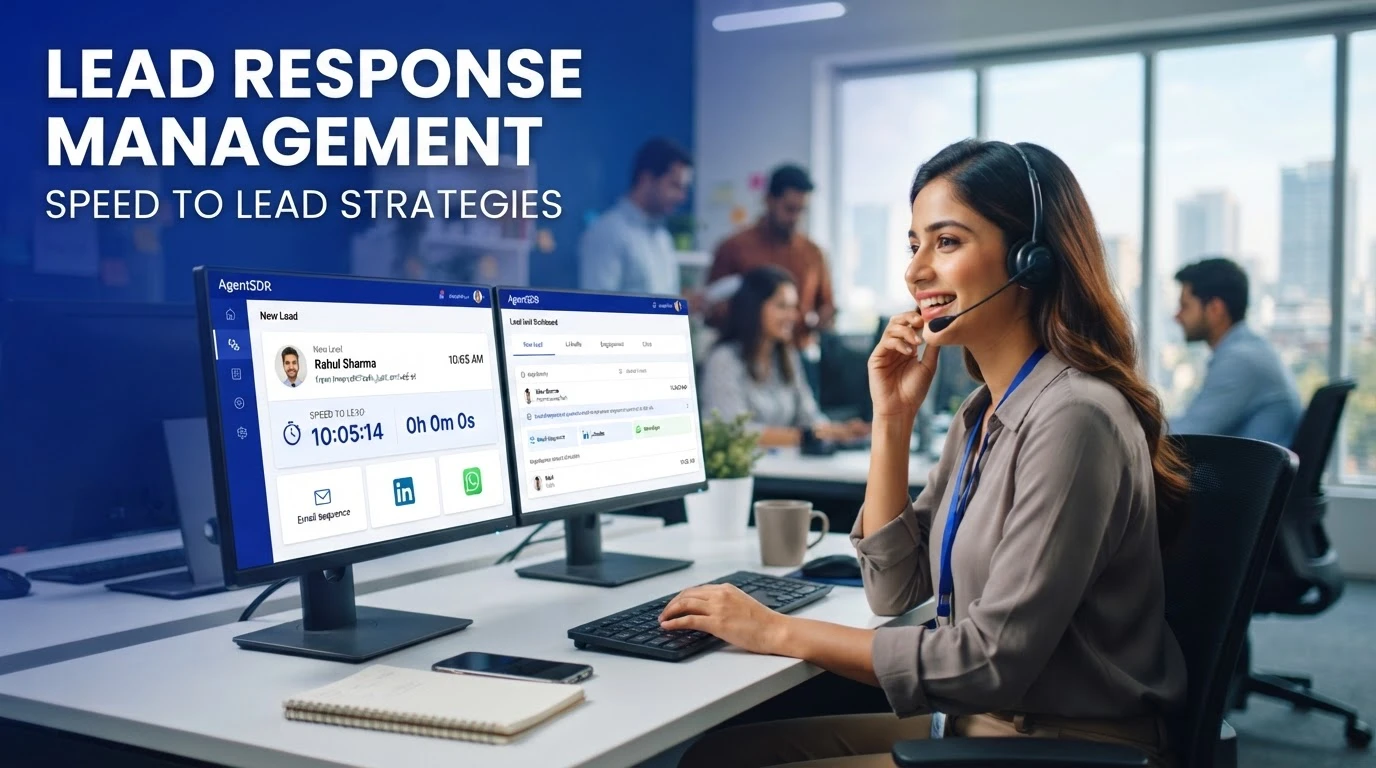
Quick Summary: Contacting a lead within five minutes makes a company 100 times more likely to connect than waiting 30 minutes, yet average B2B response time is about 42 hours. Lead response management combines instant routing, tiered SLAs, automated escalation, after-hours coverage, and follow-up across email, phone, LinkedIn, and WhatsApp. Track first response time, speed to first touch, contact rate, and lead-to-meeting conversion weekly, because systems sustain speed better than memory.
A MIT and InsideSales study found that companies calling a new lead within five minutes were far more likely to reach and qualify it. Yet average B2B response time still sits near 42 hours, so most inbound interest cools before anyone dials. Lead response management fixes that gap. This guide covers the speed-to-lead research, response SLAs, routing across channels, after-hours coverage, and the measurement stack that keeps reps first in line.
Why Lead Response Time Drives B2B Pipeline
Speed decides who wins the deal. Research on lead response time shows that the first company to reach a lead is far more likely to qualify it, while slower teams feed competitors. Response speed is a revenue lever, not a vanity metric.
What the Research Shows About Response Windows
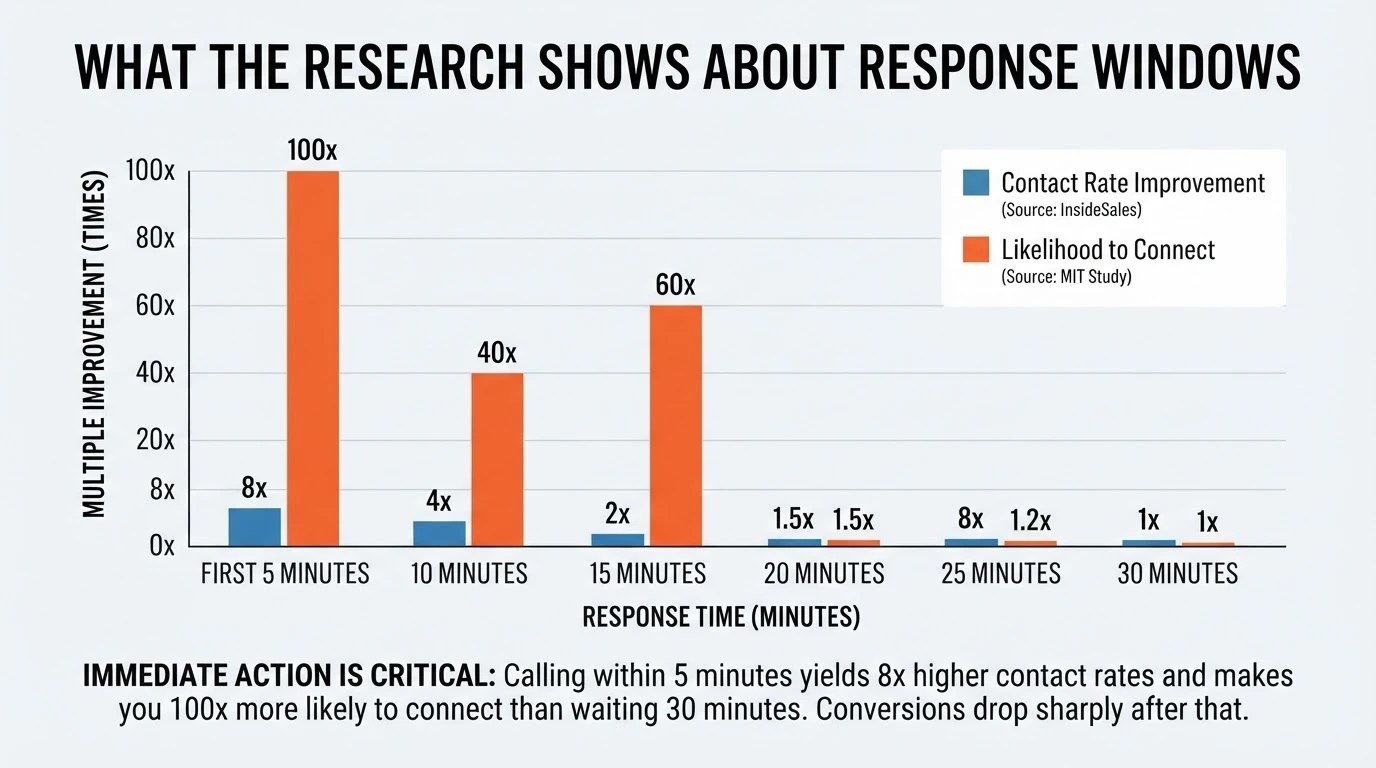
Call a lead within five minutes and you are 100 times more likely to connect than at 30 minutes, according to the MIT study on response timing. Conversions drop sharply after that. InsideSales found contact rates are 8x higher in the first five minutes.
The Revenue Cost of a Slow First Touch
Yet average B2B response time still sits near 42 hours, so most inbound interest cools before anyone dials. Each delayed hour lowers the chance a rep reaches the buyer at their moment of intent. Fast routing plus clear SLAs protect pipeline; teams can automate reply classification and prep drafts with an AI-powered CRM so reps respond in minutes, not days.
What Lead Response Management Actually Covers
Lead response management is the system that moves a new lead from arrival to first human touch as fast as possible. It covers speed, ownership, and follow-up, not just a clock.
Core Components of a Response Program
Four parts make up a working program. First, lead capture, so every form fill, call, and reply lands in one place. Second, routing rules that assign each lead to a rep in seconds. Third, an SLA, a written promise on how fast someone responds. Fourth, a follow-up cadence across channels. A unified inbox that pools email, LinkedIn, and WhatsApp replies keeps the last two steps tight.

How Response Time Differs by Channel and Lead Type
Speed expectations shift by channel. Inbound demo requests need a call within minutes; email replies tolerate an hour; form fills sit between. Hot, pricing-page leads deserve instant routing, while newsletter subscribers can wait for a nurture sequence.
Designing SLAs, Routing, and Coverage
Speed to lead only holds when a system, not a memory, decides who responds and when. Three parts make that system: tiered SLAs, routing logic, and after-hours coverage.
Setting Tiered Response SLAs
Not every lead deserves the same clock. Score hot inbound leads for a five-minute first response, warm leads within an hour, and nurtured lists within one business day. Write each tier down, assign an owner, and make the timer visible in your CRM so misses show up fast.
Routing Logic, Round Robin, and Escalation
Round robin spreads leads evenly across reps and keeps workloads fair, while filters by territory or product put each lead with the right owner. If the assigned rep does not act within the SLA, the lead escalates automatically to a manager or a second rep, as routing best practice guides recommend. Teams using platforms like AgentSDR can tie routing rules directly to their email and call sequences.
After-Hours and Time-Zone Coverage
Leads arrive at 9 p.m. too. Use follow-the-sun routing across regions, or let scheduled sequences and AI-drafted replies hold interest until someone picks up. Check round robin distribution practices for availability-based assignment rules.
Measuring and Sustaining Speed to Lead
The Metrics That Matter
Track four numbers weekly: first response time, speed-to-first-touch, contact rate, and lead-to-meeting conversion. Break each down by channel, source, and rep. Watch the distribution, not just the average, because a 20-minute mean can hide half your leads waiting two hours. Score every rep against the five-minute standard.
Automation, Tooling, and Review Cadence
Instrument your CRM to timestamp every handoff, so you can see exactly where leads stall. Route, alert, and sequence automatically; keep humans on judgment calls. Then review the numbers in a short weekly speed huddle, and fix the slowest step first. Sustained speed comes from routine, not urgency.
Every hour you wait, another lead goes cold. AgentSDR routes, sequences and alerts your team fast, so replies go out in minutes. Explore it free today.
Frequently Asked Questions
Q1: Why is lead response time critical for B2B sales?
Buyers engage the first vendor that reaches them. Calling within five minutes makes you 100 times more likely to connect than waiting 30 minutes, so speed directly decides who qualifies the lead and who feeds a competitor.
Q2: What response time should we target for each lead type?
Tier it. Hot inbound leads need a five-minute first response, warm leads within an hour, and nurture lists within one business day. Write each tier into an SLA and make the timer visible.
Q3: How do we cover leads that arrive after hours?
Use follow-the-sun routing across regions, or let scheduled sequences and AI-drafted replies hold interest until a rep picks up. Review miss timestamps weekly to find coverage gaps.
Q4: Which metrics prove our speed-to-lead program works?
Track first response time, speed-to-first-touch, contact rate, and lead-to-meeting conversion weekly, broken down by channel and rep. Watch the distribution too, since averages hide long waits.
Conclusion
Speed to lead wins deals: call within five minutes, route every lead to an owner instantly, and enforce tiered SLAs with after-hours coverage. Measure first response time weekly, then fix the slowest step. Systems sustain that speed; memory does not.