B2B Sales Automation: Trends and Tactics for 2026
Quick Summary: B2B sales automation in 2026 is about connected workflows, not single tools. Teams that automate speed-to-lead (the average firm takes 42 hours to respond), orchestrate email, LinkedIn, and WhatsApp in one cadence, and clean CRM data automatically are pulling away from competitors stuck on fragmented stacks. AI now drafts outreach and scores leads daily, but buyers increasingly rely on AI agents too, so messaging has to clear machine screening before reaching a human. Self-hosted platforms like AgentSDR are gaining traction because they let teams own prospect data, skip per-seat fees, and run multichannel sequences plus CRM in one self-hosted workspace.
B2B sales automation is no longer a single tool replacing a single task. It now connects CRM data, buyer signals, AI assistants, and every outbound channel. Teams that wired it up early are pulling away. Reps still spend just 28% of their week selling (Salesforce), while 80% of B2B sales interactions run through digital channels (Gartner). This piece covers the 2026 trends, the tactics that move pipeline, and where open-source, self-hosted B2B sales automation fits into a modern revenue stack.
The 2026 B2B Sales Automation Landscape: What Actually Changed
From Point Tools to Connected Revenue Workflows
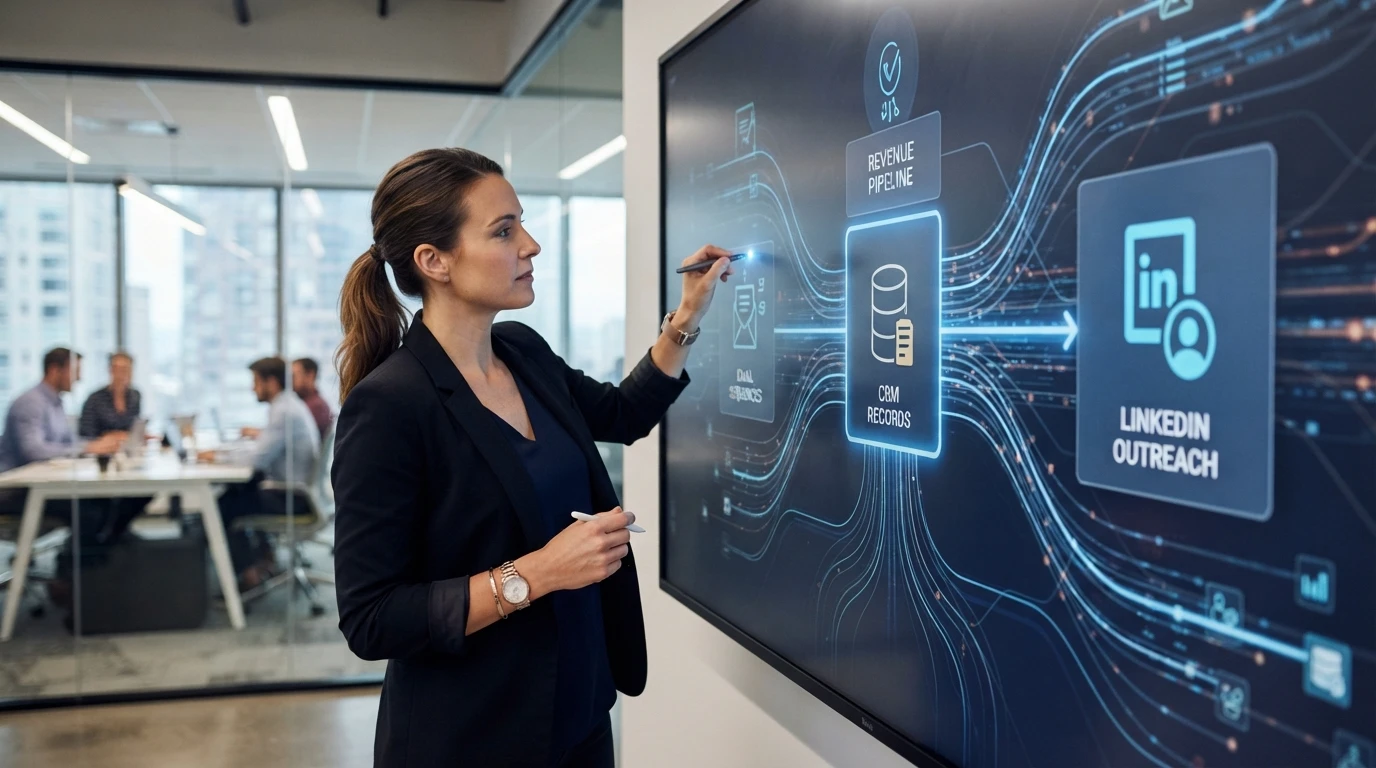
Teams no longer bolt single-purpose apps together. The shift is toward connected workflows where sequences, CRM records, and reply handling share one data layer. Fragmented stacks create gaps that cost replies and pipeline. This is why all-in-one sales platforms have become the default architecture in 2026.
AI Adoption Has Crossed the Tipping Point
AI moved from experiment to daily habit. Research shows 95% of B2B marketers now use AI at least weekly, and 65% use it daily. In sales, agentic AI drafts outreach, classifies replies, and books meetings with light human review.
Treat AI output as a draft. Human review still separates signal from spam.
Buyers Are Now Two Audiences: Human and Agent
Your prospects increasingly delegate screening to AI buying agents. Gartner predicts 90% of B2B buying will be agent-intermediated by 2028. Writing for the human reader alone means the agent never forwards your message.
The Most Effective B2B Sales Automation Tactics for 2026

Automate Speed-to-Lead First
The average B2B company takes 42 hours to respond to a new lead, even though replying within five minutes makes qualification far more likely. Set instant routing rules, auto-assign new leads, and trigger a first touch within minutes. Speed is the cheapest pipeline gain available. According to LeanData's research, most teams lose deals to delay, not competition.
Orchestrate Email, LinkedIn, and WhatsApp in One Sequence
Buyers ignore single-channel blasts. Build sequences that move across channels: an email on day one, a LinkedIn touch on day three, a WhatsApp nudge on day five. Threading these steps into one coordinated cadence lifts reply rates without raising volume, and unified reply handling keeps context intact.
Fix CRM Data Quality With Workflow Automation
Stale records kill forecasting. Automate enrichment, dedupe, and activity logging at the field level so reps stop typing and start selling. An outbound sales platform with a built-in CRM keeps this data clean by default.
Use AI for Lead Scoring, Routing, and Personalization
Use AI to score intent, route hot leads to the right rep, and draft personalization humans approve before sending.
How Open-Source and Self-Hosted Automation Fit in 2026
SaaS tools still dominate outbound sales, but self-hosted automation is becoming a real alternative. With 80% of B2B interactions now digital, teams want control over where that data lives, and open-source platforms let them keep it on their own servers, as the open-source CRM comparisons point out.
Data Ownership and Customization as a 2026 Differentiator
Cloud suites lock your prospect data inside their platform, and pricing scales with seats. Self-hosted setups flip that: your infrastructure, your data rules, no per-contact fees, a trade-off teams now weigh openly. Code-level access also means you can adapt sequences and reply handling to your exact process instead of waiting on a vendor roadmap. It's why platforms like AgentSDR package email, LinkedIn, WhatsApp, and CRM as one self-hosted workspace. Expect more teams to test this path in 2026 as AI-driven outreach raises the stakes on data control.
How We Got Here: A Short Backstory on B2B Sales Automation
From Email Tools to Agentic Workflows in a Decade
Sales automation started with simple drip emails, then grew into CRM-driven platforms that logged calls and scored leads, as the evolution of B2B selling shows. By 2020, multichannel sequencing became standard. Now AI agents research prospects, draft replies, and coordinate outreach across channels, with humans reviewing what machines prepare.
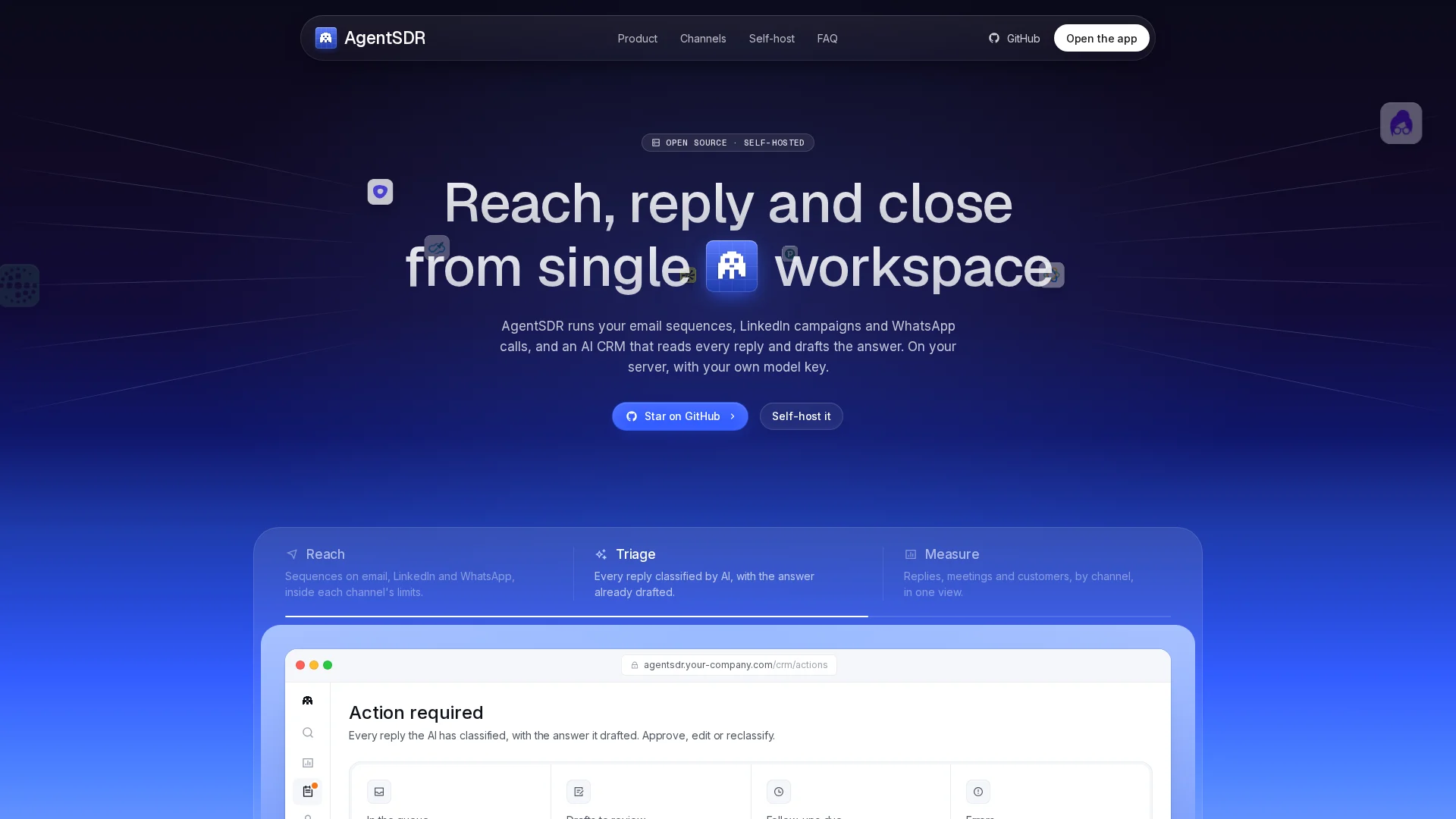
Tired of reps chasing replies across scattered tools? AgentSDR puts email, LinkedIn, WhatsApp, and your CRM in one self-hosted workspace. Try it free and see your next campaign live in minutes.
Frequently Asked Questions
Q1: What are the most effective B2B sales automation tactics?
Automate speed-to-lead first: reply within minutes, not 42 hours. Then run email, LinkedIn, and WhatsApp in one coordinated sequence, automate CRM enrichment and logging, and use AI for lead scoring and routing.
Q2: Does sales automation hurt reply rates?
Only when it blasts single channels. Multichannel cadences with human-reviewed AI drafts lift replies without extra volume.
Q3: Why choose self-hosted automation?
You control prospect data, avoid per-seat fees, and adapt workflows to your process. Open-source platforms like AgentSDR make that trade practical.
Conclusion
The throughline for 2026 is connection: AI handles drafting and scoring, humans keep the review, and one coordinated workspace ties email, LinkedIn, WhatsApp, and CRM together. Teams that automate speed-to-lead and own their data will outpace those still stitching point tools.