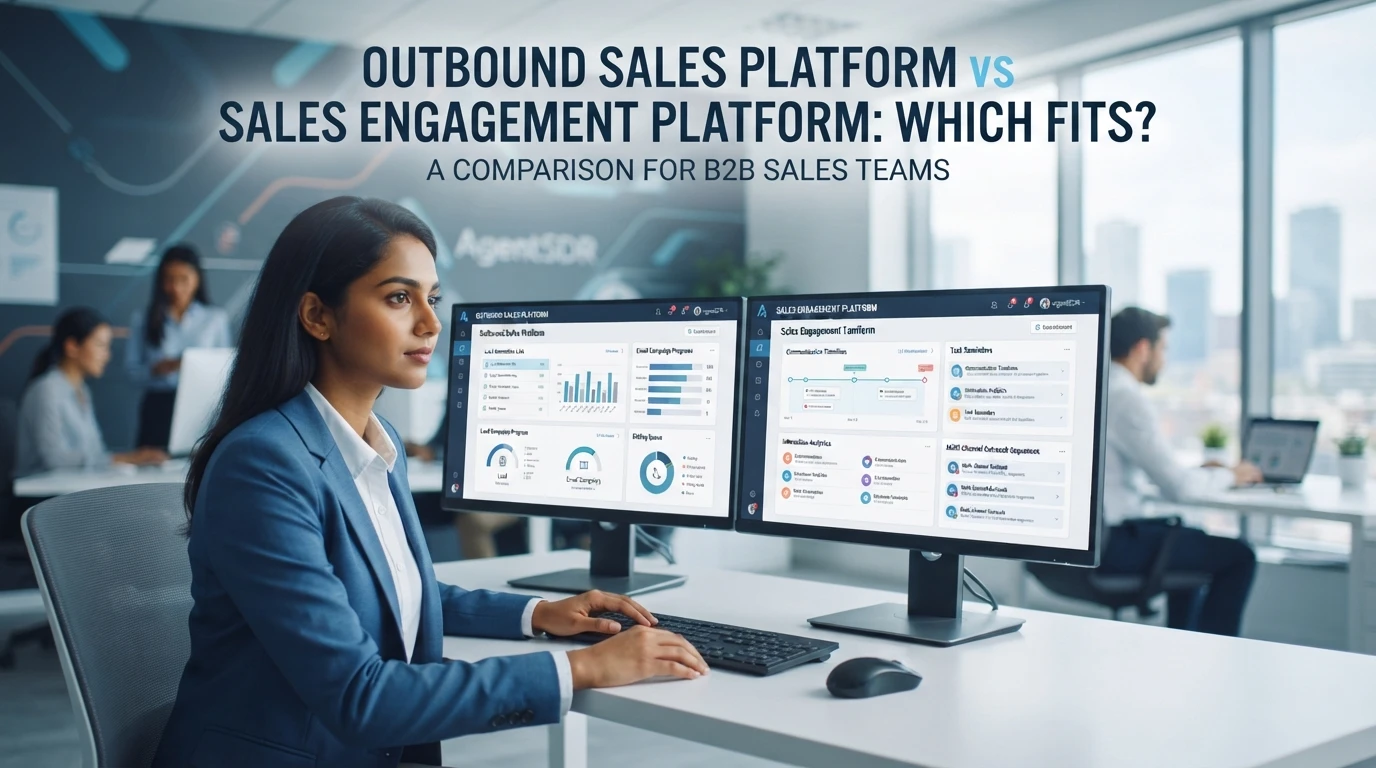
Outbound Sales Platform vs Sales Engagement Platform: Which Fits?
Quick Summary: Outbound platforms focus on high-volume cold email, while sales engagement platforms provide a unified workspace for full-cycle multichannel selling. Choosing the right tool depends on whether your priority is simple lead generation or deep CRM integration. AgentSDR bridges this gap by combining outbound automation with an AI-powered CRM in a single self-hosted environment.
Pick wrong here and your team stalls instead of scales. A dedicated outbound platform handles tactical cold email blasts. A full multichannel sales engagement system ties prospecting, sequences and CRM together. This guide maps the differences so you can match the right architecture to your team size, tool budget and multichannel sales engagement goals.
Outbound Platforms vs Sales Engagement Platforms: At a Glance
| Outbound Sales Platform | Sales Engagement Platform | |
|---|---|---|
| Primary Focus | Lead generation and initial contact | Relationship and cycle management |
| Channel Breadth | Email-heavy, limited social | Multichannel (Email, LinkedIn, WhatsApp) |
| CRM Integration | Sync-only | Native/In-workspace |
| Data Management | Transient/Campaign-specific | Unified/Centralized |
| Best For | Early-stage cold outreach | Full-cycle sales teams |
How Outbound Sales Platform and Sales Engagement Platform Compare
Outbound Sales Platform
An outbound sales platform is built for volume prospecting. It focuses on lead generation, first contact, and email deliverability, so early-stage teams sending cold outreach get the most from it. Tools like Instantly and Smartlead sit here: fast, tactical, mostly email-only, with CRM sync kept separate.
Key strengths
- High-volume sending with deliverability controls
- Simple setup for cold email campaigns
- Campaign-specific data that stays lightweight
Sales Engagement Platform
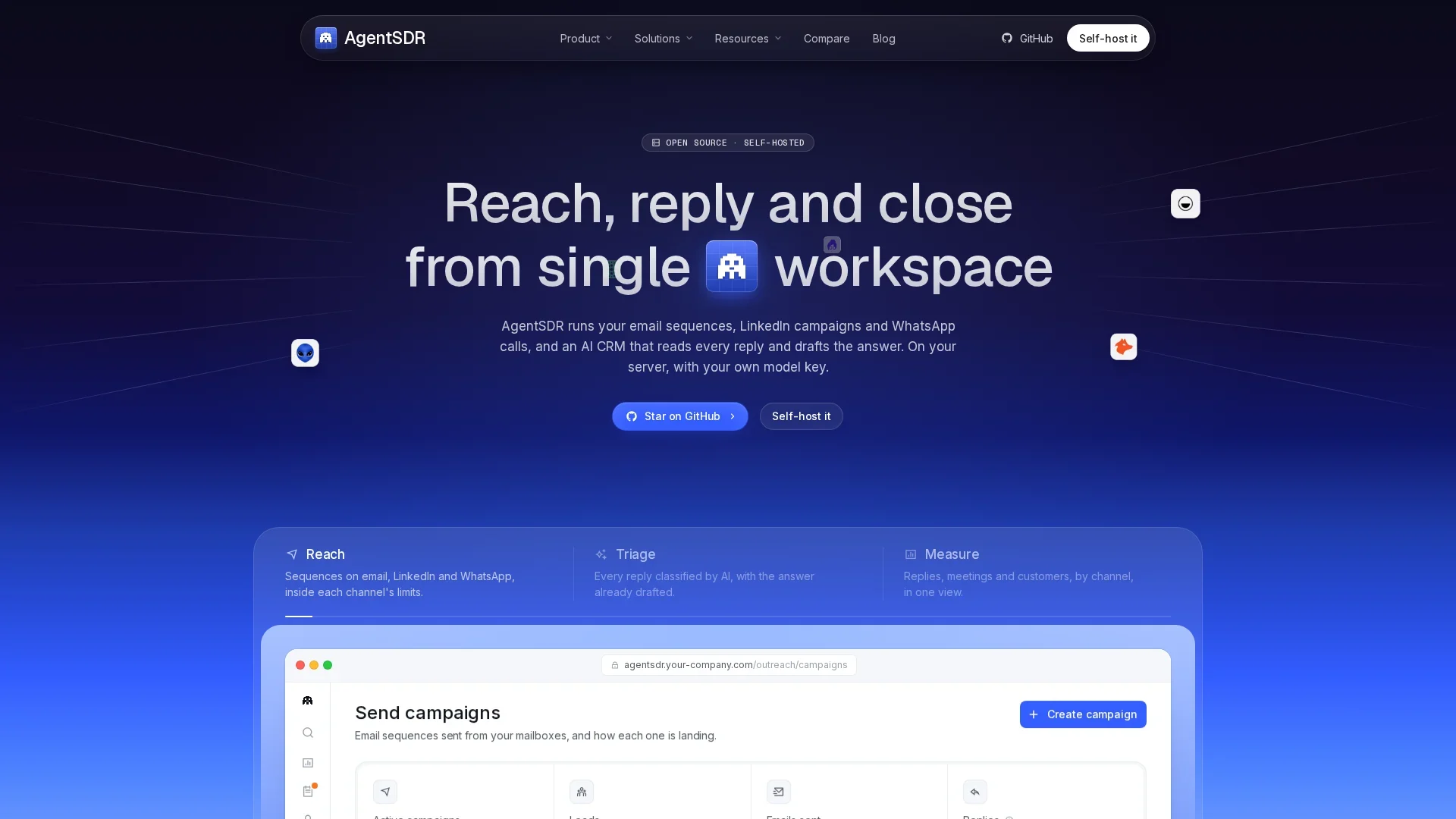
A sales engagement platform is an integrated workspace for full-cycle selling. Outreach, CRM, and multichannel sales engagement live in one place, covering email, LinkedIn, and WhatsApp. Attio and Apollo.io play in this space, while AgentSDR combines open-source self-hosting with a native AI-powered CRM.
Key strengths
- Native, in-workspace CRM rather than sync-only
- Unified customer data across the whole deal cycle
- Multichannel sales engagement under one roof
Understanding the Tactical vs Strategic Divide
The Rise of Multichannel Sales Engagement
Outbound tools split into two camps. Tactical platforms like Instantly and Smartlead focus on sending: email sequences, warmups, inbox rotation. They move fast but leave strategy to you.
Sales engagement platforms go further, connecting email, LinkedIn, and calls to a shared system of record. The gap shows up when replies pile up with no context and no owner. Tactical tools automate the touch, not the follow-through.
That gap is where multichannel outbound sales matters. It pairs sequence automation with an AI-powered CRM, so every reply gets classified and routed to a human-reviewed response. You keep the speed of outbound without losing the account context.
Integrating Data and Workflows
Managing Sales Intelligence
Your outreach is only as good as the data feeding it. Outbound platforms pull prospect details from enrichment sources, but that data often lives apart from your CRM, so replies and deal activity get split across tools. Sales engagement platforms fix this by logging every touch in the CRM record. The trade-off: less flexibility on where the data sits. A self-hosted option like AgentSDR keeps prospect data, reply classification, and AI usage inside your own infrastructure while still syncing with your CRM. That means one source of truth.
Quick checklist before you commit:
- Confirm two-way sync with your CRM
- Check how reply data is classified and stored
- Ask who owns the data if you leave

Scaling Your Revenue Infrastructure
Scaling means your tooling must grow without piling on per-seat costs or fragmented data. When you add reps, an outbound platform charges per sender and a sales engagement platform charges per user, so costs climb fast. Self-hosted options break that pattern: you pay for infrastructure, not headcount.

AgentSDR fits here. It hosts your sequences and AI-powered CRM on your own servers, so a team of five and a team of fifty share the same open-source stack. That keeps margins predictable as revenue scales.
Which Platform Should You Choose?
Pick an outbound sales platform if your team lives in sequences and high-volume prospecting; tools like Smartlead or Instantly fit that job. Pick a sales engagement platform if you want unified workflows backed by CRM data. Many teams need both. AgentSDR bridges the gap, combining outbound automation with an AI-powered CRM in one workspace.
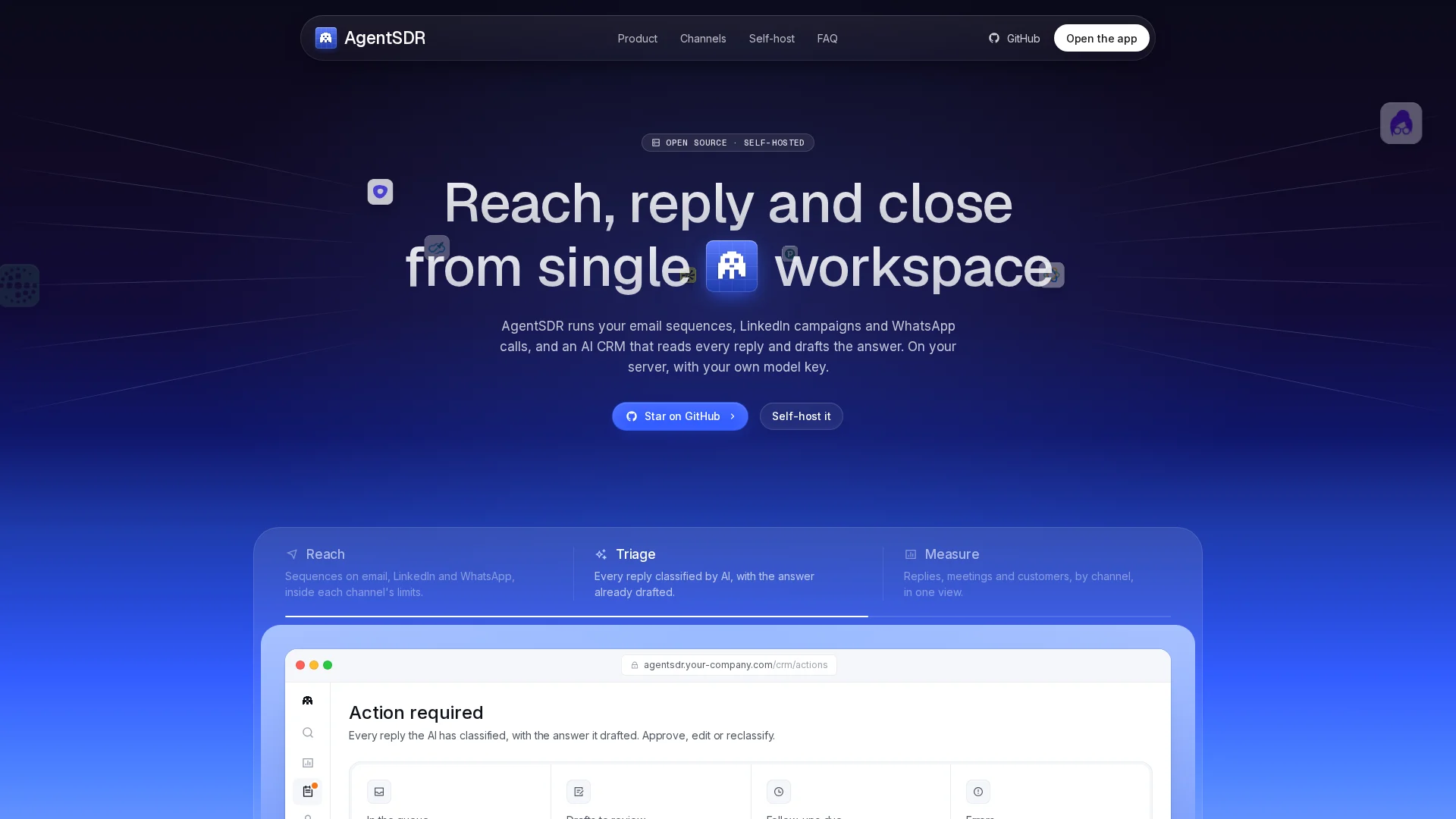
Still torn between the two? See how AgentSDR blends outbound automation with a CRM-backed workspace, then pick what fits your team.
Frequently Asked Questions
Q1: Which leading platform offers multichannel sales engagement?
Several do, including lemlist and Smartlead. AgentSDR combines email, LinkedIn, WhatsApp and CRM in one self-hosted workspace.
Q2: Can one platform replace both tools?
Yes. AgentSDR bridges outbound automation and CRM-backed engagement, so many teams avoid running separate systems.
Q3: Do I need a CRM alongside these platforms?
Outbound platforms usually lack one. AgentSDR includes an AI-powered CRM, keeping replies and pipeline data in one place.
Conclusion
Outbound platforms win on outreach volume; sales engagement platforms win on pipeline depth. Pick by your workflow, data needs, and budget. For teams wanting both, AgentSDR bridges outbound automation with CRM-backed engagement.