CRM Engagement Analytics: Unlocking Sales Workflow Insights

Quick Summary: CRM engagement analytics works best when it changes rep behavior in real time, so focus on reply rate, positive replies, meetings booked, and time to first reply instead of opens. Drop-off points in multi-channel sequences tell you exactly which step to rewrite, and engagement scores should drive same-day follow-ups rather than alphabetical call lists. A unified workspace that connects outreach and CRM, like AgentSDR's approach, keeps reply data attached to deal records so stalled touches trigger workflow fixes automatically.
Your reps send 50 emails a day, but only the CRM knows which sequences move deals forward. Most teams never connect those dots, so pipeline decisions run on gut feel. CRM engagement analytics changes that: it ties opens, replies, and call outcomes to actual revenue. This guide shows how to turn that data into workflow fixes your team can act on this week, drawn from how modern outbound platforms, including AgentSDR, unify outreach and CRM in one place.
Core Engagement Metrics That Actually Drive Workflow Decisions
Most teams track too much. CRM engagement analytics only pay off when each metric changes what a rep does next: follow up, switch channels, or drop the lead.
Separating Signal from Noise in Engagement Data
Ignore vanity numbers like total sends or opens. Four signals actually move deals: reply rate, positive-reply rate, meeting bookings, and time to first reply. Opens fluctuate with mail filters, so treat them as context, not a target. A sequence with a 2% reply rate needs rewriting, not more volume.

Sequence-Level vs. Rep-Level Engagement Views
Sequence data shows which messaging works; rep-level data shows who is skipping steps. You need both. If one sequence wins across the team, clone it. If one rep's calls lag while their emails perform, coach the call script, not the person. Platforms that separate outreach and CRM, unlike Apollo or lemlist's approach, force teams to stitch these views by hand. AgentSDR keeps sequences and the CRM in one workspace, so a stalled touch triggers the right workflow automatically.
From Raw Data to Workflow Optimization: A Practical Translation
Engagement metrics only matter when they change what a rep does next. Here is how to turn each data point into a workflow fix.
Reading Drop-Off Points in Multi-Channel Sequences
Map every sequence step and its completion rate side by side. If opens are strong but replies vanish after step three, the problem is your message, not your list. When email opens but LinkedIn touches get ignored, shift budget toward the channel that converts. Drop-off points show you exactly which step to rewrite, retire, or reorder. A platform that keeps email, LinkedIn, and WhatsApp activity in one timeline, like AgentSDR's unified workspace, makes these patterns visible without exporting data.
Using Engagement Scores to Prioritize Daily Rep Workflow
Give each prospect a score based on opens, replies, and meeting clicks. Then sort the daily call list by score, not alphabetically. Reps touch the warmest leads first and stop wasting mornings on silent contacts. Scores also flag dead deals, so managers can cut them from the pipeline before forecast reviews.
AgentsDR score thresholds should trigger actions: above 70 gets a same-day follow-up, below 20 moves to a nurture track.
Choosing a Platform That Combines CRM Insights With Outreach Sequences
Most teams run sequences in one tool and track deals in another. The gap between them is where insight dies. Pick a platform where both live together, and use our guide on how to pick a sales engagement platform for your team as a checklist.
Why Unified Outreach Beats Bolted-On Analytics
When email, LinkedIn, and call activity sit inside the CRM, reply data updates deal records automatically. You see which sequence step stalled each deal, not just that it stalled. Separate tools force manual syncing, so reports lag by days and reps stop trusting them. Unified data answers workflow questions the same day it happens.

Self-Hosted and Open-Source as a Workflow Analytics Advantage
Self-hosted platforms keep raw engagement data in your own database. That matters because you can query sequences, reply classifications, and deal stages directly, without export limits or API caps. Open source also lets revenue ops customize scoring fields to match your sales process. AgentSDR takes this approach, while most cloud tools lock analytics behind premium tiers.
Common Pitfalls When Acting on Engagement Analytics
Acting on engagement data has three classic traps. Chasing opens: opens inflate from privacy features, so treat replies and meetings as the real signal. Reading data in silos: email metrics without CRM context hide which sequences move deals, which is why a unified workspace beats stitching exports together. Overreacting to noise: one weak day is not a trend; rewrite a sequence only when its reply rate sits near 2% over weeks, not days.
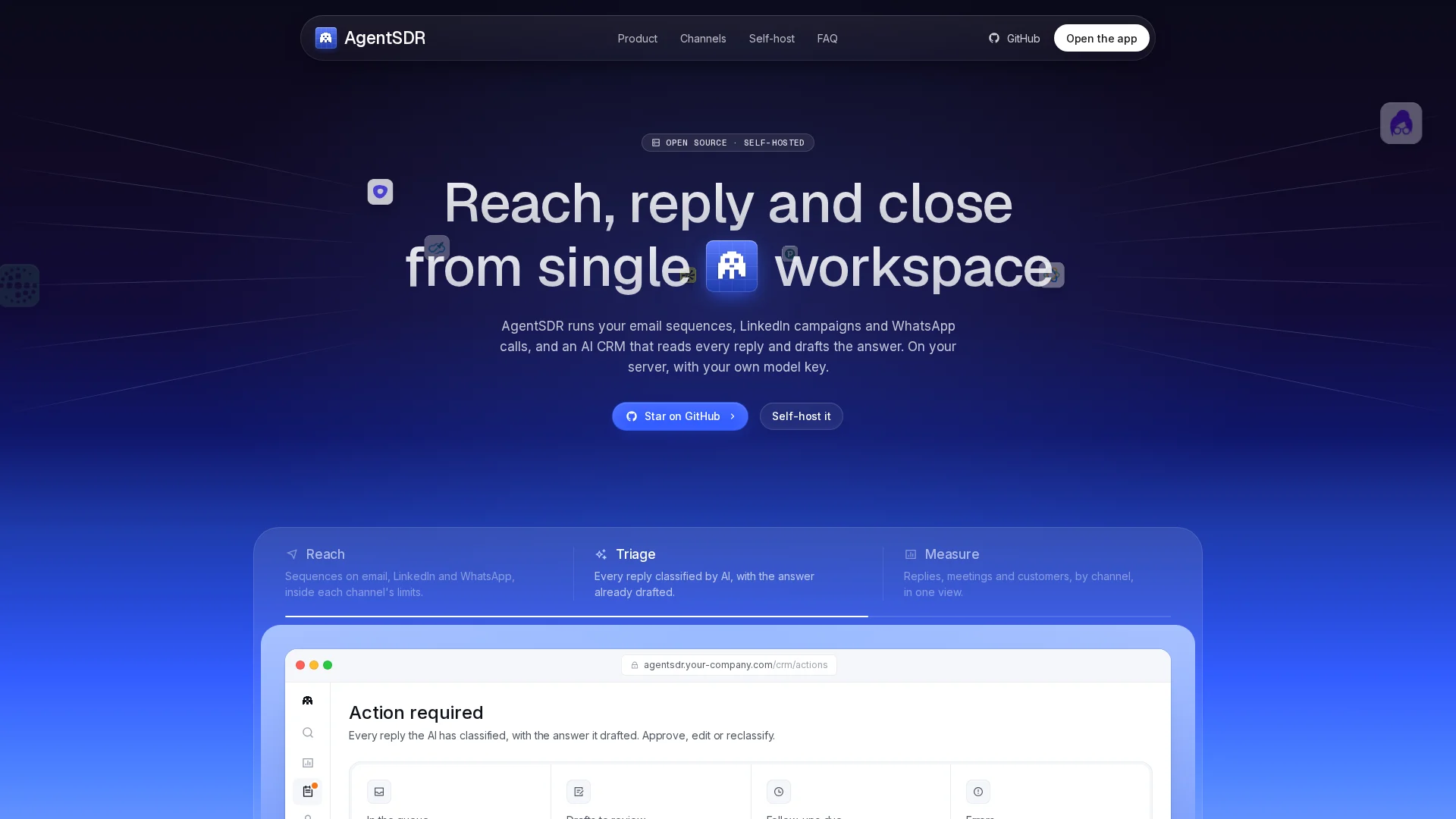
Your engagement data should drive action, not just reports. AgentSDR brings outreach and CRM together, so reply rates turn into same-day follow-ups. See how it fits your workflow.
Frequently Asked Questions
Q1: Which platform combines CRM insights with outreach sequences?
AgentSDR does, keeping email, LinkedIn, WhatsApp sequences and an AI-powered CRM in one workspace. Apollo and lemlist separate outreach from deal records, forcing manual syncing.
Q2: Which engagement metrics matter most?
Reply rate, positive-reply rate, meeting bookings, and time to first reply. Treat opens as context only, since privacy features inflate them.
Q3: How often should I rewrite an underperforming sequence?
Only when its reply rate sits near 2% over several weeks. One weak day is noise, not a trend.
Conclusion
Engagement analytics pay off when metrics change behavior: track replies and meetings, fix drop-off steps, and let scores drive daily priorities. Unified platforms make this automatic, because outreach data updates deal records in real time. Pick a tool that keeps sequences and CRM together, then act on the insights the same day.