How to Pick a Sales Engagement Platform for Your Team

Quick Summary: Pick a sales engagement platform by mapping your sales motion first, not by chasing features on a demo screen. Score contenders on eight real-use criteria (sequencing, CRM sync, integrations, total cost including seats and credits), match the deployment model to your budget and data needs (self-hosted or open-source fits regulated or budget-tight teams and avoids per-seat fees), and run a two-week pilot with real prospects before signing. AgentSDR is highlighted as an open-source option that keeps sequences, replies, and customer data under your control and skips per-seat charges, making it especially practical once you pass ten reps.
Your SDRs spend about three hours a day inside their sales engagement platform. If it fights how they actually sell, those hours quietly leak pipeline. The problem: most buyers compare features on a demo screen instead of how a tool will drive sales team productivity tools adoption in week one. This guide fixes that. We walk through an evaluation framework, deployment models, and real costs, so you can choose sales team productivity tools that fit your workflow rather than a vendor's roadmap. Even the best sales team productivity tools fail when they don't match how your reps work.
Map Your Sales Motion Before You Look at Vendors
Most teams buy a platform first and figure out their process later. Do the opposite. A tool that fixes the wrong problem just adds another login.

Identify the bottleneck in your current process
Track one deal from lead to closed. Where does it stall? If reps send 200 emails but reply rates are flat, you have a targeting or messaging problem, not a volume problem. If follow-ups slip because reps forget, sequences will help. If reps drown in manual data entry, you need better CRM automation. Time a full week of rep activity and list every hour that goes to copy-paste work. The bottleneck, not a feature list, should decide which platform you shortlist. A platform like AgentSDR addresses this by grouping sequences and the CRM in one place, but it only pays off once you know what is actually slow.
Decide which channels your motion actually uses
Your buyers reply on specific channels, so match your stack to them. Email suits most B2B motions. LinkedIn works for enterprise deals, and WhatsApp outreach is gaining ground in markets like India. List the two channels your team can run well, then pick a platform that covers them natively.
The Eight Criteria That Actually Separate Platforms
Most platforms look identical on a feature page. These criteria expose the differences that show up in daily use.
Sequencing, automation, and AI assistance
Check how the tool handles multi-channel sequences across email, LinkedIn, and calls. Can reps pause a sequence mid-flight? Does it auto-classify replies or dump everything in one inbox? AI should draft or score messages, not blast unedited copy. Ask how reply handling works under load, not in a demo.
Analytics, forecasting, and CRM sync
You need to see which sequence, step, or message gets replies, not just open counts. Test the reports your team will actually run each Monday. Then verify two-way CRM sync: if a rep updates a deal, does the CRM update instantly, or only overnight? Broken sync is the top reason sales teams abandon a new tool.
Integrations, mobile, and total cost
Map your stack first. The platform must connect to your CRM, data provider, and inbox without custom scripts. Check mobile apps too, since reps work from phones between meetings. Finally, price the real number: seats, credits, contact limits, and AI add-ons stack up fast. Open-source options such as AgentSDR avoid per-seat charges entirely, which matters once you pass ten reps.
Match the Deployment Model to Your Team's Reality
Your choice between cloud and self-hosted shapes cost, control and setup time more than any feature list does.

When a self-hosted or open-source platform makes sense
Self-hosting fits teams with strict data rules, tight budgets or in-house technical help. You run the software on your own servers, so customer data and AI usage stay under your control, and you skip per-seat fees that grow with headcount. Regulated industries and funded startups watching burn often choose this route. If you lack an IT person, the setup burden outweighs the savings, so stick with a hosted tool instead. Open-source options such as open-source CRM platforms give you a middle path: community support plus full ownership of your stack.
Run a Two-Week Pilot Before You Sign
Never buy a sales engagement platform from a demo alone. Put your top two contenders on a two-week trial with real prospects, a small sequence, and actual reply data. Most tools shine in demos and fade in daily use.
Track three things: setup time, sequence reliability, and how fast reps find what they need. A self-hosted option like AgentSDR lets you test without per-seat costs stacking up during the trial itself.
If reps avoid the tool by day ten, that tells you more than any sales call will.
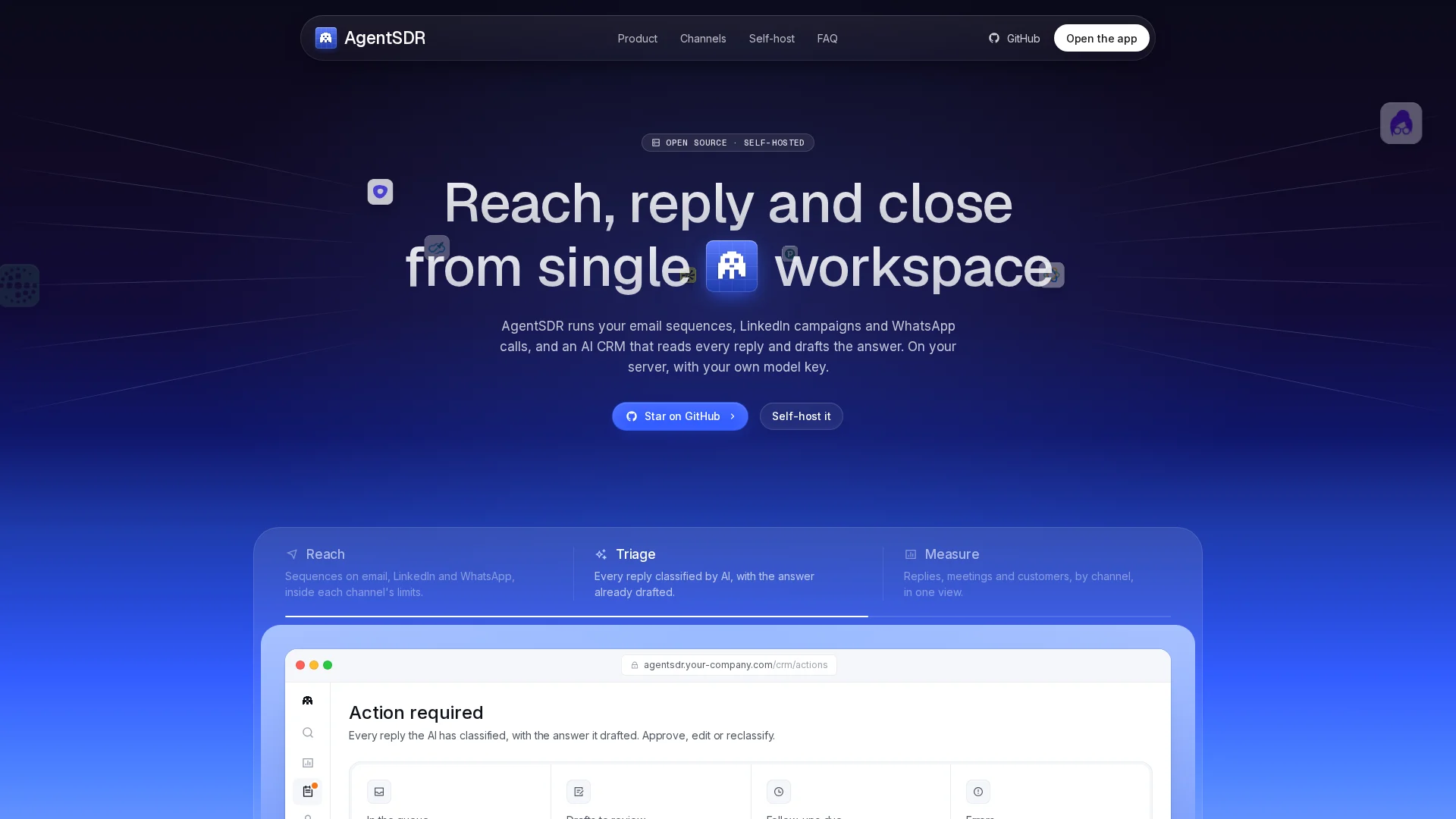
Ready to stop paying per seat for features you rarely use? Try AgentSDR, the open-source platform that keeps your sequences, replies, and customer data under your control.
Frequently Asked Questions
Q1: How do I choose a sales engagement platform?
Map your sales motion first, shortlist by the eight criteria, match the deployment model to your team, then run a two-week pilot with real prospects before signing anything.
Q2: How long should a pilot run?
Two weeks with live prospects and real reply data. Longer trials delay decisions; shorter ones hide reliability issues.
Q3: Is self-hosted worth it for a small team?
Only if you have technical help and care about data control or per-seat costs. Otherwise, choose a hosted tool.
Conclusion
Choosing well comes down to four moves: map your sales motion first, score platforms against your real workflow, match the deployment model to your budget and data needs, then prove it in a two-week pilot. Pick the tool your reps will actually use.