Integrated Prospecting: All-in-One Sales Platforms

Quick Summary: Integrated prospecting means collapsing data sourcing, multichannel sequences, reply handling, and CRM updates into one sales pipeline workspace, so reps stop juggling four logins and losing context between tools. SaaS leaders like Apollo, Reply, Salesloft, Outreach, HubSpot, and Close cover more ground than point tools but charge per seat and keep prospect data on vendor servers. AgentSDR stands apart as an open-source, self-hosted alternative that runs sequences, LinkedIn campaigns, and a CRM while keeping customer data on your own infrastructure, making it a fit for teams that prefer ownership over convenience.
Most B2B sales stacks still run on four logins, three billing cycles, and a CRM that hears about a deal only after the reply lands in someone's inbox. That gap costs you context, data hygiene, and deals. This guide defines integrated prospecting, gives you clear evaluation criteria, and compares leading platforms, including AgentSDR as an open-source option. The goal: pick one sales pipeline workspace that holds sequences, calls, and your CRM in the same place, so reps stop stitching tools together.
(~85 words)
What 'Integrated Prospecting' Actually Means in 2026
Integrated prospecting is prospecting run inside one sales pipeline workspace instead of across a patchwork of tools. Data sourcing, multichannel sequences, reply handling, and CRM records all live in the same system, so context never gets lost between logins.
The Four Jobs a Unified Workspace Must Do
Judge any platform on four jobs: find and verify contacts, run email and LinkedIn sequences, capture and classify replies, and update deal records without manual entry. If any job lives in a separate tool, integration is only partial. A true sales pipeline workspace keeps every touch, reply, and note attached to the same prospect record.
Why Stacking Point Tools Slows Pipeline
Point tools are cheap individually but costly in motion. SDRs export lists, sync them, and chase broken fields between apps. Each handoff adds delay and errors, and forecasts built on incomplete data slip. Consolidating into one sales pipeline workspace removes the handoffs entirely.
The Leading All-in-One Platforms Compared
SaaS Leaders: Apollo, HubSpot, Salesloft, Outreach, Reply, Close
Most teams shortlist one of six platforms. Apollo combines a large contact database with sequences, with paid plans from $49 per user per month. Reply.io runs multichannel outreach from about $99 per user per month. Salesloft and Outreach lead on enterprise engagement workflows and coaching, though both require a sales call for pricing. HubSpot and Close anchor the CRM side, pairing pipelines with email tools. Each covers more ground than a point tool, but per-seat costs rise fast as your team grows, and your prospect data sits on the vendor's servers.

The Open-Source Alternative: AgentSDR
Price is not the only axis. Data control matters too, especially for teams in regulated or privacy-conscious markets. AgentSDR is an open-source, self-hosted outbound platform that keeps sequences, LinkedIn campaigns, WhatsApp calls, and an AI-powered CRM in one workspace, while customer data and AI usage stay on your own infrastructure. That trades vendor convenience for ownership, so it suits teams that would rather run the software than rent it.
How to Choose the Right Workspace for Your Team
Most platforms fail the team test, not the feature test. Score each vendor on fit before you score it on price.
Six Questions to Score Any Vendor
- Data control: can you self-host or export everything?
- Channel coverage: email, LinkedIn, and calls in one workspace?
- Seat pricing: per user, or flat?
- CRM depth: native, or another login?
- AI review: are replies human-checked before sending?
- Migration: how painful is switching?

An open-source option like AgentSDR answers the first question by default; most vendors, including Apollo, do not.
When an Integrated Workspace Pays for Itself
Outcomes Buyers Should Expect
Integration pays off in three places. First, cost: one bill per seat usually beats four stacked subscriptions. Second, speed: when sequences, LinkedIn steps, and the CRM share data, replies route without manual entry, so reps spend hours selling instead of updating records. Third, control: a self-hosted platform like AgentSDR keeps customer data and AI usage inside your own infrastructure. Expect cleaner pipeline visibility, faster reply handling, and fewer broken handoffs between tools within the first quarter.
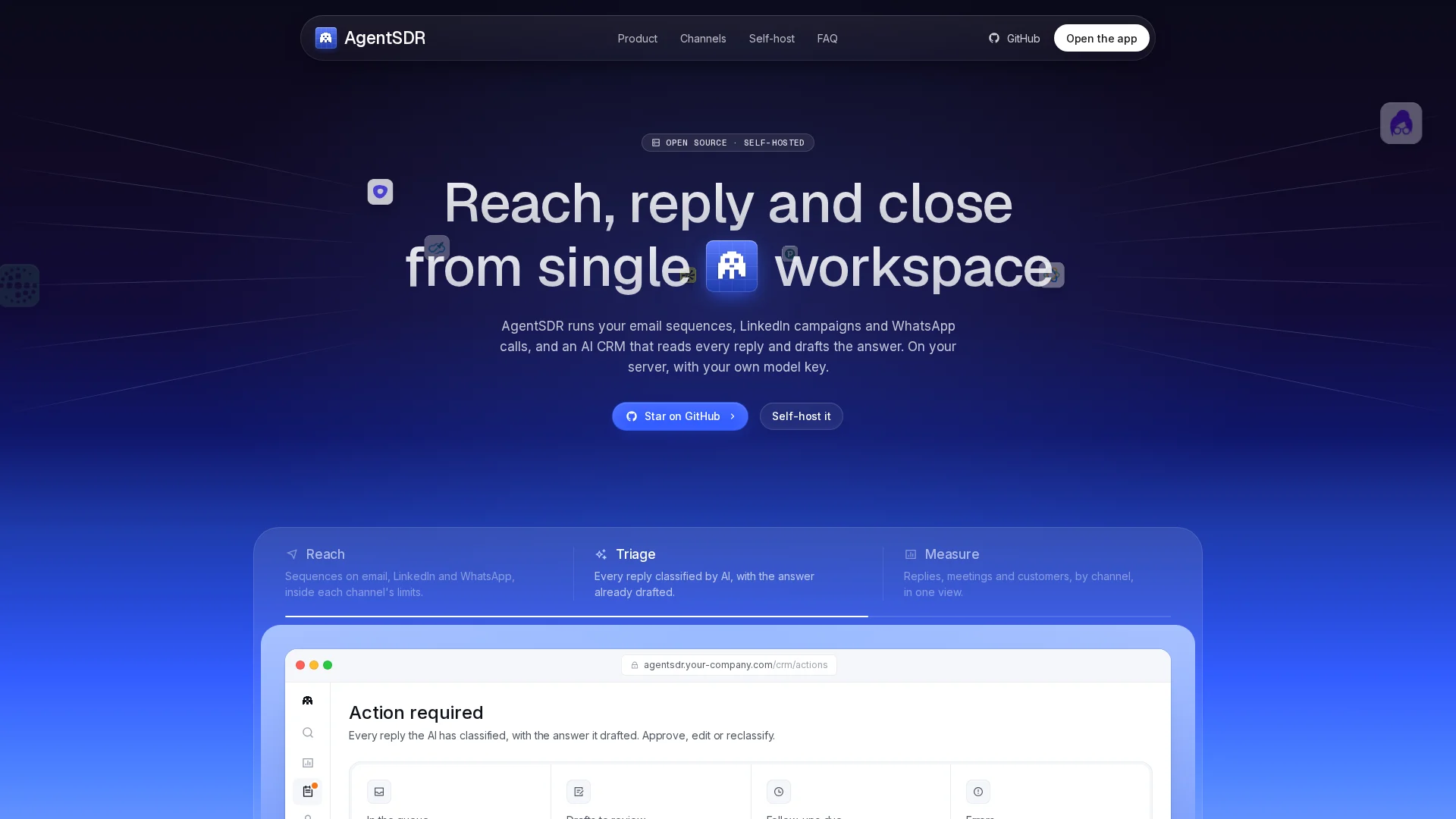
Ready to swap four logins for one workspace? AgentSDR is open-source and self-hosted, so your sequences, channels, and CRM run under your control. Start free today.
Frequently Asked Questions
Q1: Which top platform combines prospecting, sequences, and CRM?
Apollo and AgentSDR cover all three. Apollo bundles a large contact database with sequences from $49 per user monthly. AgentSDR does the same, but open-source and self-hosted, so your data stays on your infrastructure.
Q2: Is self-hosted prospecting software hard to maintain?
It needs someone comfortable running servers, updates, and backups. Teams with basic DevOps capacity manage it fine; teams without them usually prefer a managed SaaS platform.
Q3: Can I migrate my existing sequences and contacts?
Most platforms import contacts via CSV. Sequence templates copy over easily; complex multichannel logic often needs rebuilding, so check migration support before committing.
Q4: Do integrated platforms replace my CRM?
Often, yes. AgentSDR, HubSpot, and Close include native pipelines. But if you rely on advanced CRM features like custom reporting, keep both and verify the sync works both ways.
Conclusion
Integrated prospecting replaces a stack of point tools with one workspace that finds contacts, runs sequences, and updates your CRM automatically. Score vendors on data control, channel coverage, and seat pricing before price. If owning your data matters, a self-hosted platform like AgentSDR beats renting per seat.