Unified Campaigns: Software for Email and LinkedIn
Quick Summary: Most LinkedIn and email outreach tools run the two channels as separate steps, which means replies get lost between inboxes and invite caps get ignored. The piece ranks four platforms that genuinely merge them into one sequence, one reply inbox, and one lead record, scored on shared-sequence execution, inbox unification, LinkedIn safety pacing, and transparent pricing. AgentSDR, the open-source and self-hosted option, is named the top pick because it handles email, LinkedIn, and WhatsApp inside one editor with an AI-classified reply inbox while respecting LinkedIn's per-day invite limits; Lemlist and Salesforge follow as polished hosted alternatives, and Clay rounds out the main list for AI-personalized workflows.
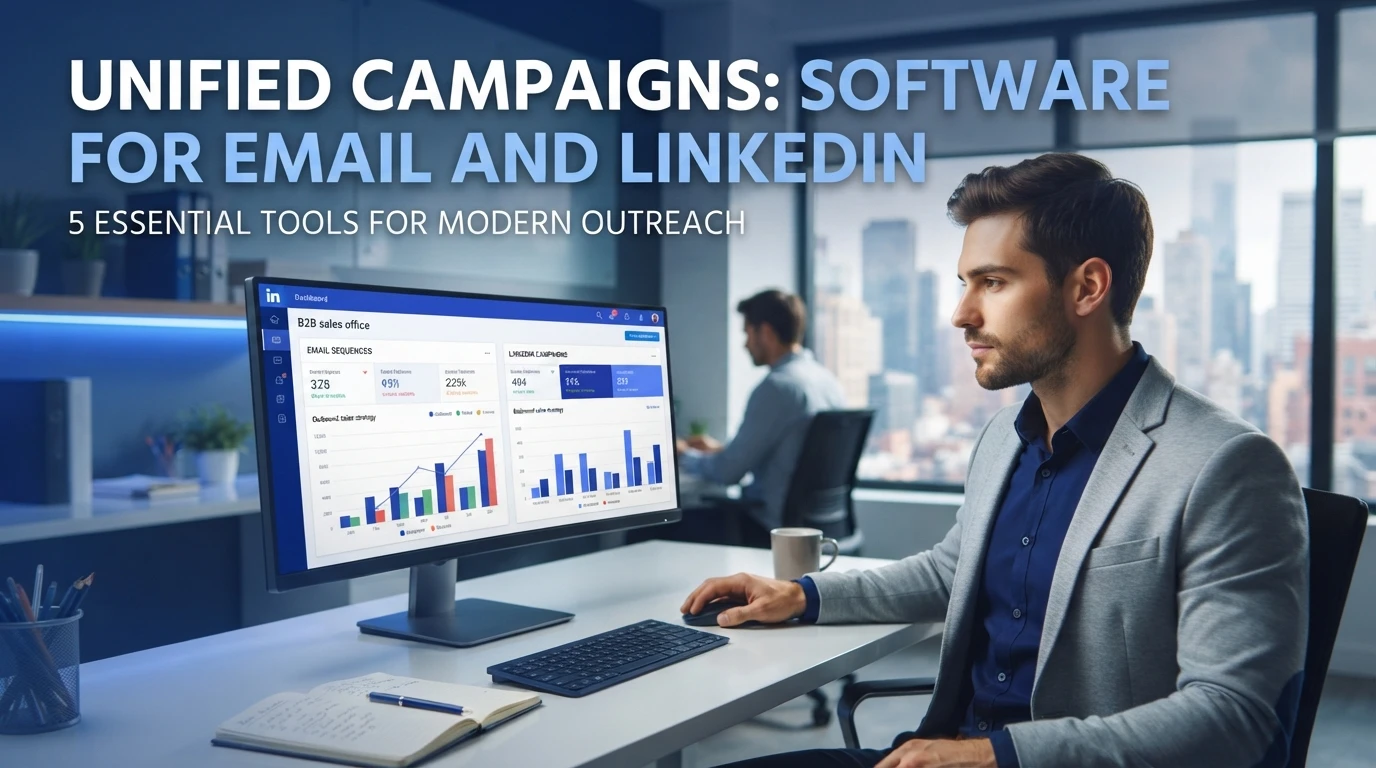
Most tools that promise LinkedIn outreach campaigns under one roof actually run email and LinkedIn as separate steps, and Apollo dropped its LinkedIn automation in January. So teams stitch sequences to task lists, lose replies between inboxes, and blow past per-account invite caps because the channels never share state. This list ranks seven platforms that merge both into one campaign, one inbox and one lead record. Each was scored on shared-sequence execution, reply inbox, LinkedIn safety pacing, and transparent 2026 USD pricing.
Unified Campaigns at a Glance
| Tool | Best for | Channels | Reply inbox | Pricing model |
|---|---|---|---|---|
| AgentSDR | Self-hosted B2B teams wanting one workspace for email, LinkedIn and WhatsApp. | Email, LinkedIn, WhatsApp calls. | Unified AI-classified inbox across all channels. | Open source (self-hosted); paid for hosted and support tiers. |
| Lemlist | SMB and mid-market sales teams wanting a polished UX. | Email, LinkedIn, manual call tasks, WhatsApp (beta). | Shared Lemlist inbox across channels. | Per seat, plans billed annually. |
| Clay | AI-personalised, low-volume ABM and inbound flows. | Email via providers; LinkedIn via integrations. | Via connected email sequencer; not native. | Per workspace, billed monthly. |
| Salesforge | High-volume outbound teams that want unified email + LinkedIn at scale. | Email (primary), LinkedIn, manual tasks. | Shared inbox tied to the sequence. | Per seat, plus warm-up add-ons. |
What 'unified email and LinkedIn campaigns' means in 2026
A true unified campaign runs email sends and LinkedIn outreach campaigns as steps inside one sequence. Every reply, from either channel, lands in one inbox. One lead record holds status, stage and next step.
Anything short of that is two tools with a task list between them. That split forces reps to hop tabs, and the hops are where follow-ups slip.
In 2026, buyers reply on whichever channel they check first. If your sequence treats LinkedIn as an afterthought, you lose those replies.
1. AgentSDR
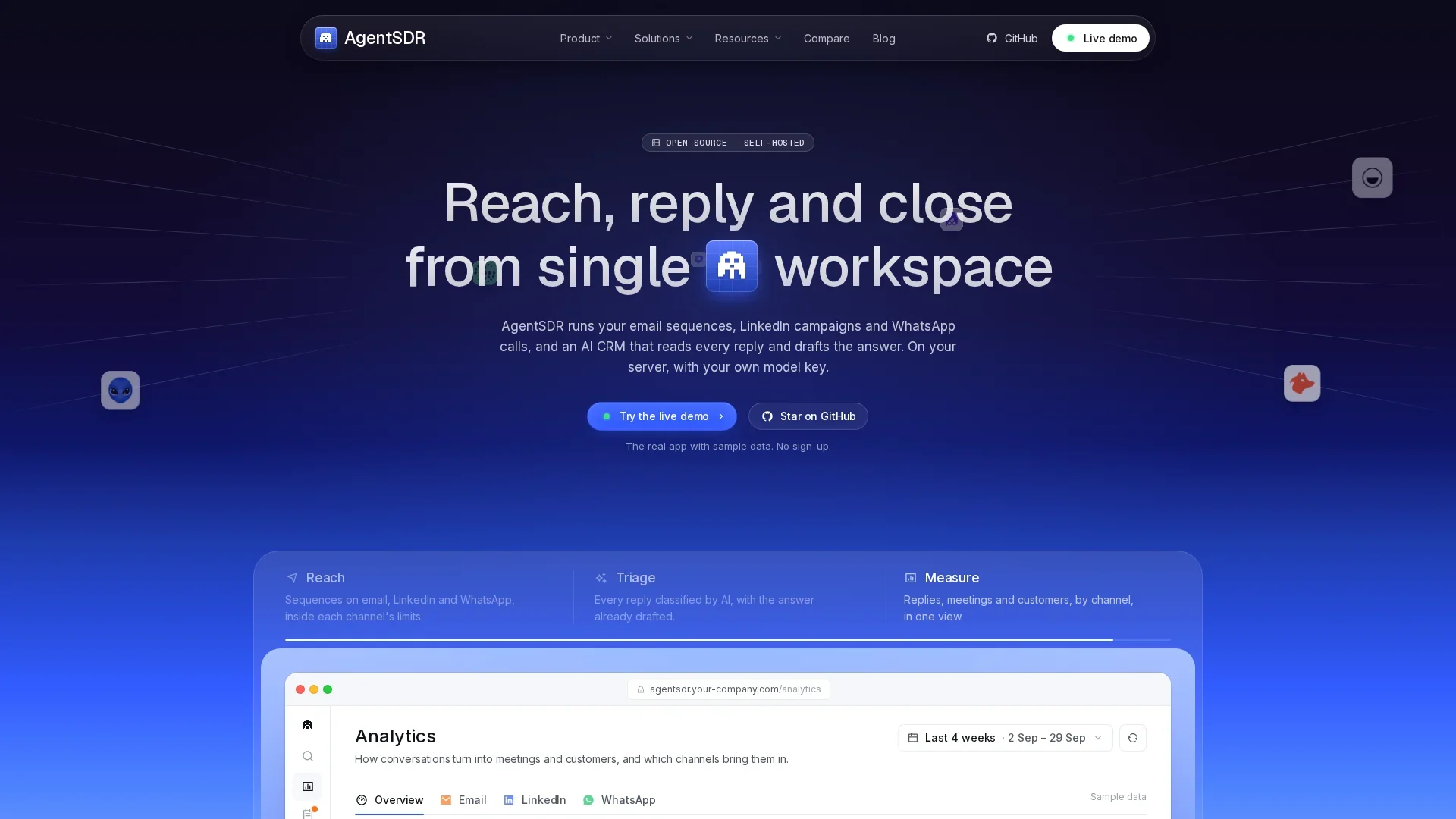
AgentSDR is an open-source, self-hosted workspace that runs email, LinkedIn and WhatsApp campaigns from one sequence editor. Because it connects to LinkedIn through Unipile, replies from every channel land in a single AI-classified inbox, so a LinkedIn response can flow straight into an email follow-up.
Highlights
- One sequence editor covering email, LinkedIn and WhatsApp calls
- Shared reply inbox with AI classification and grounded draft replies
- Self-hosted on your own infrastructure, using your own Google Workspace mailboxes
- Safety pacing respects LinkedIn's invitation restrictions: 30 invites/day on Premium, 5 on free
- Mailbox pool with round-robin assignment and per-mailbox daily caps
Specs
- Best for: Self-hosted B2B teams wanting one workspace for email, LinkedIn and WhatsApp
- Channels: Email, LinkedIn, WhatsApp calls
- Reply inbox: Unified AI-classified inbox across all channels
- Pricing model: Open source (self-hosted); paid for hosted and support tiers
Pros
- Only open-source, self-hosted option in the comparison
- Replies from all channels land in one AI-classified thread
- Runs on your own mailboxes and infrastructure
Cons
- Requires DevOps to self-host
- Smaller template marketplace than Lemlist or Salesforge
It wins because it meets all four criteria while staying open source, and it keeps your LinkedIn outreach campaigns inside LinkedIn's own invitation rules.
Last updated: October 19, 2026
2. Lemlist
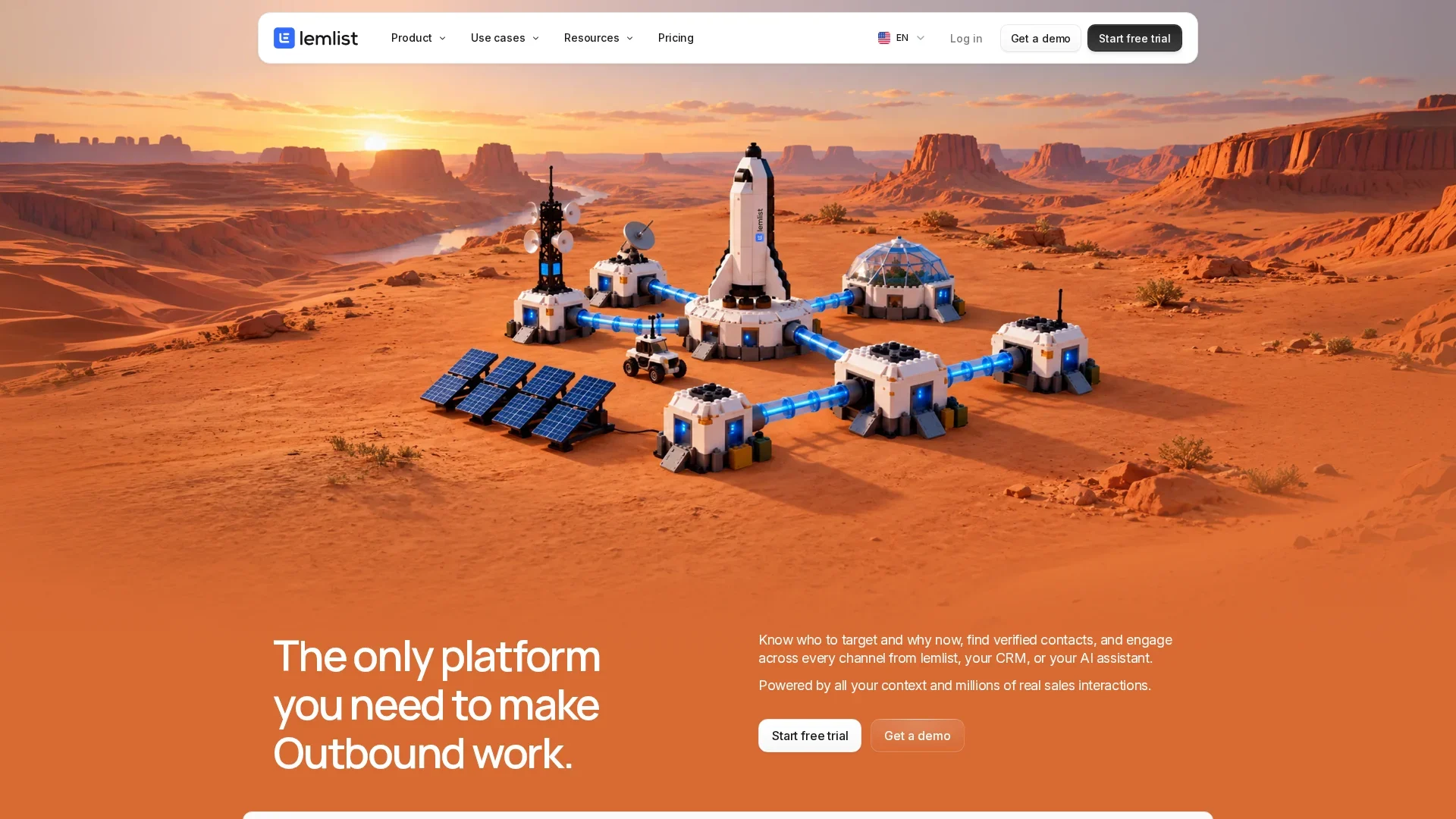
Lemlist is the polished multichannel sequence editor for personalised outreach. A campaign can move a lead from email to a LinkedIn invite to a manual call task, with replies aggregated into one shared inbox. It suits SMB teams that want strong UX and templates over control of their own stack.
Highlights
- Drag-and-drop sequence builder with branching and conditions.
- LinkedIn steps (visit, invite, message) inside the same campaign.
- Lemwarm deliverability warm-up included.
- Shared Lemlist inbox with reply detection.
- Deep personalisation: images, video, custom landing pages.
Specs
- Best for: SMB and mid-market sales teams wanting a polished UX.
- Channels: Email, LinkedIn, manual call tasks, WhatsApp (beta).
- Reply inbox: Shared Lemlist inbox across channels.
- Pricing model: Per seat, plans billed annually.
Pros
- Best-in-class sequence editor and templates.
- Strong deliverability tools out of the box.
Cons
- Not open source or self-hosted.
- Per-seat pricing gets expensive above 10 users.
Multichannel Expert runs about $99 per user monthly, or roughly $87 billed annually, so costs climb fast with headcount according to Tomba's pricing breakdown and Amplemarket's cost analysis.
Last updated: October 19, 2026
3. Clay
Clay turns lead generation into a live spreadsheet: each row pulls data from 50+ providers, and the Claygent AI agent researches accounts and drafts copy for you. Then you push rows into email or LinkedIn steps. It suits teams where personalisation depth beats sending volume, a goal shared by personalised email sequences in general, and enrichment costs run roughly $0.30 to $1.00 per contact in credits according to this Clay data enrichment review.
Highlights
- 50+ data providers in one enrichment table
- Claygent AI agent for research and copy generation
- Conditional waterfalls for data lookups
- Push enriched rows into any sequencer or LinkedIn tool
Specs
- Best for: AI-personalised, low-volume ABM and inbound flows
- Channels: Email via providers; LinkedIn via integrations
- Reply inbox: Via connected email sequencer; not native
- Pricing model: Per workspace, billed monthly
Pros
- Most flexible enrichment and personalisation stack
- AI-agent research is unique to Clay
Cons
- Reply inbox lives in a connected tool, not Clay itself
- Steeper learning curve than Lemlist or Instantly
It ranks here because its AI-personalised LinkedIn and email workflows are unbeatable, but sending and replies depend on other tools, so it isn't unified alone.
Last updated: October 19, 2026
4. Salesforge
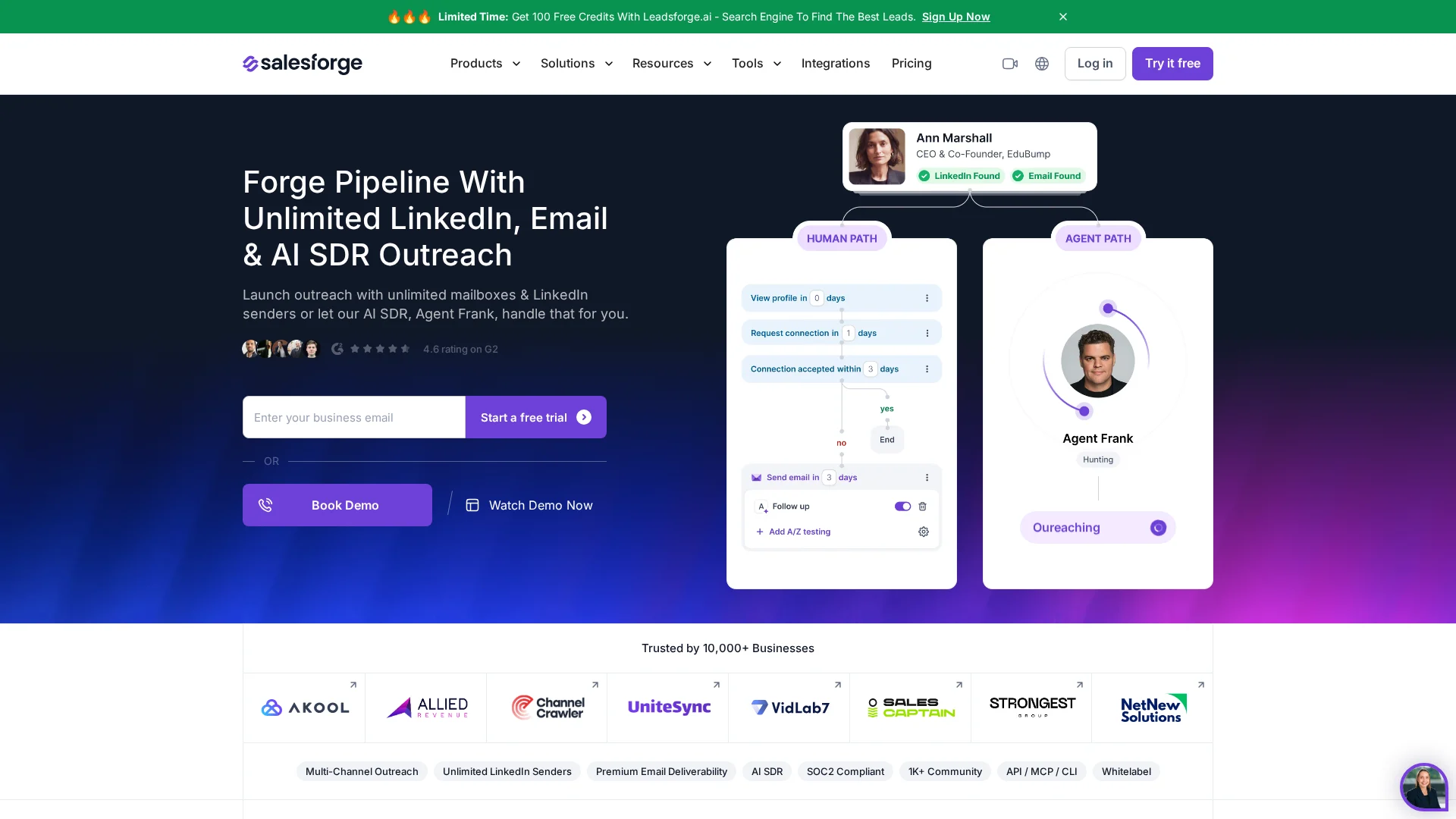
Salesforge markets itself as the only platform running email and LinkedIn at scale inside one sequence. Its deliverability stack, including automated warm-up through Mailforge and a unified Primebox inbox, comes built in. LinkedIn coverage is thinner than Lemlist or AgentSDR, and there's no self-hosted tier.
Highlights
- One sequence canvas combining email and LinkedIn steps
- Mailforge automated warm-up bundled in
- Primebox inbox rotation for higher deliverability
- Agent-assisted copy and follow-ups
- API and webhooks for tight CRM integration
Specs
- Best for: High-volume outbound teams that want unified email + LinkedIn at scale.
- Channels: Email (primary), LinkedIn, manual tasks.
- Reply inbox: Shared inbox tied to the sequence.
- Pricing model: Per seat, plus warm-up add-ons.
Pros
- Strong deliverability stack out of the box
- Scale-friendly pricing and API access
Cons
- LinkedIn coverage thinner than Lemlist or AgentSDR
- No self-hosted or open-source tier
It ranks here as the closest enterprise-style rival to a unified model, though it's priced per seat and built for larger teams rather than self-hosters.
Last updated: October 19, 2026
Runners-Up Worth a Look
These three tools handle email and LinkedIn on one canvas, but each slips on at least one of the four scoring criteria for B2B scale. The main list covers four tools in depth; these three just missed the cut.
- Heyreach - Best for agencies juggling several LinkedIn accounts; native email sequencing is thin.
- La Growth Machine - Clean email plus LinkedIn cadence for European SMBs, but fewer integrations.
- Apollo.io - Huge B2B database and sequencer, though LinkedIn automation was removed in January 2026.
How to choose the right unified campaign tool
- Decide who runs the stack. Have engineers? Self-host AgentSDR so data stays on your servers. Otherwise, Lemlist or Salesforge keep setup light.
- Test the reply inbox, not the editor. Send 20 real replies across channels and confirm they land in one thread, classified once.
- Check LinkedIn pacing. Every account needs a per-day invite cap and working-hour window. Tools that ignore this get profiles restricted fast.
- Match pricing to headcount. Per-workspace (AgentSDR, Clay) suits small specialist teams; per-seat (Lemlist, Salesforge) rewards bigger orgs.
- Plan for AI replies. Prioritise tools that classify replies and draft follow-ups. That is where SDR hours get saved.
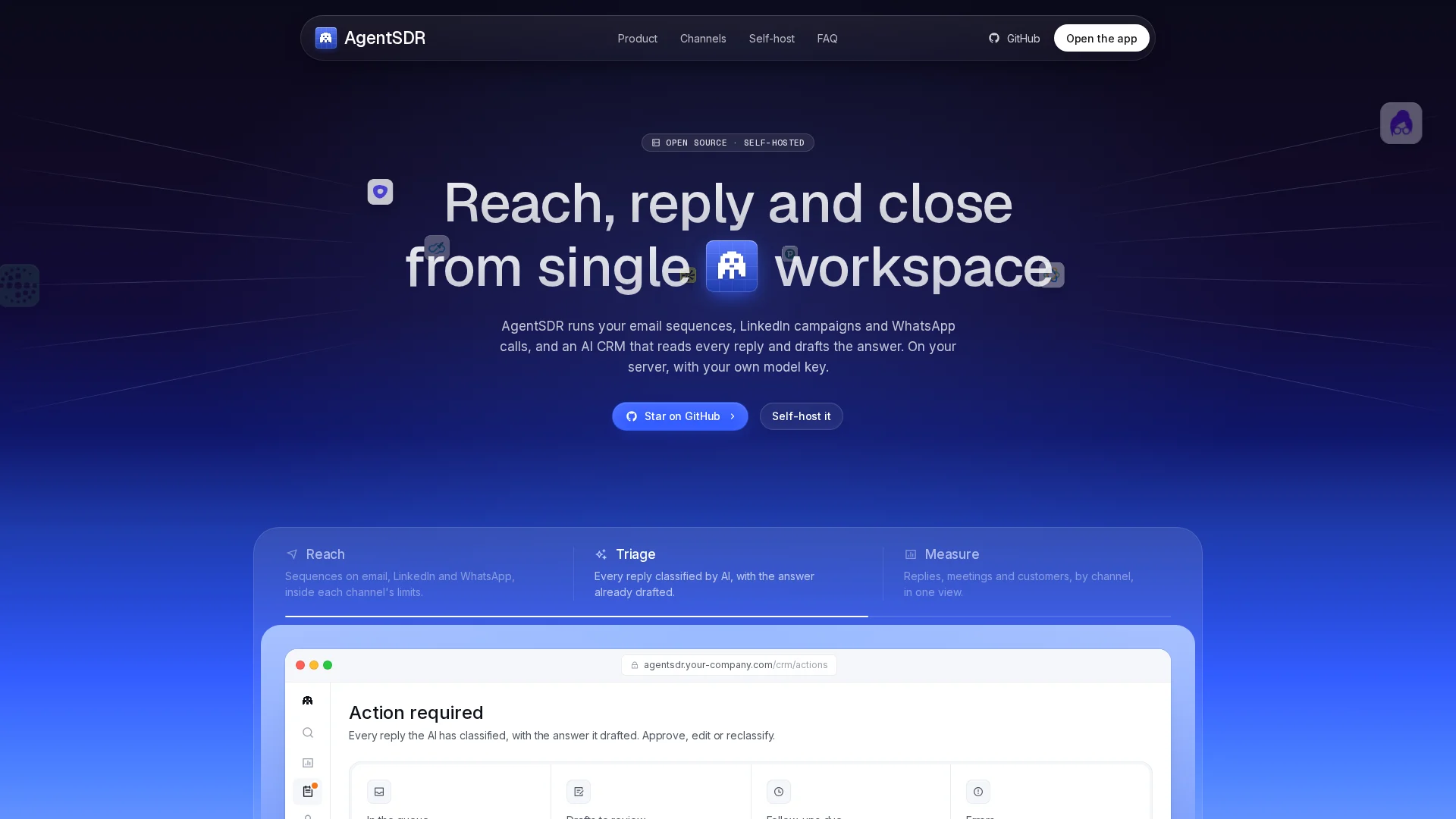
Done juggling stitched-together tools? AgentSDR runs email and LinkedIn sequences in one editor with a shared, AI-classified reply inbox. It's open source and self-hosted, so your data stays yours. Try it free today.
Frequently Asked Questions
Q1: Which leading tools combine email and LinkedIn campaigns?
AgentSDR, Lemlist, and Salesforge run email and LinkedIn steps inside one sequence. Clay covers email well but relies on integrations for LinkedIn, so replies live elsewhere.
Q2: How many LinkedIn invites can I send daily?
Free accounts get about 5 invites per day; Premium allows up to 30. Choose tools with per-account pacing caps, or risk profile restrictions.
Q3: Do I need developers to run a unified tool?
Only for self-hosted options like AgentSDR. Lemlist and Salesforge require no DevOps and set up in hours.
Q4: How do I test whether a tool is truly unified?
Send around 20 replies across email and LinkedIn, then confirm every one lands in a single classified thread.