How to Build an Outreach Workflow on a Lean Budget
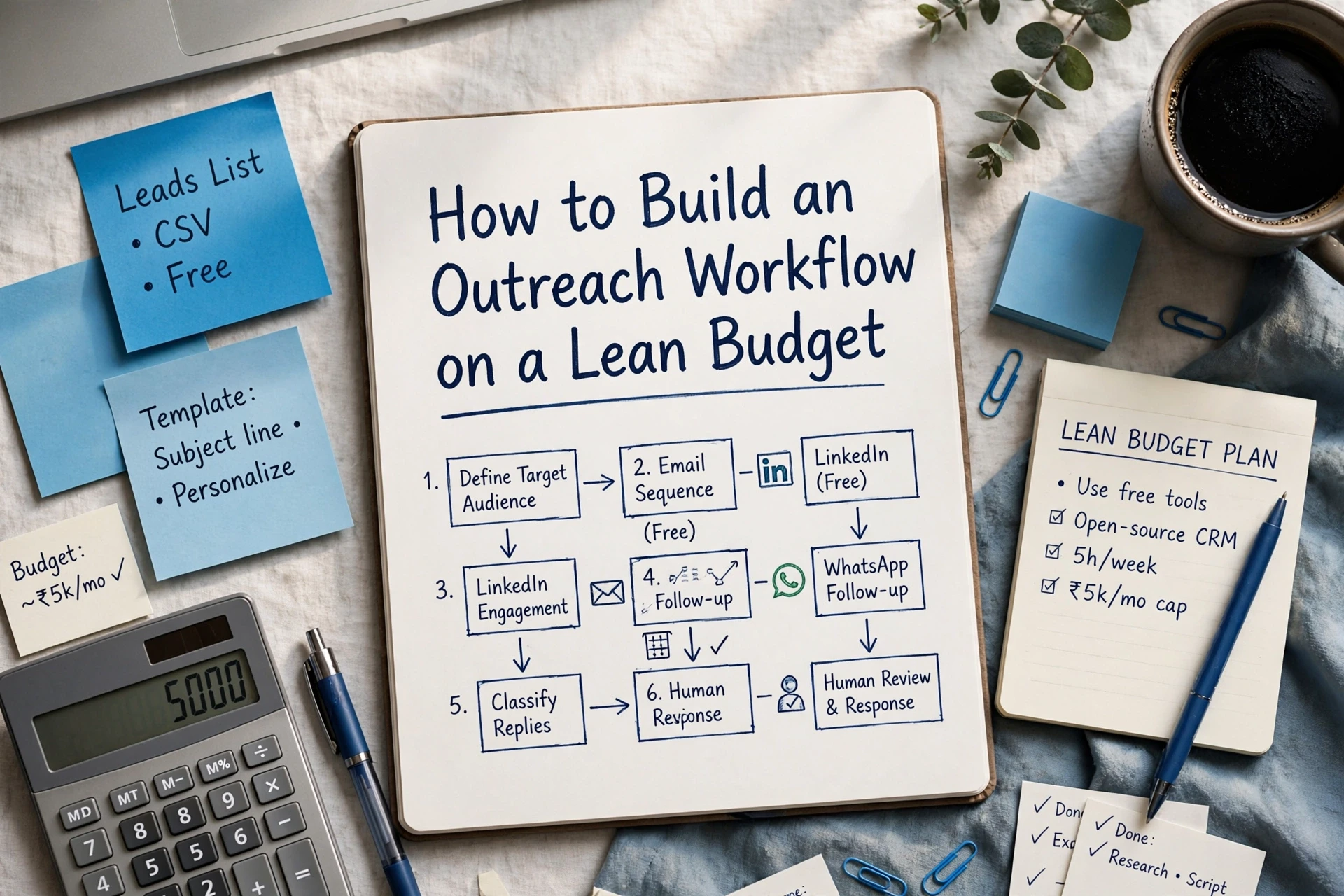
Quick Summary: A lean outreach system starts with a fixed budget, a five-stage workflow, and one primary channel, then adds only tools that cover sequencing, data, CRM, or deliverability. Protect inbox health with secondary domains, SPF, DKIM, DMARC, and two to four weeks of warmup before sending short, personalized sequences of three or four touches. Review reply rates, meetings, and cost weekly, rebuild sequences below a 2% reply rate, and reinvest savings in list quality; AgentSDR is highlighted as an open-source, self-hosted option that combines sequences, replies, and CRM without per-seat fees.
A two-person SDR team can burn more on tools, domains and lead data in month one than a paid ad campaign costs in a quarter, and still land in spam. The fix is not more software. It is a lean, ordered workflow where sales outreach automation does the heavy lifting, deliverability comes before volume, and every tool must prove its per-seat cost. This guide walks through that build, step by step, for small teams running outbound on a tight budget.
Step 1: Define the Workflow and Divide the Budget Before Buying Tools
Build your sales outreach automation workflow in this order: fix the budget, write the workflow, then buy tools. Tools chosen first tend to shape your process around their limits, which is backwards.
Split your budget into fixed costs and the software layer
Some costs are not optional. You need domains, inboxes and a sending setup before any tool matters, so treat those as fixed costs first. The software layer comes second. Once the budget is set, compare options with our guide on choosing an outbound sales platform.

Write the workflow as five stages
Write the process as five stages: find leads, enrich them, send the sequence, handle replies, and log activity. Each tool you buy must map to one stage. Anything that covers two stages is a bonus, not a requirement.
Pick one primary channel and one supporting channel
Choose one primary channel, usually email, and one supporting channel such as LinkedIn. Adding WhatsApp outreach at the start spreads a thin budget thinner. Add the second channel only once the first produces consistent replies.
Step 2: Assemble a Lean Stack That Covers Sequence, Data and CRM
The four capabilities your stack must cover
A lean outbound stack needs exactly four things:
- Sequencing: email sequences, LinkedIn campaigns and WhatsApp outreach
- Data: verified prospect emails and phone numbers
- CRM: pipeline stages and reply tracking
- Deliverability: warmup and authentication (covered in Step 3)
That is the whole requirement for sales outreach automation.
Three ways to assemble the stack
You can stitch together point tools, buy an all-in-one platform, or go open-source. Point tools get expensive fast with per-seat pricing. An open-source CRM and self-hosted sales engagement platform removes that cost entirely. Weigh monthly fees against setup time before you choose.
Decide what you will not automate yet
Keep lead research manual at first. Human judgment finds better-fit prospects than most data tools, and it costs nothing but an hour a day.
Step 3: Build the Sequence and Protect Deliverability
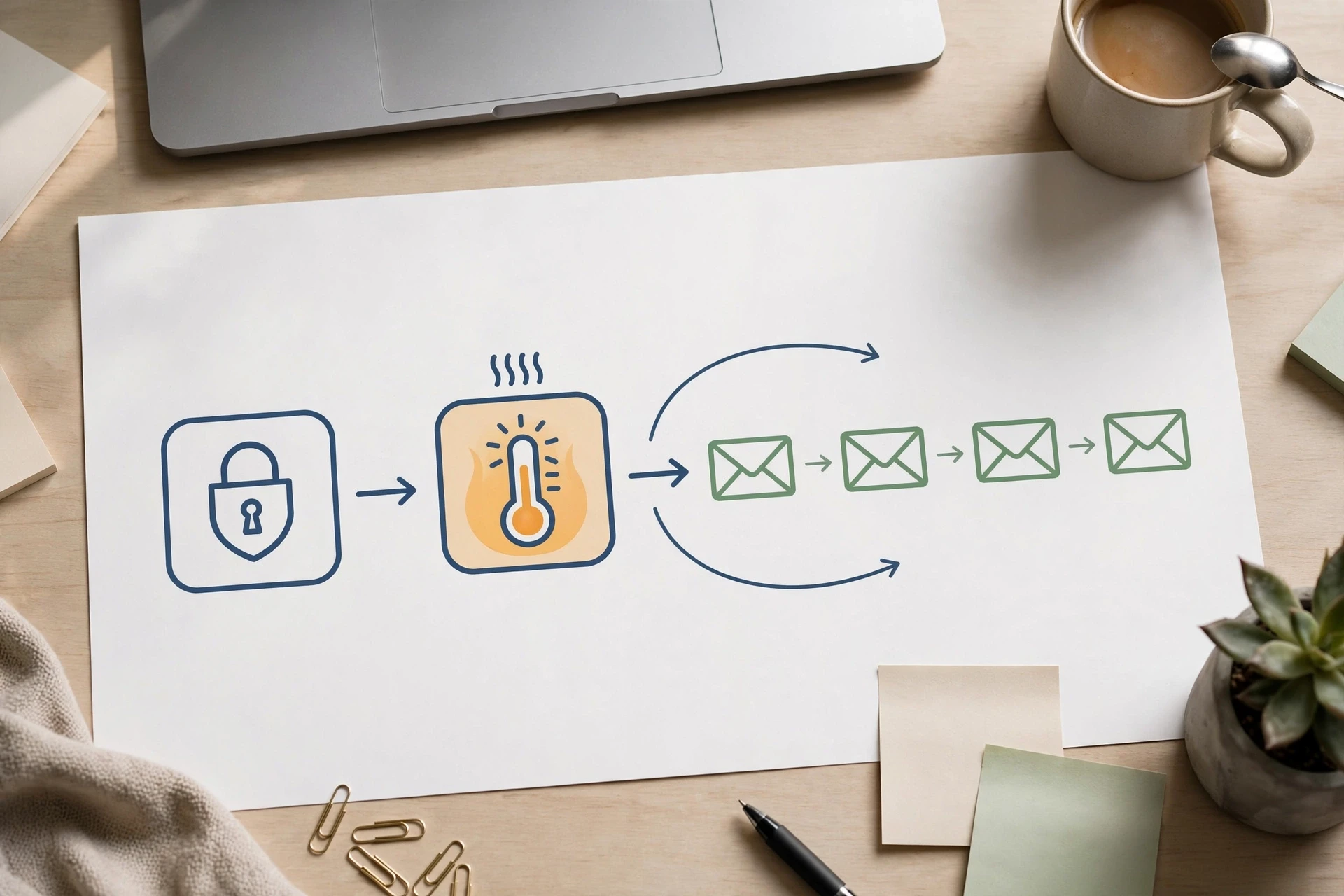
Authenticate every sending domain first
Deliverability fails or succeeds before you write a word. Set up cold email deliverability on a budget like this:
- Buy secondary sending domains.
- Add SPF, DKIM, and DMARC records.
- Start DMARC in monitoring mode, then tighten it.
Google and Microsoft require bulk senders to authenticate, so skip this and mail lands in spam.
Warm inboxes before the first campaign
New domains and inboxes need two to four weeks of warmup: start with low daily volume, ramp slowly, and keep sends under 20 to 30 per inbox per day. Don't touch your primary domain.
Run a short, human-sounding sequence
Keep sequences to three or four touches over two weeks. Write like a person: short lines, one clear ask, no images or heavy links. Personalize the first sentence with something specific, and pause automatically once someone replies to your sequence. Track replies, not just opens.
Step 4: Run a Weekly Cadence and Cut What Is Not Working
The 45-minute weekly review
Pick one day and time. Review four metrics: reply rate, positive replies, meetings booked, and cost per booked meeting. Check them per sequence and per inbox. Skip vanity numbers like opens; they shift with privacy tools and tell you little.
Know when to stop and rebuild
If a sequence gets under 2% reply rate after two weeks, rewrite the opening line and offer. If deliverability drops, pause sends, then recheck your SPF, DKIM and DMARC setup before resuming. Never ramp volume on a struggling domain.
Reinvest the savings
Cancel any tool a rep has not touched in a month. Track the freed spend, then move it toward list quality or a second warmed domain. Cheap and focused beats sprawling.
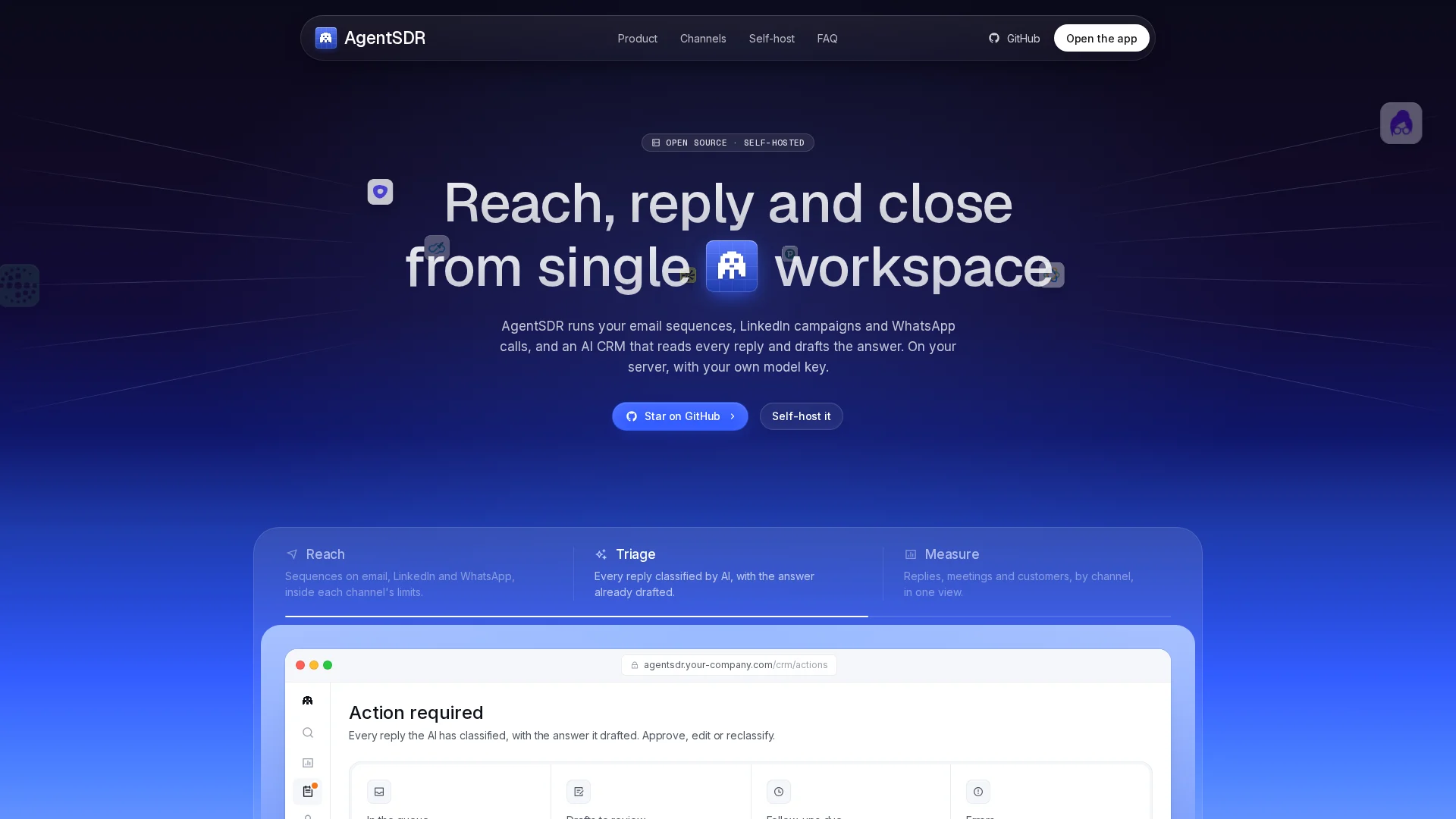
Ready to run outbound without per-seat fees eating your budget? AgentSDR is open source and self-hosted, so your sequences, replies and CRM live in one workspace you control. Try it free today.
Frequently Asked Questions
Q1: How do I build an outreach workflow with a small budget?
Fix your fixed costs first (domains, inboxes), write the five-stage workflow, then buy software that maps to one stage each. Start with one primary channel, warm your inboxes, and track reply rate weekly.
Q2: How many emails can I safely send per inbox per day?
Keep sends under 20 to 30 per inbox per day, even after a full two to four week warmup.
Q3: What reply rate should I expect from a cold sequence?
Aim above 2%. If a sequence falls under that after two weeks, rewrite the opening line and offer before adding volume.
Q4: Do I need separate domains for cold outreach?
Yes. Buy secondary sending domains and never warm or send from your primary domain.
Conclusion
A lean outbound stack comes down to order, not spend. Fix your domains and deliverability first, write the five-stage workflow, then buy tools that map to one stage each. Track reply rate and cost per booked meeting weekly, cut what sits idle, and reinvest the savings in list quality.