EspoCRM Review: Lightweight Open Source CRM for Sales
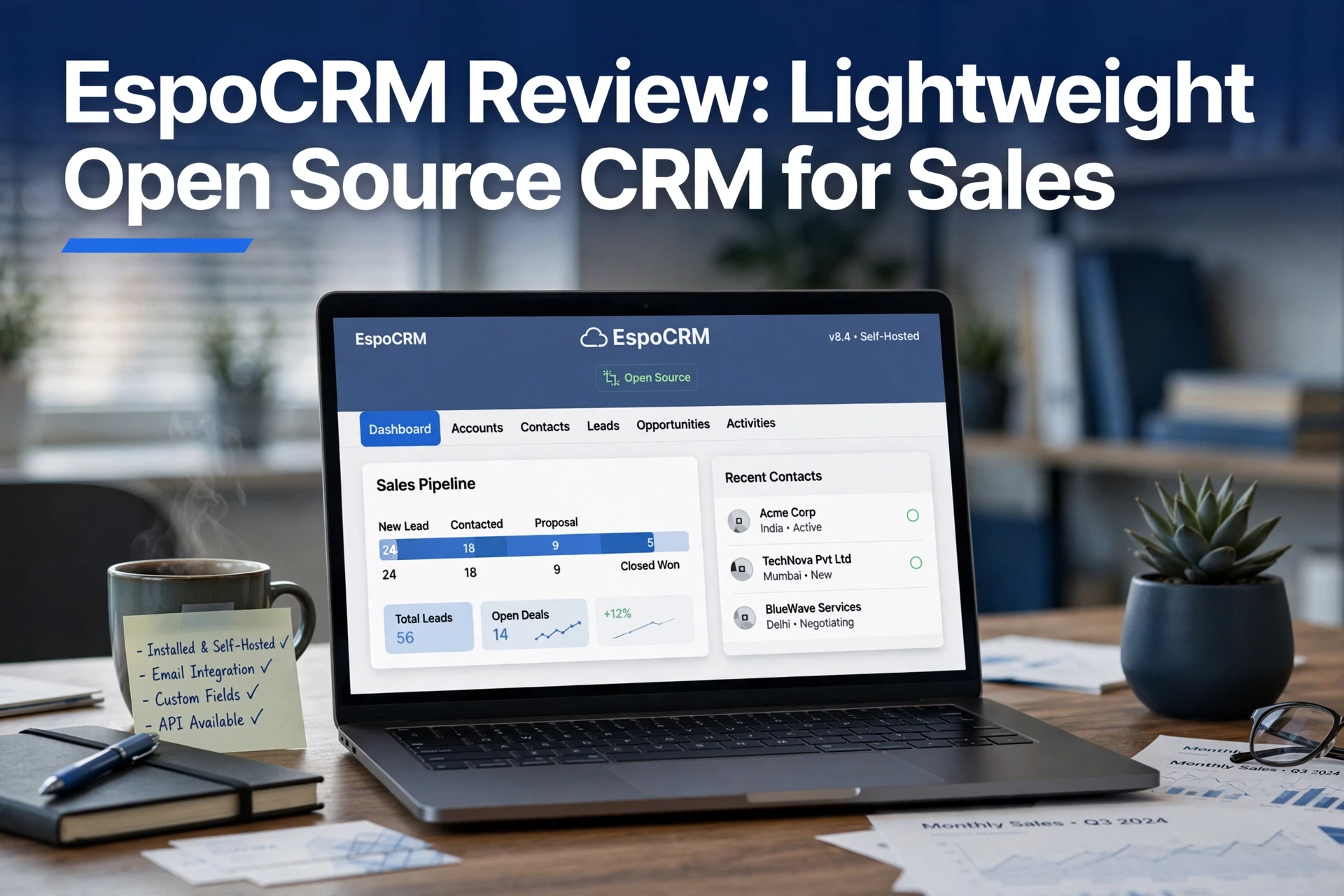
Quick Summary: EspoCRM is a fast, customizable open source CRM for small B2B teams that value pipeline control and full data ownership, with cloud plans starting at $15 per user but minimum seat charges that push a solo founder to $45 monthly. Self-hosting avoids license fees but adds server, backup, update, and admin costs, while advanced workflows and reporting require paid extensions. Its main limitation is no native email sequencing or built-in WhatsApp outreach, so outbound-heavy teams need separate tools such as AgentSDR or paid connectors.
EspoCRM is a lightweight open source CRM for small B2B sales teams that want full data control without heavy setup work. This EspoCRM review looks at where it breaks: onboarding time, hidden self-hosting costs, and the sequencing features sales teams expect but won't find. We tested deployment and pricing against SuiteCRM and Frappe CRM alternatives so you can decide fast.
What EspoCRM Actually Costs: Cloud vs Self-Hosted
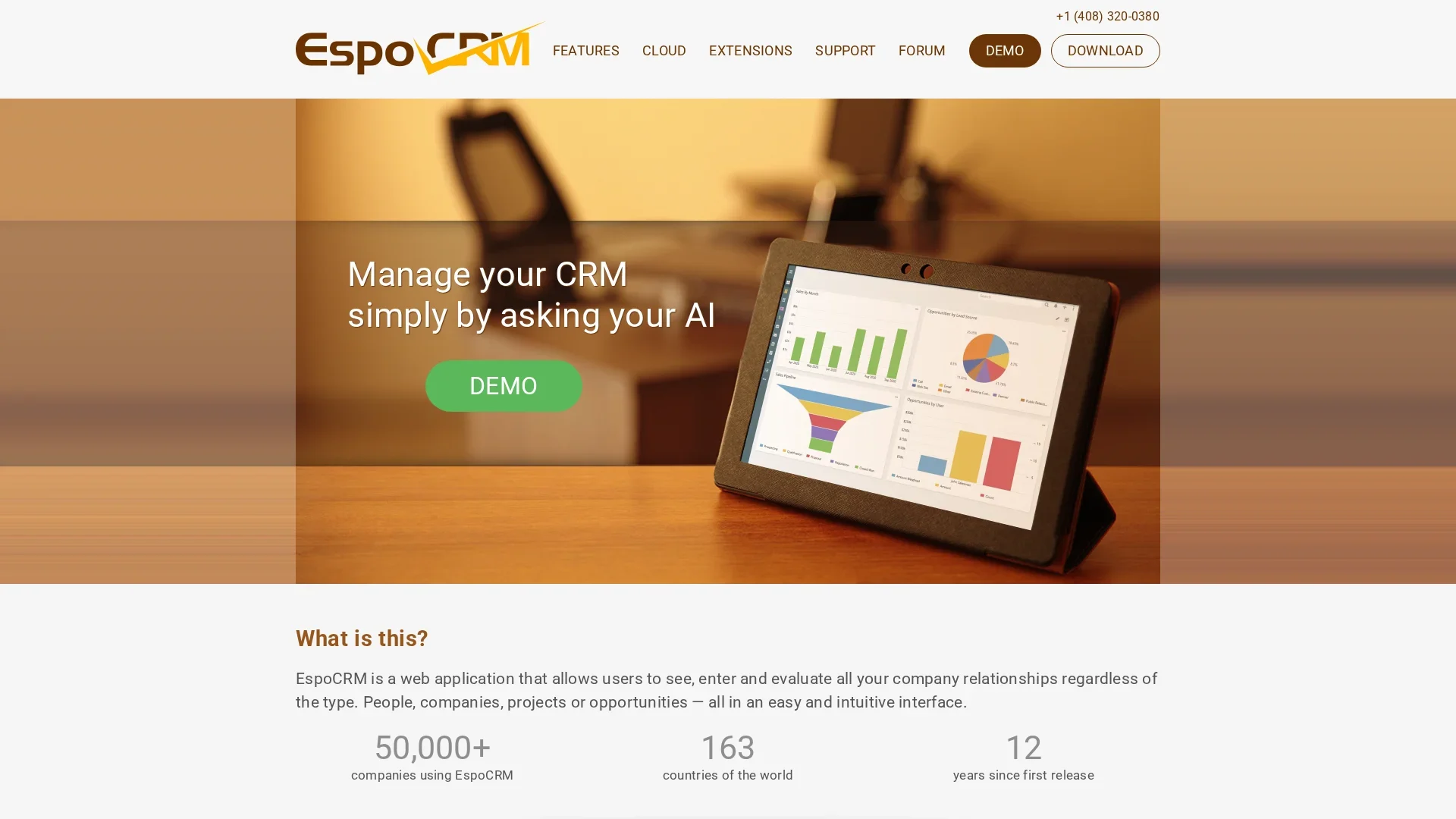
EspoCRM pricing splits into two paths: hosted cloud plans or a free self-hosted install. How much does EspoCRM cost per user per month? Cloud starts at $15, and the self-hosted version costs nothing in license fees.
Cloud Tiers and Seat Minimums
| Plan | Price | Minimum Users |
|---|---|---|
| Basic | $15/user/month | 3 |
| Enterprise | $25/user/month | 5 |
| Ultimate | $69/user/month | 10 |
Each tier bundles hosting, updates, and support. Seat minimums matter for tiny teams: a solo founder on Basic pays $45 monthly, not $15.
The Real Cost of the Free Self-Hosted Version
The self-hosted build is free, but you pay for a server, backups, updates, and admin time. Budget a few hours monthly for maintenance, more when upgrades break customizations. That trade fits teams wanting full data control, a stance we also weigh when comparing open source CRM options like Twenty and SuiteCRM.
Customization, Automation and Integrations
Entity Manager and Tailored Fields
The [Entity Manager](
) is EspoCRM's no-code control room. Admins add custom entities and fields, rename labels, and reshape layouts without touching code. For sales teams with unusual pipelines, this turns a generic CRM into something shaped around your deal stages.
Workflows, BPM and Reporting
Base workflows trigger actions on record changes, such as assigning an owner or sending an alert. BPM (business process modeling) diagrams and reports sit in the paid Advanced Pack, so budget for that extension if you need multi-step approvals or scheduled reporting.
Email, API and the 2,000+ Integration Catalog
EspoCRM ships a REST API for custom connections, plus connectors through platforms like Make. Integration marketplaces list thousands of ready-made links to email, marketing and billing tools. WhatsApp support comes via a paid connector, not the core build. Teams wanting outreach built in, the way sales automation platforms handle sequences natively, will find EspoCRM needs glue work first.
Pros and Cons

Where EspoCRM Wins
EspoCRM stays fast on cheap hosting, and the self-hosted edition carries no license fees. The Entity Manager lets you reshape records without code, while BPMN workflows and a REST API handle automation. Light system requirements and a clean interface make it easy for small teams to adopt.
Where EspoCRM Falls Short
It is a CRM first, not a sales engagement platform. It lacks native email sequencing, and WhatsApp needs third-party connectors such as Zapier's EspoCRM WhatsApp integration or paid add-ons. That means extra setup, extra cost, and workflows stitched together across tools. Outbound-heavy teams feel this gap most.
Is EspoCRM a Good Fit for Lean Sales Teams?
Yes, if your team needs contact management, pipelines, and data control more than outbound automation. Solo founders pay $45 monthly on cloud Basic due to seat minimums, but self-hosting removes that cost. It fits teams with some technical help on hand.
Is EspoCRM Worth It?
Who Should Choose EspoCRM
EspoCRM fits small B2B teams that want a fast, cheap CRM with full data control. Self-host it and skip license fees entirely. It also suits developers who like the entity manager and REST API. If you need built-in outbound sequencing, though, it will disappoint.

The Practical Verdict
For pipeline and contact management, EspoCRM punches well above its $15 starting price. Pair it with a dedicated outreach tool when sequences matter, or consider an open source platform like AgentSDR that keeps CRM and outbound in one place. For pure CRM value, it earns a yes.
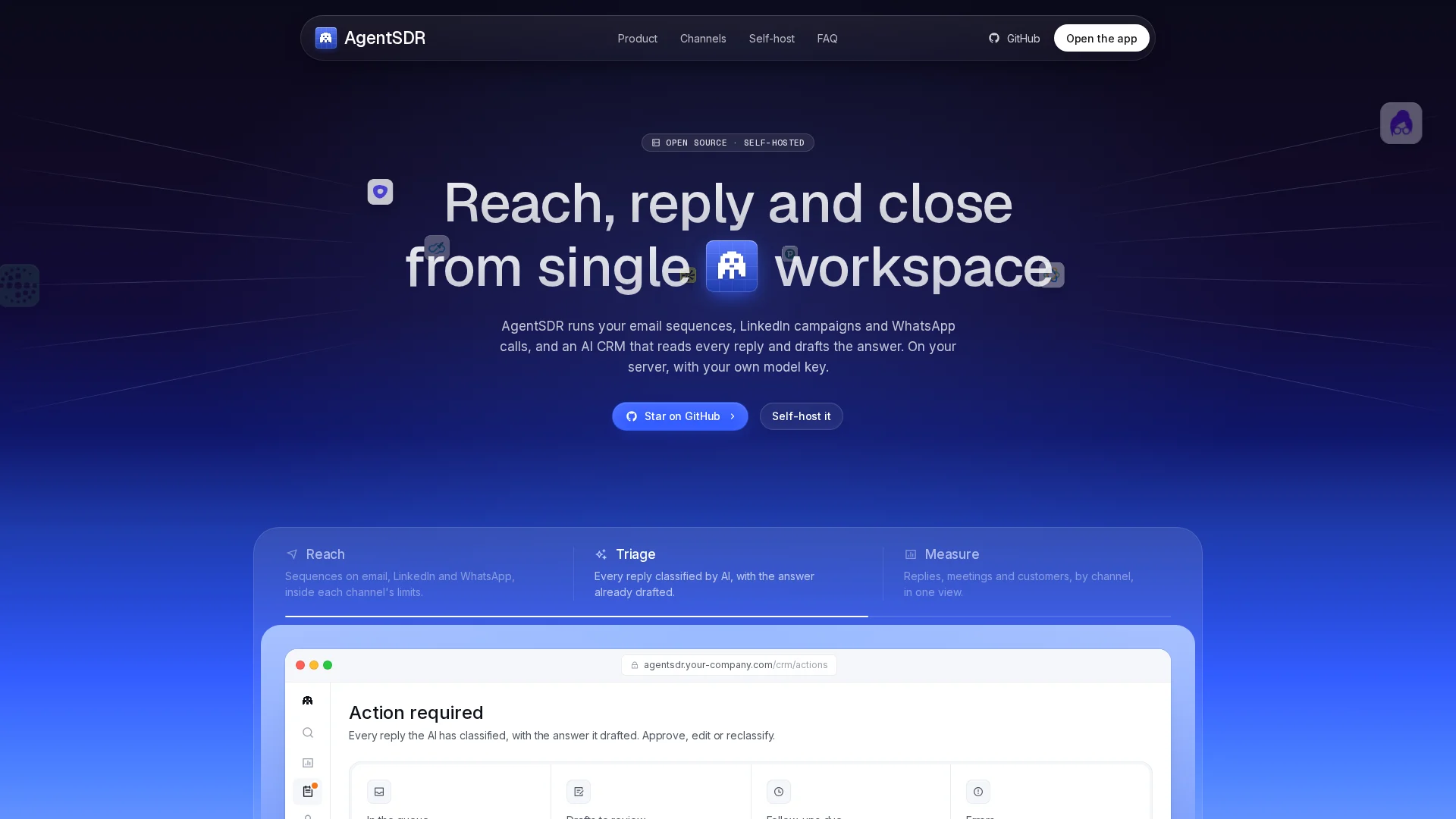
If EspoCRM's strengths fit your pipeline needs, it's a smart pick. But if you want outreach and CRM in one self-hosted tool, see AgentSDR.
Frequently Asked Questions
Q1: Is EspoCRM a good fit for lean sales teams?
Yes, for contact management and pipelines. But solo founders pay $45 monthly on cloud Basic, and self-hosting needs technical help.
Q2: Does EspoCRM include email sequencing?
No. Sequencing requires third-party connectors or a separate outbound platform.
Q3: Is the self-hosted version really free?
Free of license fees, though servers, backups, and admin time add cost.
Conclusion
EspoCRM is a solid lightweight open source CRM with honest pricing and strong customization, but it lacks native sequencing. Choose it for pipeline control; pick an all-in-one outbound platform if sequences drive your revenue.