Apollo vs Outreach: The Best B2B Outreach Software
Quick Summary: Apollo leads on built-in prospecting, with over 210M contacts, intent signals, and a free tier starting near $49 per seat, making it the easier pick for startups and SMBs. Outreach fits larger revenue teams that need advanced workflows, governance, and account-level execution, but it locks buyers into annual contracts around $100-$300+ per user with $5,000-$25,000+ onboarding fees. Neither tool suits every team, so self-hosted options like AgentSDR offer a third path that keeps sequences, calls, and CRM data fully under your own control without per-seat costs.
If you need 200,000 verified contacts and same-day B2B outreach automation, Apollo wins. If your 50-person org needs governance-grade workflows, pick Outreach. This guide compares both on data, sequencing, pricing, and fit, then names a winner per team profile, including self-hosted B2B outreach automation options like AgentSDR.
Apollo vs Outreach at a Glance
| Apollo | Outreach | |
|---|---|---|
| Primary strength | Data-first, all-in-one prospecting and engagement | Workflow-first enterprise sales execution |
| Database and data | 210M+ contacts, built-in buyer intent signals, credit-based exports | Limited native data; relies on integrations (ZoomInfo, etc.) for prospecting |
| Engagement and workflows | Multichannel sequences, AI writing, dialer, light CRM layer | Advanced sequences, AI assist, deal execution, mutual action plans, deep governance |
| Pricing model | Free tier; paid plans from ~$49/seat/mo; ~$119/seat/mo Professional (annual, min 3 seats) | Annual contracts only; from ~$100/user/mo (email) to $200-$300+/user/mo (full platform) |
| Best fit | SMBs, startups, and mid-market teams that want prospecting + engagement in one tool | Mid-market and enterprise revenue orgs needing governance and account-level execution |
| Onboarding | Self-serve, free tier, no sales call required | Sales-led rollout, onboarding fees often $5,000-$25,000+ |
How Apollo and Outreach Compare
Apollo
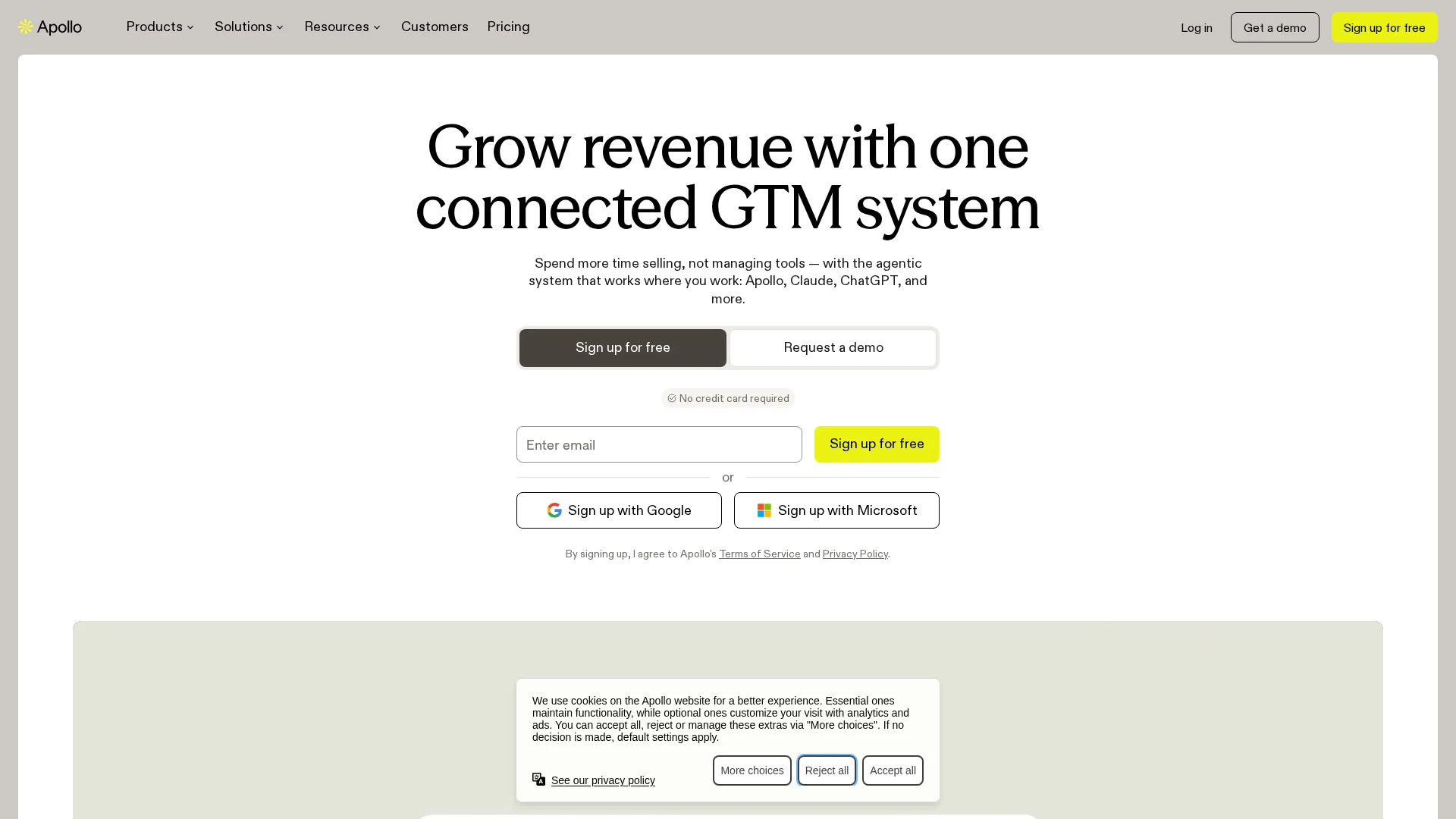
Apollo bundles prospecting data with B2B outreach automation. Its 210M+ contact database, built-in intent signals, sequencing, dialer, and light CRM suit startups and SMB teams that want one tool instead of several.
Key strengths
- 210M+ contacts with buyer intent signals and credit-based exports
- Multichannel sequences, AI writing, and a built-in dialer
- Free tier and self-serve setup, no sales call needed
- Paid plans from ~$49/seat/mo; ~$119/seat/mo Professional
Outreach
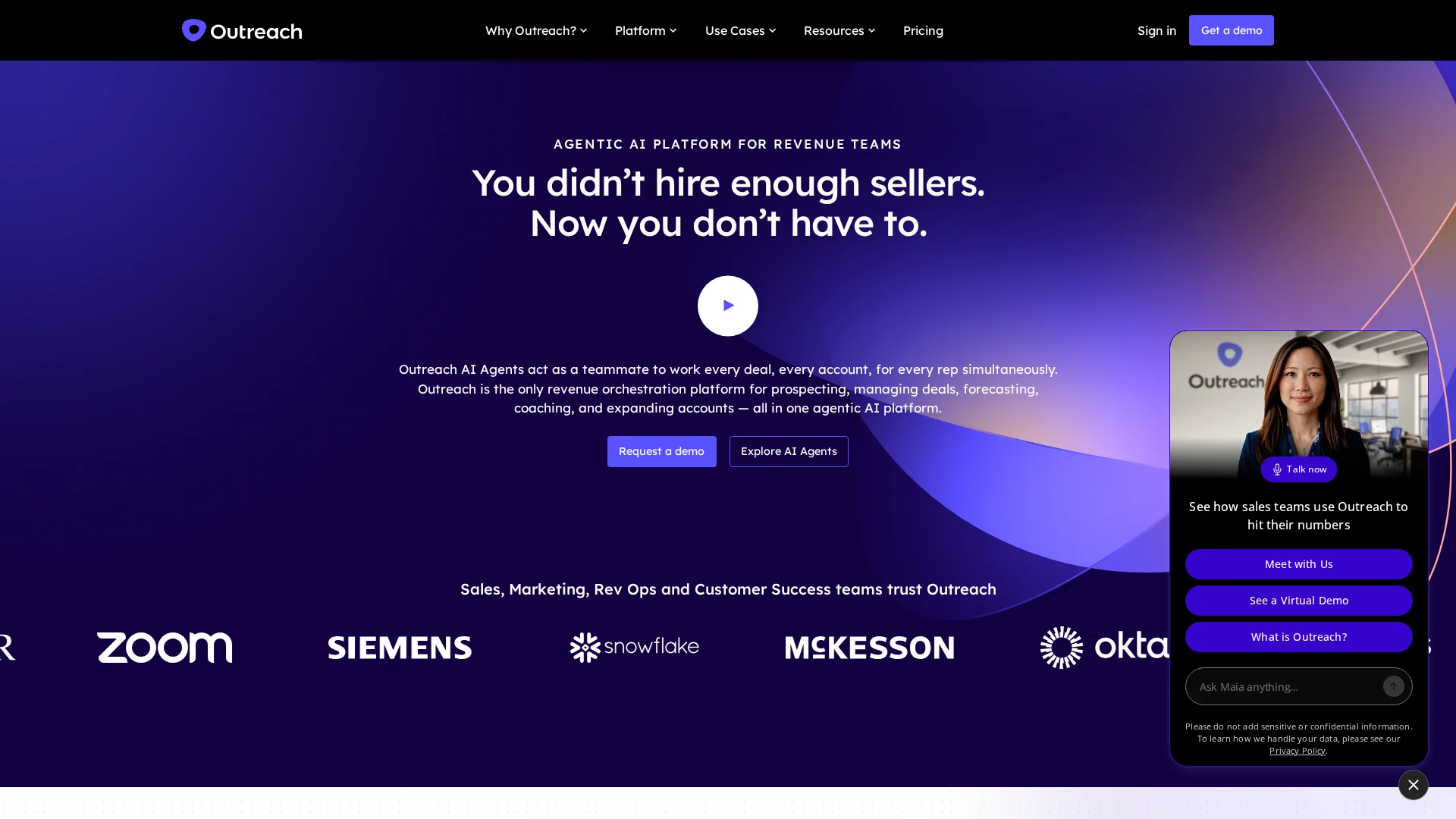
Outreach is an enterprise sales execution platform built around advanced sequences, account workflows, AI assistance, and governance. It relies on integrations like ZoomInfo for prospecting data, so it fits mid-market and enterprise revenue orgs that need account-level control.
Key strengths
- Advanced sequences, AI assist, deal execution, and mutual action plans
- Deep governance for larger revenue teams
- Annual contracts from ~$100/user/mo to $200-$300+/user/mo
- Sales-led rollout with onboarding fees often $5,000-$25,000+
Data and Prospecting Capabilities Compared
Contact volume and credit economics
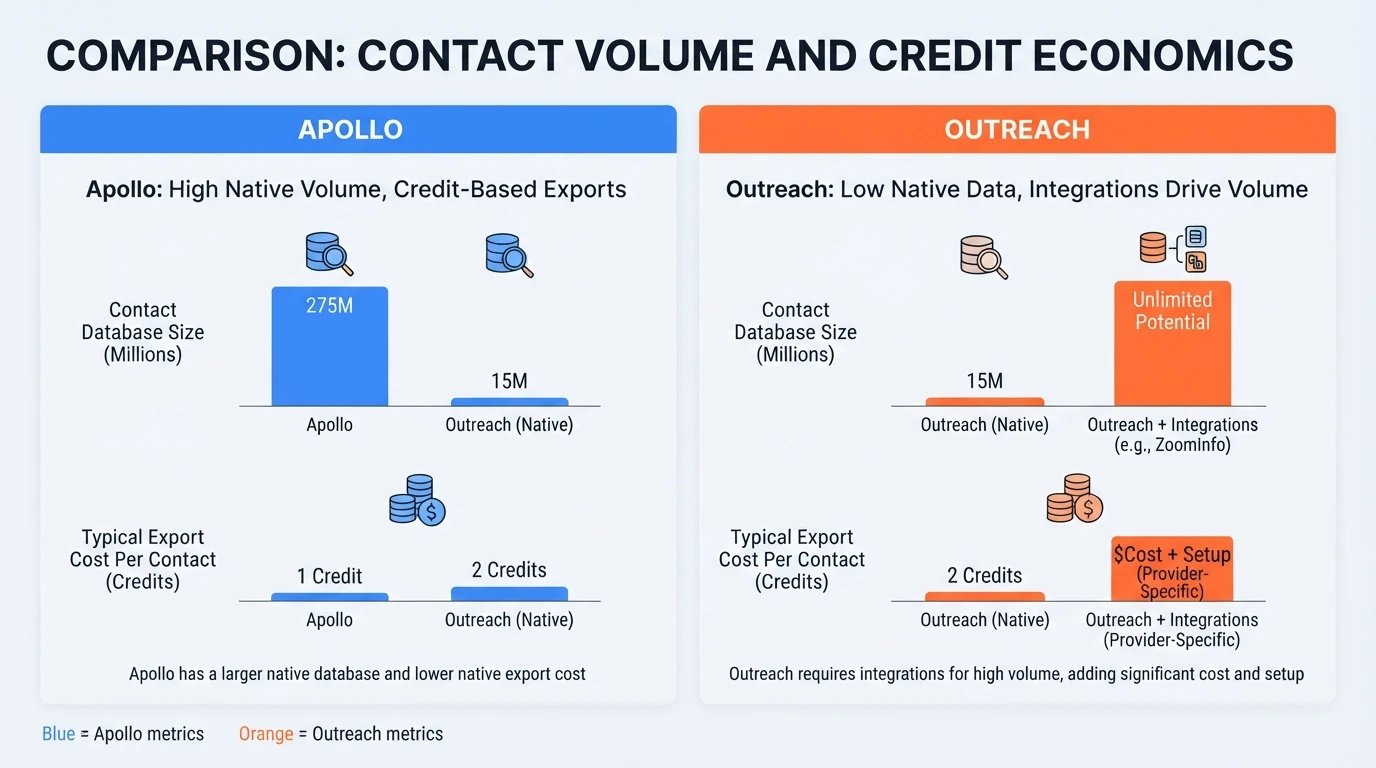
Apollo wins on native data. Its database holds over 210 million verified contacts with buyer intent signals, so SDRs can build lists and export them without a second tool. The catch is credits: each email unlock or export draws down a monthly quota, and heavy users outgrow their plan fast.
Outreach takes the opposite path. It carries little native data and leans on integrations with providers like ZoomInfo for prospecting. That adds cost and setup work, but it means enterprise teams can plug in the data source they already trust.
Self-hosted teams often bring their own lead lists instead, which keeps export credits out of the picture entirely.
Engagement, Workflows, and AI Capabilities

Sequence depth and execution governance
Both platforms handle multichannel sequences, but they differ in how much control they give you. Apollo lets SDRs spin up email, call, and LinkedIn steps fast, so small teams can launch campaigns the same day. Outreach goes deeper: its workflow builder supports branching logic, approvals, and admin-level rules that keep large teams consistent. On the AI side, both now draft and reply to messages; Outreach leans on AI for rep coaching, while Apollo focuses on automated personalization. If you want AI features without sending customer data to another vendor, a self-hosted option such as AgentSDR keeps that data in-house.
Pricing and Total Cost of Ownership
The sticker price hides the real cost. Apollo starts around $49 per seat per month, while Outreach typically runs $100-$300+ per user monthly on annual contracts.
Sticker price is only the entry fee. Total cost includes contracts, onboarding, and the seats you must buy.
Hidden costs and contract structure
Outreach locks you into annual agreements and sales-led onboarding, often adding $5,000-$25,000 in setup fees. Apollo offers a free tier and self-serve signup, so you can start small. Budget for seat minimums too: Apollo Professional requires at least three seats. Open-source options like AgentSDR shift costs to hosting instead of per-seat fees.
Which Should You Choose: Apollo or Outreach?
Pick Apollo if you want built-in prospecting data and a free tier. Pick Outreach if you need enterprise workflows and have the budget for annual contracts. Neither fits every team. If data control matters, self-hosted outbound sales platforms like AgentSDR keep sequences, calls, and your CRM in one workspace you own.
Alternatives worth shortlisting
Both tools sit in a busy market. Consider Lemlist or Instantly.ai for simple cold email, Clay for data enrichment, or Smartlead.ai for high-volume sending. Sales teams that want open-source flexibility can compare options in our guide to the best outbound sales platforms for Indian B2B teams. Match the tool to your team size and data needs.
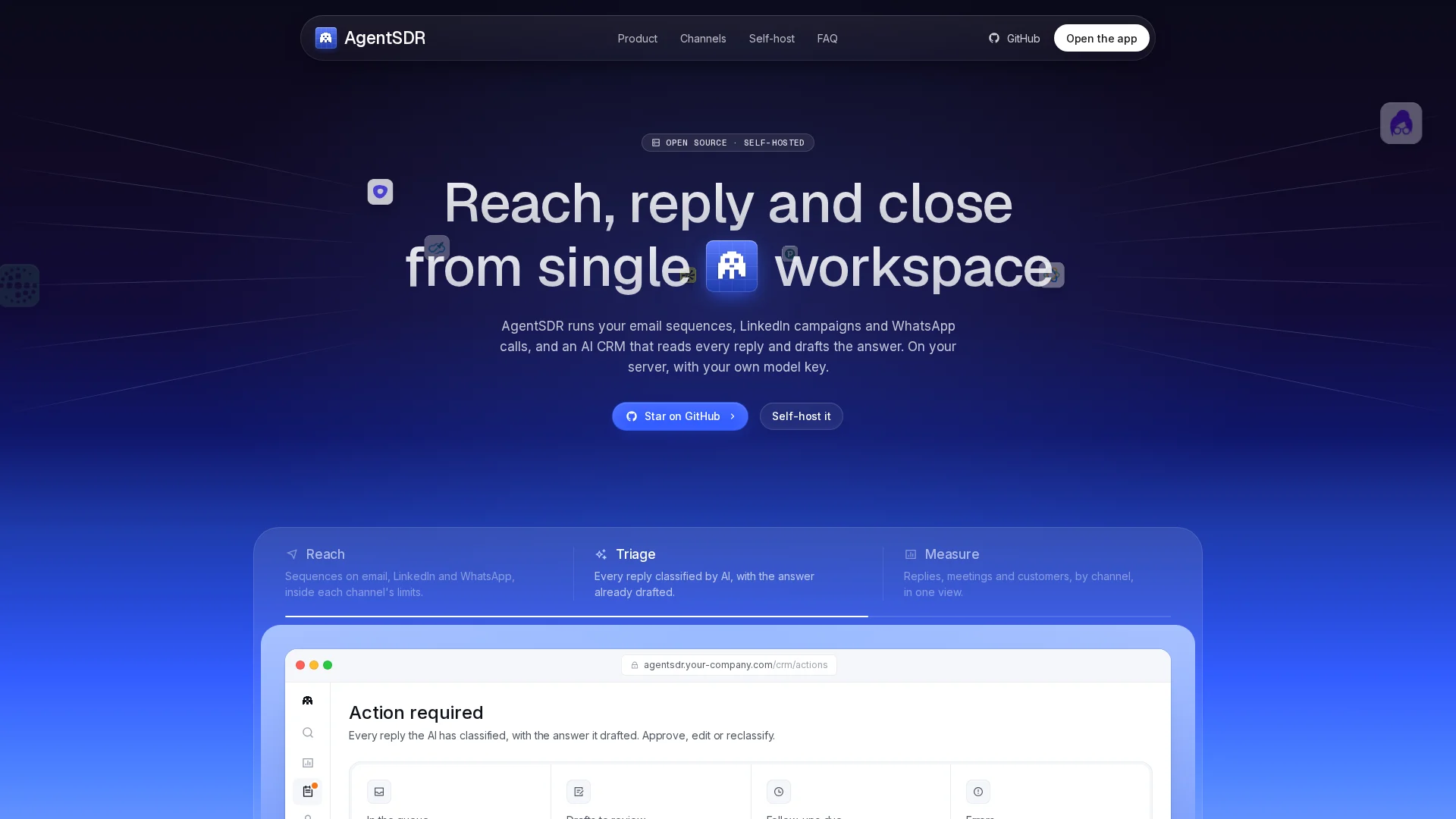
If Apollo's credits or Outreach's contracts don't fit, try AgentSDR. It's open-source, self-hosted, and keeps your outreach data fully under your control.
Frequently Asked Questions
Q1: Apollo vs Outreach: which software is better for prospecting?
Apollo. Its 210M+ contact database and intent signals mean no extra data tool. Outreach depends on integrations like ZoomInfo.
Q2: Does Apollo have a free plan?
Yes, plus self-serve signup. Paid plans start near $49 per seat monthly.
Q3: Is Outreach worth it for small teams?
Usually not. Annual contracts and onboarding fees suit larger revenue orgs.
Final Verdict
Apollo wins on built-in data and easy entry. Outreach wins for enterprise workflows and governance. If contracts, credits, or per-seat pricing don't fit your team, a self-hosted option like AgentSDR keeps costs low and data in your hands.