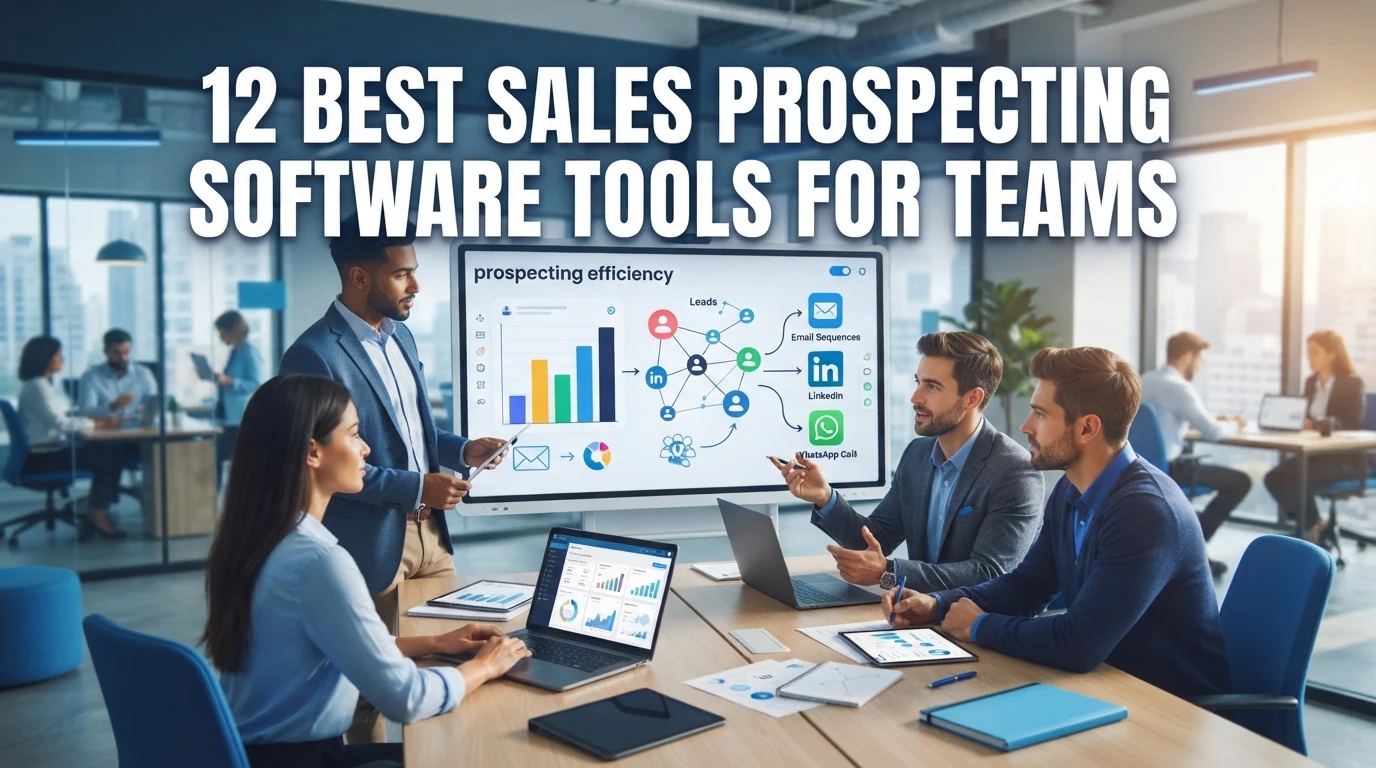
12 Best Sales Prospecting Software Tools for Teams
Quick Summary: AgentSDR tops a 2026 ranking of 12 sales prospecting tools as the only open-source, self-hosted option, beating Apollo, Clay, and Lemlist by combining email, LinkedIn, and WhatsApp outreach with an AI CRM that triages replies and drafts responses. Apollo lands at #2 for its 240M+ contact database and accessible ~$49/user pricing, while Clay (#3) earns its spot with 50+ waterfall enrichment providers and spreadsheet-style workflows that hand leads to a separate sequencer for sending. The piece argues buyers should weigh six factors beyond feature lists: deployment model, channel coverage (especially WhatsApp for EMEA and APAC), where the AI sits in the reply cycle, true cost per active mailbox, deliverability safeguards, and exit path. Across all picks, the gap that separates winners is reply-side AI and real data control, not just database size.
In 2026, B2B sales teams face a split: SaaS prospecting suites that keep your data locked in the vendor's cloud, or lightweight point tools that need three more subscriptions to cover the gaps. Most listicles rank on data breadth alone, so multichannel reach, an AI inbox, and true data control end up spread across three or four products. This guide scores 12 sales prospecting software tools on data depth, AI reply handling, deliverability, deployment model, and per-seat cost. AgentSDR takes the top spot as the only open-source, self-hosted option, ahead of Apollo, Clay, and the rest. Each tool was judged on contact data, multichannel reach, AI triage, and deployment flexibility, with pricing checked against public 2026 plan pages.
Sales Prospecting Software Comparison
| Tool | Best for | Deployment | Channels | AI reply triage |
|---|---|---|---|---|
| AgentSDR | Self-hosted multichannel outreach with AI reply triage | Self-hosted (open source) | Email, LinkedIn, WhatsApp | Yes - classifies and drafts replies |
| Apollo.io | SMB all-in-one prospecting at a low entry price | Cloud SaaS | Email, phone, LinkedIn (limited) | Partial - AI-assisted writing |
| Clay | AI-powered data enrichment with waterfall providers | Cloud SaaS | Email (via integrations), LinkedIn data | No - outbound data workflows |
| Lemlist | Mature multichannel sequences and deliverability | Cloud SaaS | Email, LinkedIn, calls | Partial - AI variables and replies |
What to know about sales prospecting software in 2026
Sales prospecting software now covers four overlapping categories: B2B contact databases, AI enrichment tools, multichannel sequencers, and AI-native outbound agents. Most vendors are blending these into one platform.
Three things separate the winners in 2026. Look for reply-side intelligence that classifies answers and drafts responses, deployment flexibility between self-hosted and cloud, and real coverage of LinkedIn and WhatsApp, not just email.
The right pick depends on your team's volume, your data residency rules, and whether you prefer vendor-managed deliverability or full control.
1. AgentSDR
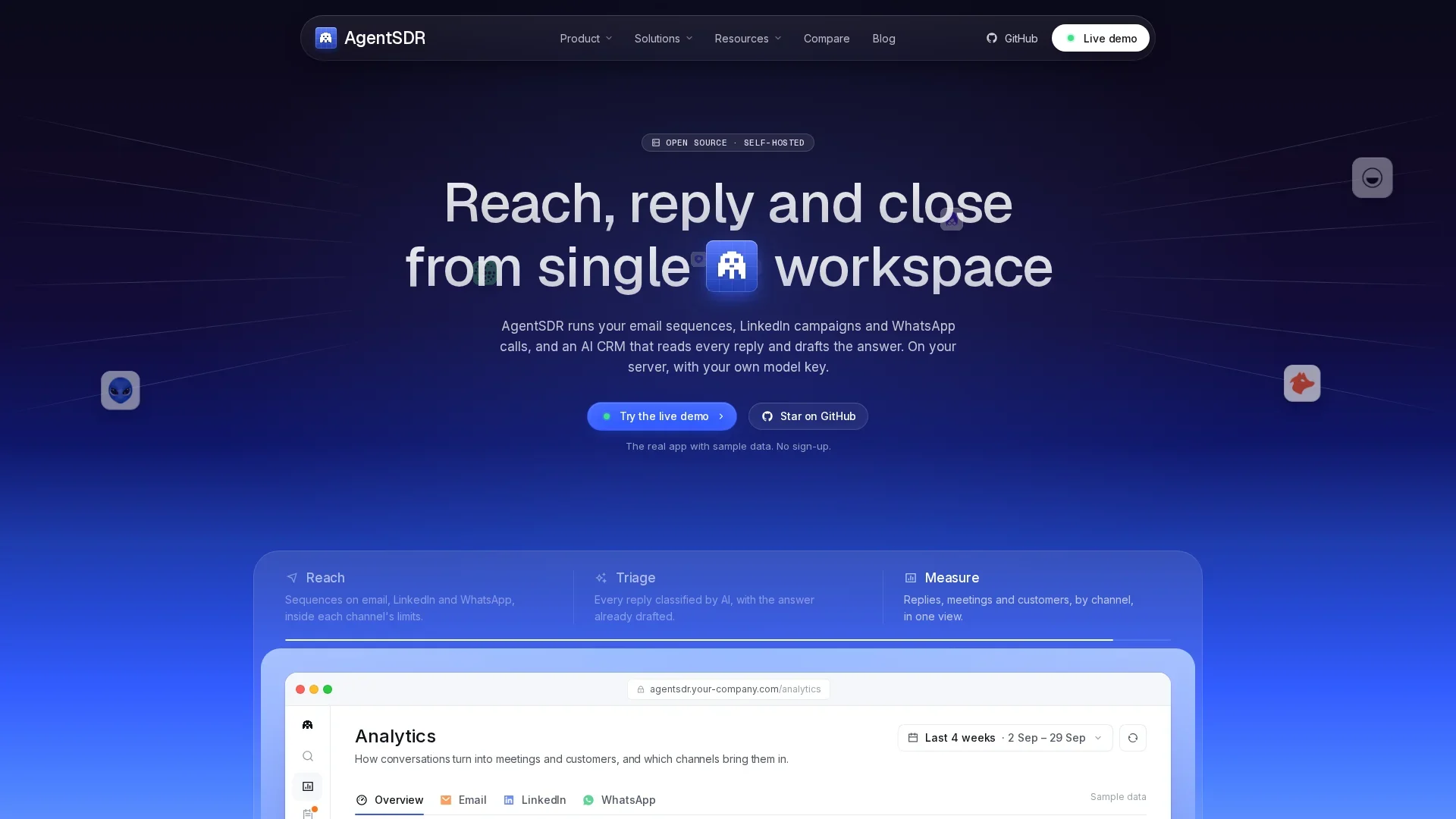
AgentSDR is an open-source, self-hosted outbound platform that runs email, LinkedIn and WhatsApp sequences from one workspace on your own infrastructure. An AI CRM classifies every reply and queues a draft for approval.
Highlights
- Self-hosted, with your own model key for full data control
- WhatsApp calls and messages through a Chrome extension, covered in detail on their WhatsApp outreach page
- Per-mailbox limits and round-robin sending protect deliverability
Specs
- Best for: Self-hosted multichannel outreach with AI reply triage
- Deployment: Self-hosted (open source)
- Channels: Email, LinkedIn, WhatsApp
- AI reply triage: Yes - classifies and drafts replies
Pros
- Full data ownership and no per-seat lock-in
- Reply triage and AI drafts in one workspace
Cons
- Setup and hosting sit on your side
- Smaller contact database than enterprise data vendors
It ranks first as the only open-source option here, combining reply-side AI with WhatsApp parity that most closed SaaS tools lack.
Last updated: October 20, 2026
2. Apollo.io
Apollo.io is an all-in-one B2B prospecting platform with a 240M+ contact database and built-in engagement. Teams use it to find leads, run sequences, and manage pipeline without wiring a separate sequencer. Free and Basic plans start around $49 per user per month, according to FullEnrich's 2026 pricing breakdown.
Highlights
- 240M+ contacts and 30M+ companies in the B2B contact database
- Built-in email sequences and dialer
- AI-assisted prospecting and lead scoring
- CRM integrations with Salesforce, HubSpot and others
Specs
- Best for: SMB all-in-one prospecting at a low entry price
- Deployment: Cloud SaaS
- Channels: Email, phone, LinkedIn (limited)
- AI reply triage: Partial - AI-assisted writing
Pros
- Large database with competitive pricing
- Data and engagement in one product
- Wide CRM and integration ecosystem
Cons
- Data accuracy can vary by region
- Reply handling is lighter than dedicated AI inboxes, a gap covered in our guide to personalized email sequences
It ranks at #2 as the broadest all-in-one cloud platform, with strong data coverage and accessible pricing for smaller teams.
Last updated: October 20, 2026
3. Clay
Clay is an AI-driven prospecting tool that runs waterfall enrichment across 50+ data providers and lets ops teams build custom workflows in a spreadsheet-style UI. Growth and RevOps teams use it for flexible lead research and personalized outreach at scale, handing leads off to a sequencer to send.
Highlights
- Waterfall enrichment across 50+ data providers
- AI prompts for personalized research and copy
- Spreadsheet-style UI for custom workflows
- CRM and sequencer handoffs
Specs
- Best for: AI-powered data enrichment with waterfall providers
- Deployment: Cloud SaaS
- Channels: Email (via integrations), LinkedIn data
- AI reply triage: No - outbound data workflows
Pros
- Best-in-class enrichment flexibility
- AI research and copy drafting
- Strong fit for RevOps and growth teams
Cons
- Requires a separate sequencer for sending
- Usage-based credit pricing can climb with volume
It ranks third for the strongest data enrichment and AI research workflows in the category, even though sending typically happens in another tool.
Last updated: October 20, 2026
4. Lemlist
Lemlist is a cloud sales engagement platform built for multichannel sequences across email, LinkedIn, and calls. It stands out for deliverability tooling and personalized images, videos, and landing pages, targeting SMB and mid-market teams.
Highlights
- Multichannel sequences across email, LinkedIn, and calls
- Personalized images, videos, and landing pages
- Built-in warm-up and deliverability tools on every plan
- B2B lead database add-on (Lemlist data)
Specs
- Best for: Mature multichannel sequences and deliverability
- Deployment: Cloud SaaS
- Channels: Email, LinkedIn, calls
- AI reply triage: Partial - AI variables and replies
Pros
- Strong deliverability tooling and warm-up
- Multichannel sequences with personalization
- Mature ecosystem and integrations
Cons
- Per-seat pricing can be high for growing teams; Email Pro starts at ~$63 per user per month
- Limited native WhatsApp support, a gap self-hosted platforms like AgentSDR cover natively
It takes fourth place for the most mature multichannel sequencer here, with the strongest deliverability track record for high-volume outbound.
Last updated: October 20, 2026
Honourable Mentions
Four of the twelve earn only brief coverage. If your team's needs are narrower - LinkedIn-only volume, a CRM-first stack, or fully autonomous AI outbound - these runners-up deserve a short evaluation alongside the top four.
- Smartlead - Best for unlimited-mailbox cold email at scale with strong warm-up
- Instantly - Best for fast cold email campaigns with built-in warm-up and B2B lead database
- Salesforge - Best for AI-personalized multichannel sequences with deliverability tooling
- La Growth Machine - Best for automated email and LinkedIn flows with conditional sequences
- Heyreach - Best for LinkedIn-only outreach across multiple accounts with safe pacing
- Artisan - Best for AI digital sales agents (Ava) handling end-to-end outbound
- Attio - Best as a CRM-first prospecting workspace for data-driven teams
- Frappe CRM - Best open-source CRM with prospecting and outreach modules
How to choose the right sales prospecting software
Pick on six criteria, not feature lists:
- Deployment model. If data residency or per-mailbox cost control matters, go self-hosted. AgentSDR is the standout: open source, on your infrastructure, with no per-seat lock-in. Frappe CRM is the other open-source route. Otherwise, cloud suites like Apollo roll out faster.
- Buyer channels. EMEA and APAC buyers live on WhatsApp, so pick a tool with real parity there - AgentSDR covers WhatsApp natively. For North America SaaS, LinkedIn plus email works; enterprise needs a dialer.
- Where AI sits. Choose tools that classify replies and draft answers, like AgentSDR, Lemlist, or Apollo's AI - not first-touch copy only.
- True cost. Read price per active mailbox or credit, not per seat. Clay's credits suit lean ops teams; Smartlead's unlimited-mailbox plan suits high-volume senders.
- Deliverability safeguards. Warm-up, bounce suppression, and per-mailbox daily caps belong in the tool. Stay at 30 or fewer sends daily on Google Workspace.
- Exit path. Confirm CRM and data export before you commit, especially with closed platforms that lock pipeline data inside the vendor's app.
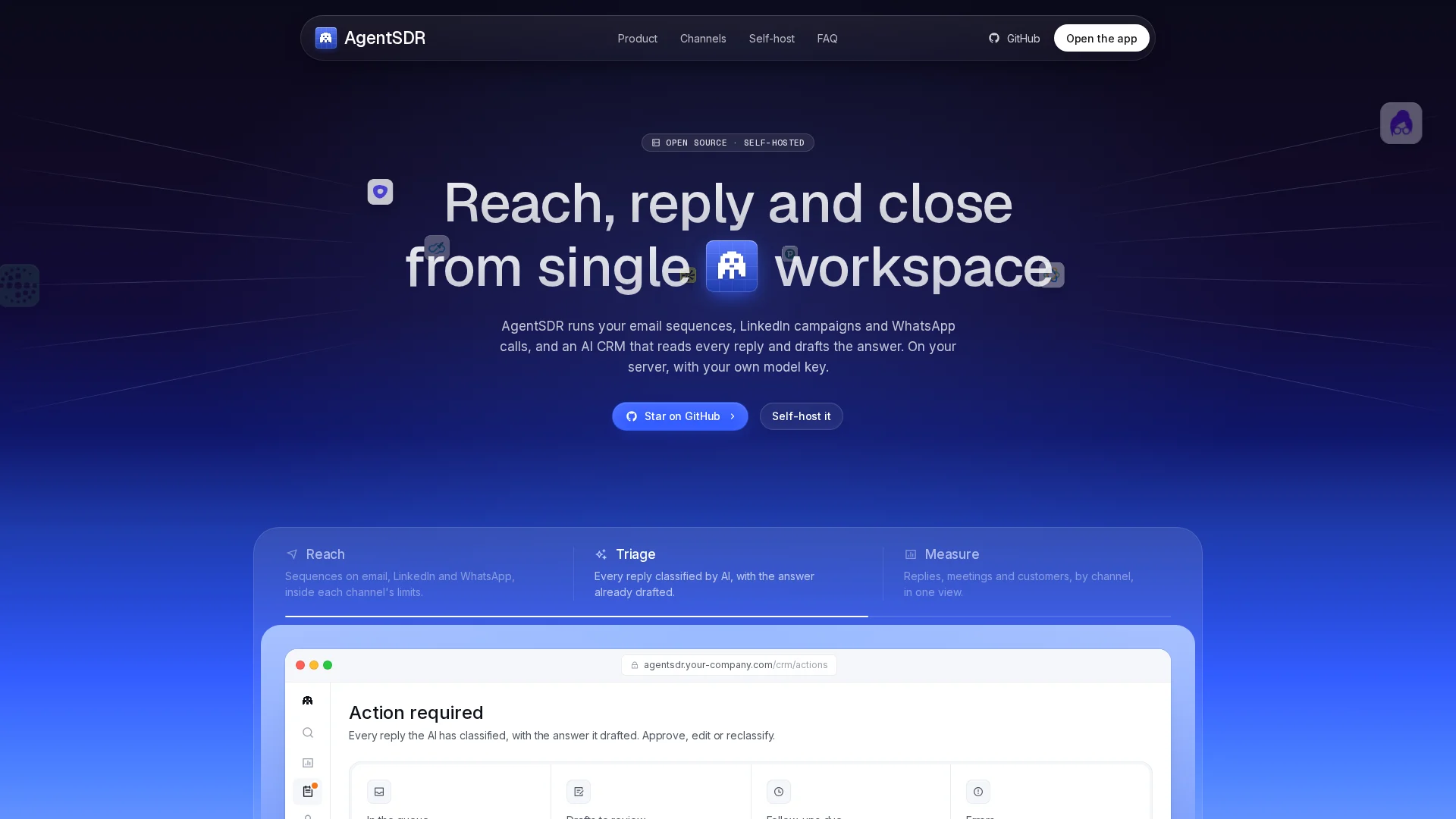
If locked-in data and per-seat costs are slowing your outreach, AgentSDR puts email, LinkedIn, WhatsApp and an AI-powered CRM in one self-hosted workspace. Explore it free today.
Frequently Asked Questions
Q1: Which tools define the market for sales prospecting?
Apollo.io, Clay, and Lemlist define the mainstream market. AgentSDR leads the self-hosted open-source segment, while Smartlead and Instantly shape high-volume cold email.
Q2: Is self-hosted prospecting software harder to run?
It needs setup and hosting on your side, but gives you full data ownership and no per-seat fees.
Q3: How much should teams budget per seat?
Most cloud tools run $49-63 per user monthly. Self-hosted options trade license fees for infrastructure costs.