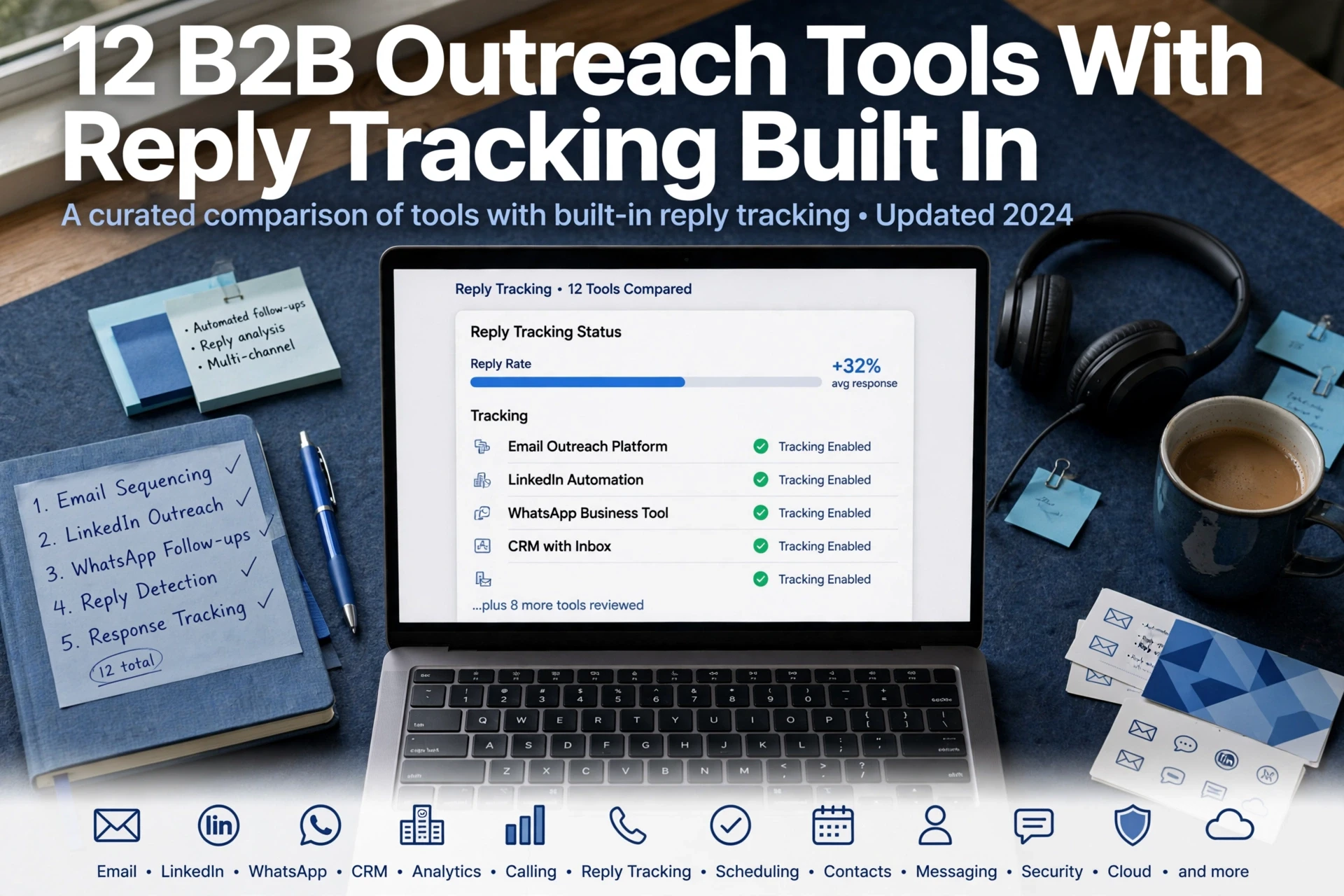
Why Outbound Sales Teams Are Consolidating Their Stack

Quick Summary: Outbound sales teams are consolidating tools because fragmented analytics create conflicting reply, meeting, and pipeline numbers, not simply because licenses cost too much. A unified stack should bring email, LinkedIn, WhatsApp, CRM records, and attribution under one source of truth, with self-hosting adding control over customer data. AgentSDR is presented as one self-hosted workspace that covers these channels, but teams should inventory tool ownership, costs, features, and exported data before cutting anything.
Outbound sales teams are retiring point solutions faster than they add new ones, and price is not the trigger. Outbound campaign analytics no longer reconcile across the tools a team owns, so leaders cannot tell if a campaign works or which channel deserves the next rupee. This guide covers the four real consolidation drivers, why analytics fragmentation beats seat count as the fault line, and what a unified outbound stack must own: email, LinkedIn, WhatsApp and CRM records under one analytics layer.
Why Outbound Teams Are Consolidating Right Now
Sales teams are folding point solutions into fewer tools because four forces are converging at once: rising per-seat licence costs, overlapping capabilities across tools, new data privacy rules, and an analytics layer that only works when email sequences, LinkedIn campaigns and WhatsApp calls share one source of truth. When every channel reports separately, pipeline attribution breaks. Outbound campaign analytics needs unified data to be trustworthy.

The four forces behind the consolidation wave
- Cost pressure: seven subscriptions cost more than one platform.
- Overlapping features: sequencers duplicate what CRMs now do.
- Data control: self-hosted options keep customer data in-house.
- Unified reporting: split metrics hide the real reply rate.
The warning signs teams recognise too late
A sales stack audit usually reveals the damage late: duplicate contacts, conflicting meeting rate numbers and tools nobody logged into since Q2. Teams comparing options often start with guides to outbound sales platforms before deciding what to cut.
Loading...
The Analytics Problem Hiding Inside Every Sprawling Stack
Outbound campaign analytics is the practice of measuring opens, replies, meetings and revenue across every outreach channel. It breaks when each tool counts those numbers on its own:
- Email sequences report opens and reply rate in the sequencer
- LinkedIn campaigns live in a separate connection tool
- WhatsApp calls leave almost no data trail
- Pipeline attribution sits in the CRM, disconnected from all of it
The real cost is not the licences. It is having two numbers for the same metric and no way to tell which one is true. When the CRM says a deal came from email but the sequencer never logged the reply, reps stop trusting reports, so forecasting turns into guesswork.
That is why teams consolidating their outbound platform usually start with the data layer, not the price tag. A unified outbound stack gives every channel one shared source of truth for contact and campaign data, which is exactly what fragmented point solutions cannot deliver.
What a Consolidated Outbound Stack Has to Own
A consolidated outbound platform should include, at minimum:
- Email sequences with deliverability controls
- LinkedIn campaigns and WhatsApp calls in the same cadence
- An AI-powered CRM that doubles as the source of truth for contacts
- Pipeline attribution that ties replies and meetings back to the campaign
If a tool covers only one channel, it is a point solution, and point solutions are what teams are replacing.

Multi-channel execution and CRM records in one workspace
Execution and records belong together. When sequences live in one tool and the CRM in another, every reply has to be synced, and syncs break quietly. A unified workspace keeps campaign data and contact data in one place, so attribution and reply classification work off the same record.
Why self-hosted changes the consolidation maths
Consolidation usually means paying one vendor more per seat. Self-hosting flips that: you pay for infrastructure, not per-seat licences that grow with your team. It also keeps customer data and AI usage inside your own environment, which matters for teams with strict data rules. One open-source platform can cover sequences, channels and CRM, so the savings compound as headcount grows.
How the Stack Got Here
From single-channel sequencers to category-by-category sprawl
Early outbound teams ran one email sequencer and a spreadsheet. Then data enrichment, LinkedIn automation, dialers and CRM tools each arrived as separate buys. Now a five-person SDR team can pay for eight point solutions with overlapping capabilities, and nobody owns the data flowing between them.
Why the first step is an inventory, not a cancellation
Cut tools before you know what they do, and you lose pipeline attribution. A proper sales stack audit starts with a table of what you actually run.
| Column | Why it matters |
|---|---|
| Tool and owner | Who renews it |
| Channels covered | Reveals overlap |
| Monthly cost | Sizes licence reclamation |
| Data exported | Shows exit risk |
Trim last, not first.
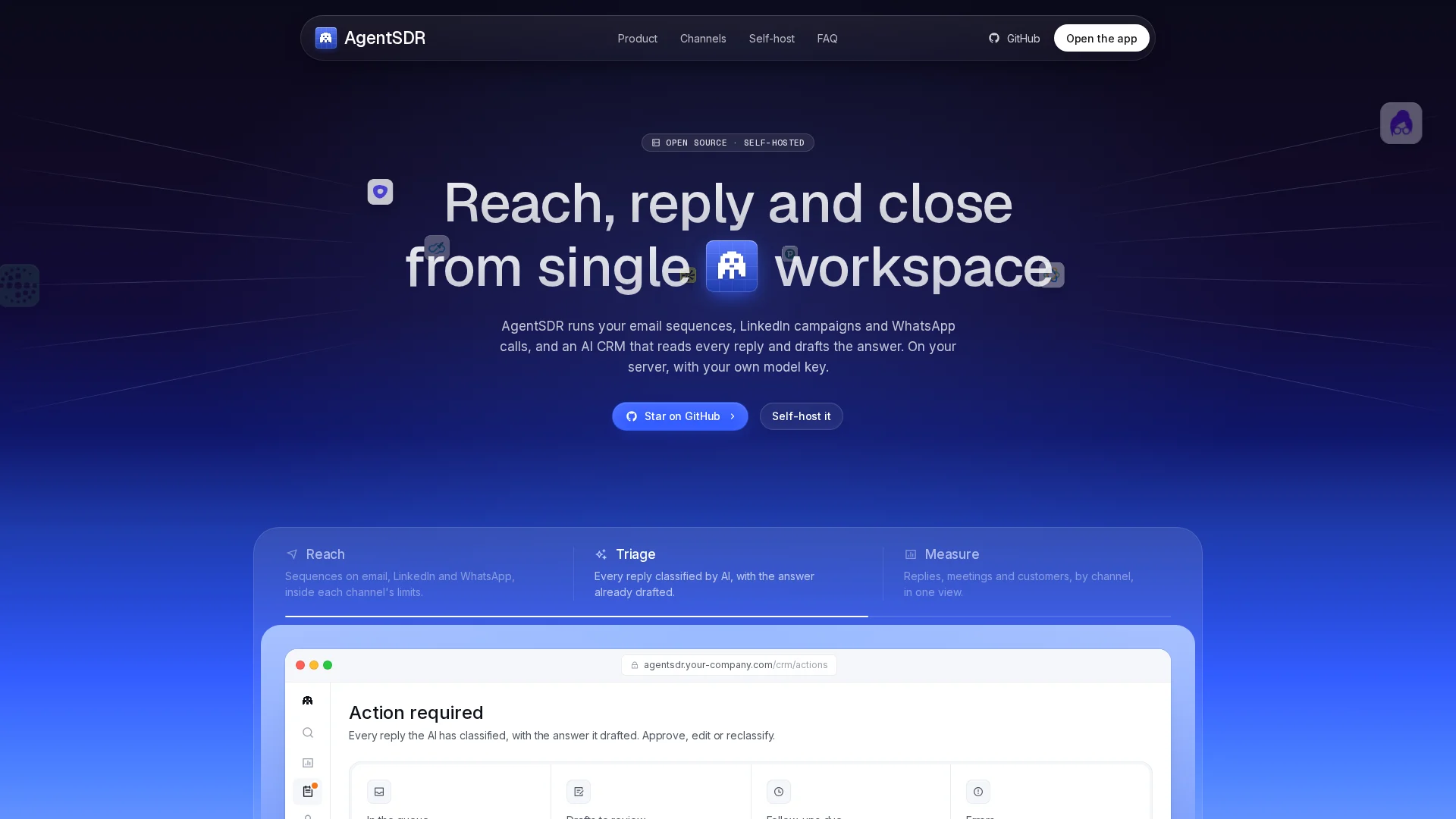
If scattered tools are slowing your outreach, see how one workspace replaces them. AgentSDR combines email, LinkedIn, WhatsApp and CRM in a self-hosted platform you control.
Frequently Asked Questions
Q1: Why are sales teams consolidating outbound platforms into fewer tools?
Four forces drive it: per-seat licence costs, overlapping capabilities, data privacy rules, and broken outbound campaign analytics. When every tool reports separately, pipeline attribution fails and reps stop trusting the numbers.
Q2: Is consolidation mainly about saving money on licences?
No. Cost matters, but the deeper driver is analytics. A unified outbound stack gives every channel one source of truth for contact and campaign data, so reply rate and meeting numbers finally reconcile.
Q3: What should a consolidated outbound platform include?
At minimum: email sequences with deliverability controls, LinkedIn campaigns and WhatsApp calls in one cadence, an AI-powered CRM as the source of truth, and pipeline attribution tying replies back to campaigns.
Q4: How does self-hosting change the consolidation decision?
Self-hosting charges for infrastructure instead of per-seat licences, so savings grow with headcount. It also keeps customer data and AI usage inside your own environment, which suits teams with strict data rules.
Q5: What is the first step in a sales stack audit?
Build a tool inventory before cancelling anything. List each tool's owner, channels covered, monthly cost and exported data. That reveals overlap and exit risk, so you trim last, not first.
Conclusion
Consolidation is really an analytics fix. When email sequences, LinkedIn campaigns, WhatsApp calls and CRM records sit in one unified outbound stack, reply rate and pipeline attribution finally reconcile. A self-hosted platform adds data control, so teams trim tool sprawl without losing the numbers they trust.