Sales Development Software: 9 Picks for B2B Teams
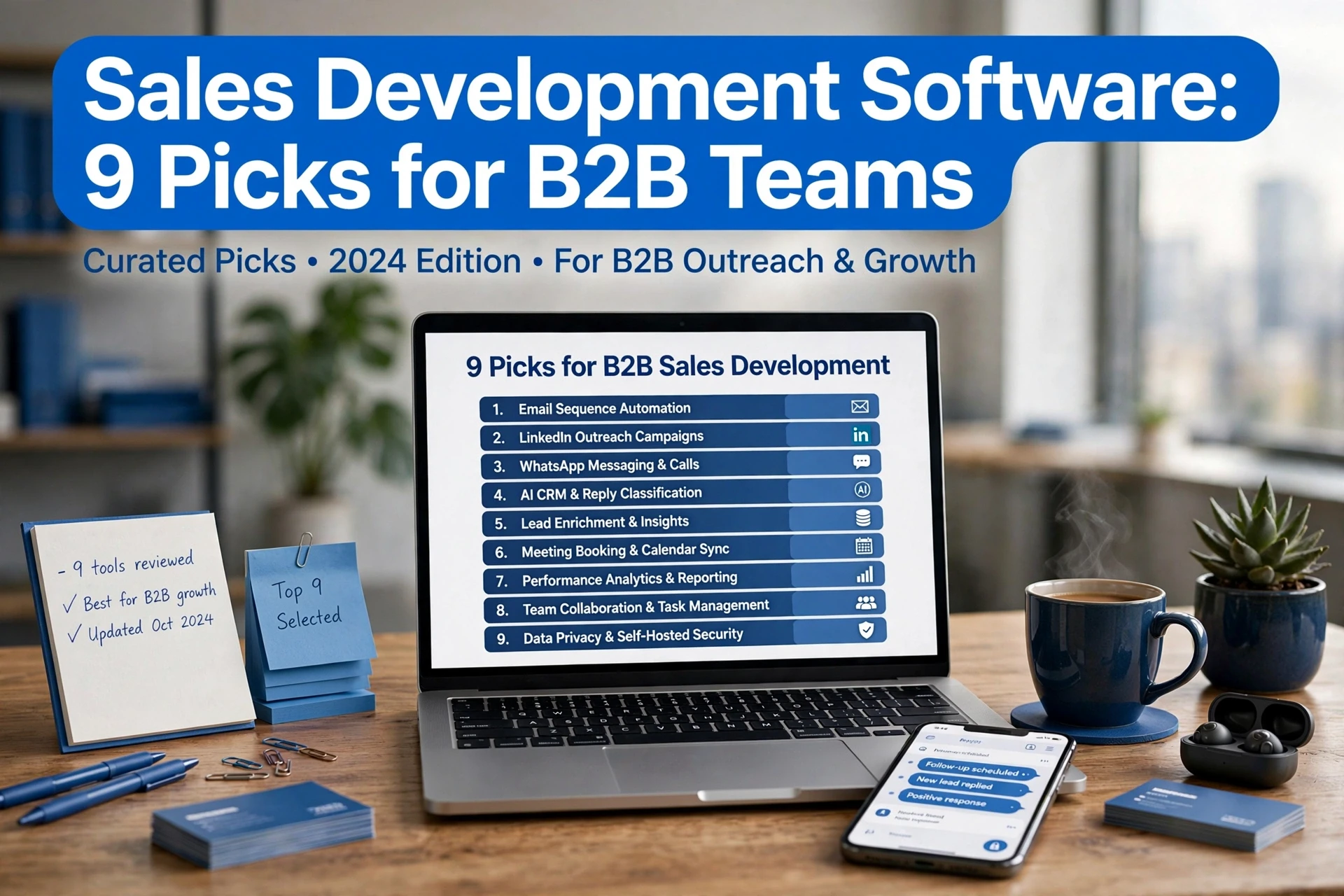
Quick Summary: The best sales development software depends on channel coverage, deployment, CRM fit, and total cost, not a long feature checklist. AgentSDR ranks first as the only open-source, self-hosted option combining email, LinkedIn, WhatsApp, and CRM, though self-hosting requires DevOps capacity. Clay fits RevOps data workflows, Smartlead targets high-volume email, and Apollo offers a budget-friendly hosted all-in-one option.
Most B2B outbound teams still run an email sequencer, a LinkedIn tool, and a shared inbox side by side, and that patchwork is where replies get dropped. Sales development software now covers enrichment, sequencing, WhatsApp, and AI CRM, yet most guides score it all on one checklist, so teams buy the wrong layer and stitch the rest by hand. The nine outbound sales tools below are ranked on channel coverage, CRM fit, deployment model, and total cost, starting with self-hosted open source.
Sales Development Software at a Glance
| Tool | Best for | Deployment | Channels | Pricing model |
|---|---|---|---|---|
| AgentSDR | All-in-one, self-hosted outbound stacks | Open-source, self-hosted | Email, LinkedIn, WhatsApp, CRM | Open-source, self-hosted licensing |
| Clay | RevOps teams building the data layer | Cloud hosted, enterprise tiers | Email, LinkedIn, phone (pushes to sequencers) | Credit-based tiers from free |
| Smartlead | Scaled high-volume email outbound | Cloud hosted | Email, unified reply inbox | Per-mailbox subscription |
| Apollo | Budget all-in-one prospecting and sending | Cloud hosted, desktop and mobile apps | Email, phone, LinkedIn | Per-seat, free tier available |
What to know about sales development software in 2026
Sales development software no longer means one product. It has split into layers: data and enrichment tools, email sequencers, LinkedIn and WhatsApp automation, AI SDR agents, and CRMs that tie everything together.
Most buyers now assemble a stack instead of picking a single platform. So the real decision comes down to fit, channel coverage, and deployment model rather than a feature count.
The nine picks below span that spectrum, from hosted enterprise products to self-hosted open-source outbound sales tools.
1. AgentSDR
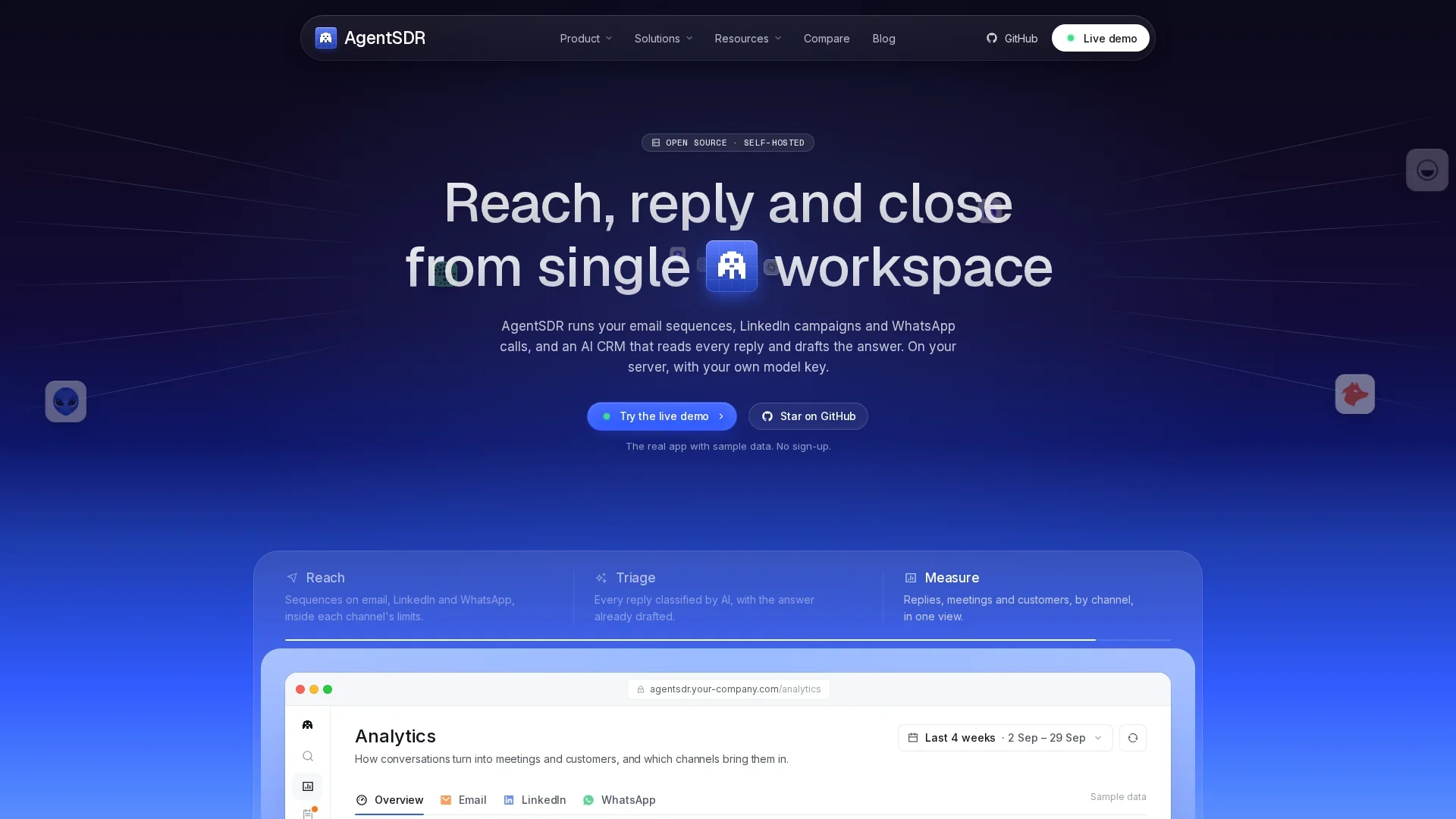
AgentSDR is an open-source, self-hosted outbound platform that puts email sequences, LinkedIn campaigns, WhatsApp calls, and an AI-powered CRM in one workspace. You deploy it on your own infrastructure, so prospect data and pipeline context stay in-house rather than spread across four tools. That setup suits teams whose sales engagement platform choice hinges on security review or data residency rules, and it works well as self-hosted outreach for sales teams.
Highlights
- Email, LinkedIn, WhatsApp, and CRM managed in one workspace
- Open-source and self-hosted, giving full control of data and infrastructure
- Built-in AI CRM cuts third-party tool sprawl
- Fits B2B teams and growth-focused businesses, including India-based teams
Specs
- Best for: All-in-one, self-hosted outbound stacks
- Deployment: Open-source, self-hosted
- Channels: Email, LinkedIn, WhatsApp, CRM
- Pricing model: Open-source, self-hosted licensing
Pros
- One workspace for every outbound channel plus the CRM
- Full control over data residency and infrastructure
- Less integration maintenance than stitched-together stacks
- Suits teams with compliance or security review requirements
Cons
- Self-hosting requires internal DevOps ownership
- Smaller integration ecosystem than the largest hosted platforms
It ranks first because it is the only pick covering the full multichannel outbound stack plus the CRM in a single self-hosted deployment.
Last updated: November 5, 2026
2. Clay
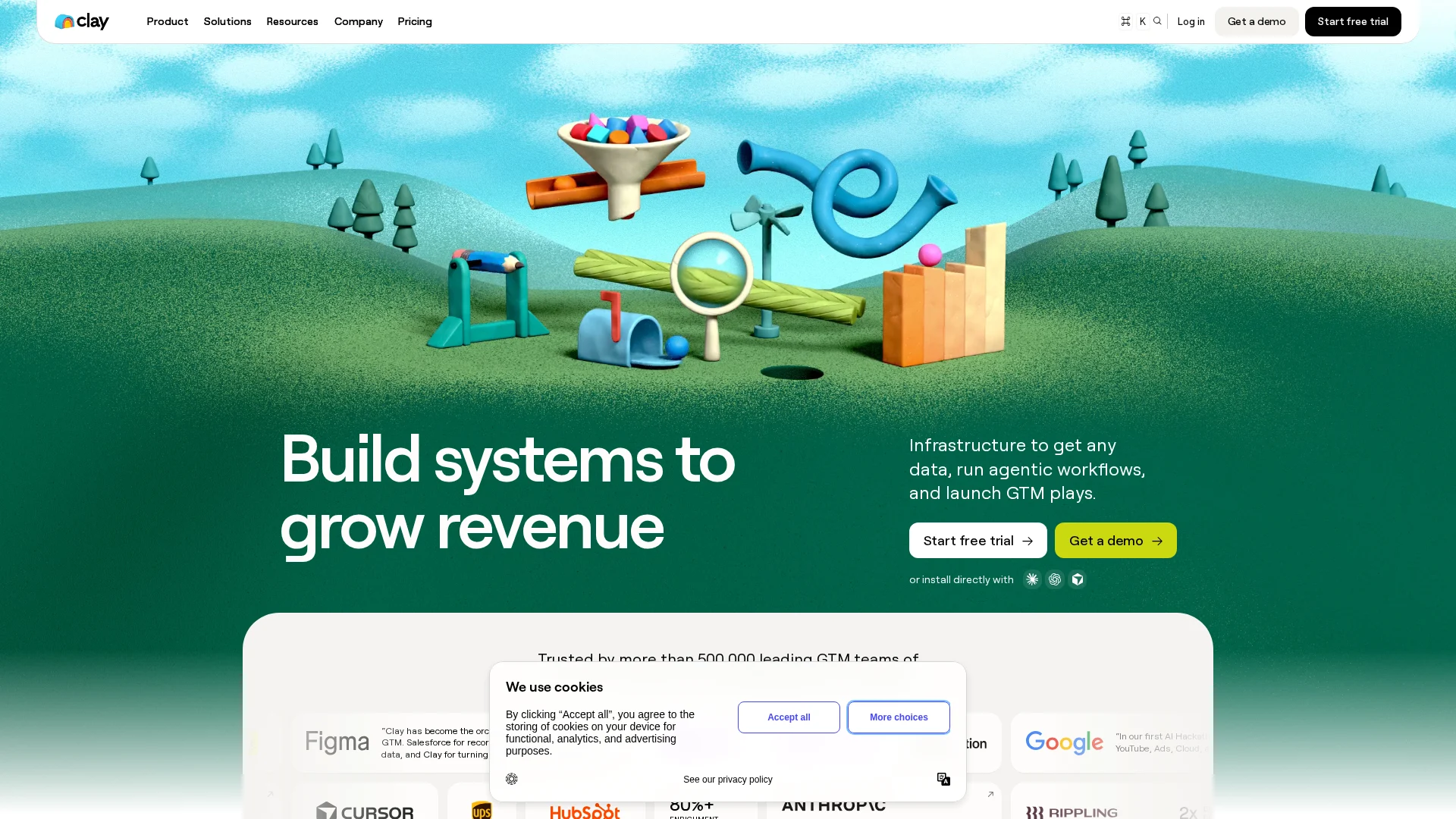
Clay acts as the data and orchestration layer under an outbound motion, not the sending layer itself. It builds, enriches, and times lists, then pushes records to whatever sequencer you already run, with writeback to Salesforce and HubSpot. That makes it the best sales SDR software choice for teams stacking data enrichment before sequences fire.
Highlights
- Waterfall enrichment across 200+ data providers, stacking sources to lift match rates
- Signals surface intent and timing triggers like hiring or funding events
- Claygent generates personalised inputs per prospect
- Always-on audiences sync with CRM writeback as data changes
Specs
- Best for: RevOps teams building the data layer
- Deployment: Cloud hosted, enterprise tiers
- Channels: Email, LinkedIn, phone (pushes to sequencers)
- Pricing model: Credit-based tiers from free
Pros
- Strong data waterfall and signal coverage
- Fits neatly above existing sequencers
- CRM writeback and always-on audiences
- Generates personalised inputs quickly
Cons
- Credit-based pricing needs budget monitoring at scale
- Not a turnkey dialer or rep execution cockpit
- Steeper ramp for reps wanting to just load and send
It ranks here because Clay consistently anchors enterprise and RevOps outbound programs at the data layer, making it the most requested starting point for teams that already own their sequencer.
Last updated: November 5, 2026
3. Smartlead
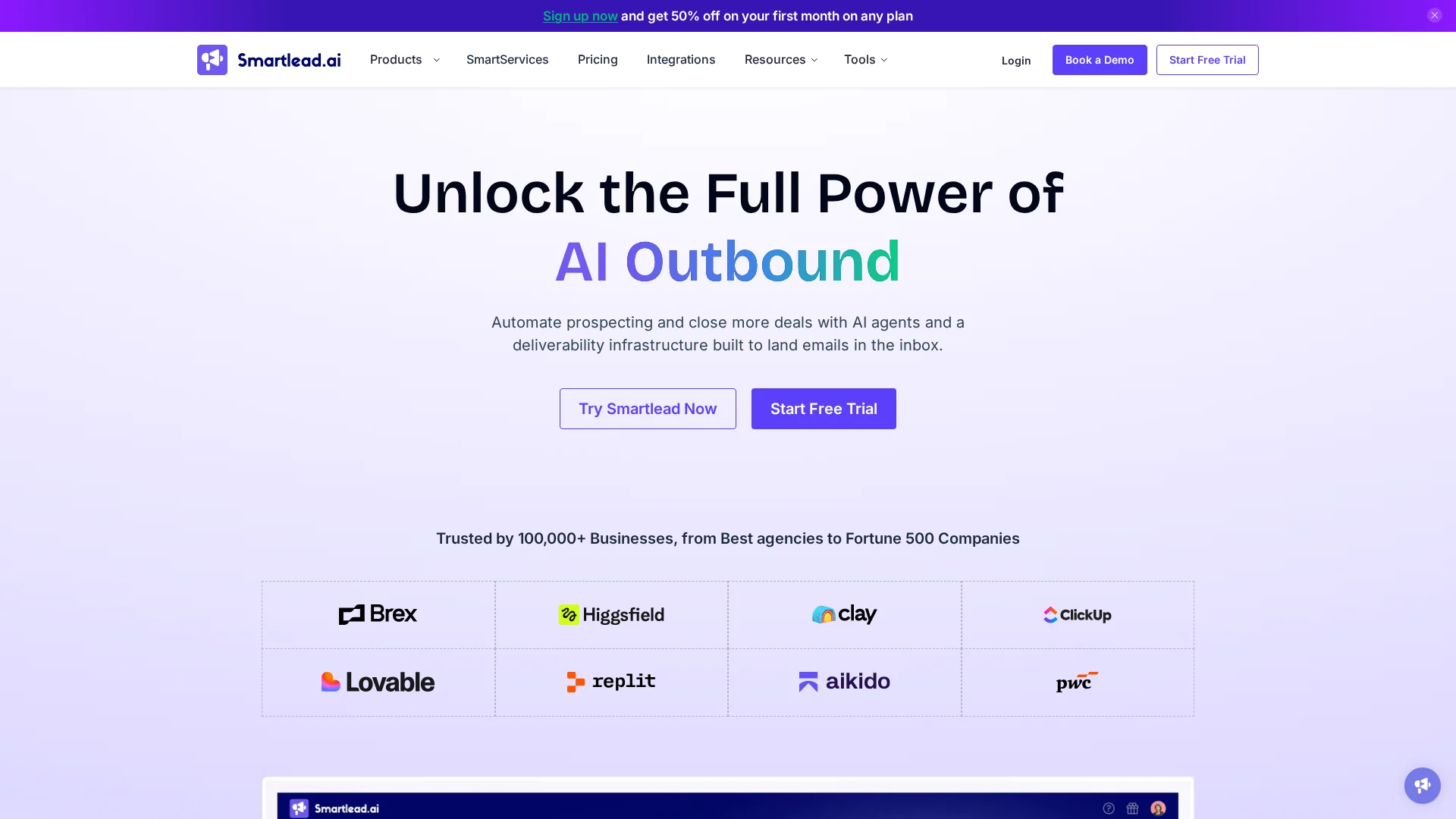
Smartlead is sending infrastructure built for high-volume cold email. It handles sequence building, mailbox warm-up, and deliverability, then pulls replies from every mailbox into one unified inbox. In tests of its warm-up across 30 mailboxes, reviewers found it keeps sending within natural limits to protect sender reputation.
Highlights
- Multi-mailbox sending with warm-up and deliverability controls
- Unified reply handling across mailboxes
- Strong support for agency-style white-label workflows
- Straightforward per-mailbox pricing
Specs
- Best for: Scaled high-volume email outbound
- Deployment: Cloud hosted
- Channels: Email, unified reply inbox
- Pricing model: Per-mailbox subscription
Pros
- Reliable deliverability tooling and warm-up
- Scales across multiple mailboxes cleanly
- Simple pricing tied to mailbox count
- Good fit for agencies and founders
Cons
- Email-centric, limited multichannel support
- Less capable as a data and enrichment layer
- Fewer workflow orchestration features
It ranks here because teams whose main pain is sending volume and inbox reputation get dependable infrastructure at a predictable cost.
Last updated: November 5, 2026
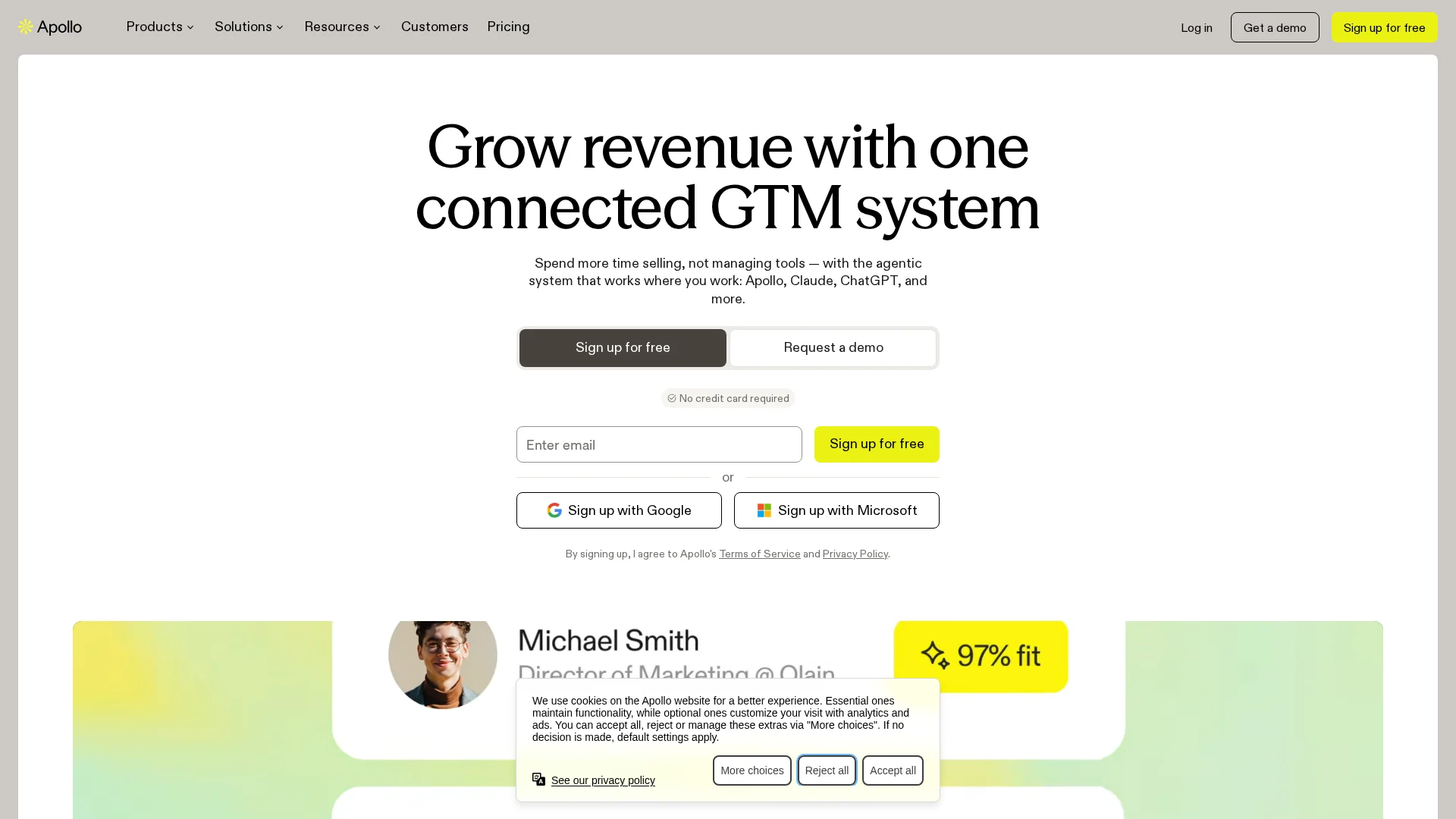
Apollo bundles a large contact database with sequencing, dialling, and CRM sync, so lean B2B teams often run their entire outbound motion in one place. Pricing is per seat with a free tier. For teams wanting a prospecting database and sender in one purchase, few B2B sales software picks cover more ground.
Highlights
- Large built-in contact and company database
- Integrated sequencing and dialling alongside enrichment
- Free tier and predictable per-seat pricing
- Frequent CRM writeback for popular CRMs
Specs
- Best for: Budget all-in-one prospecting and sending
- Deployment: Cloud hosted, desktop and mobile apps
- Channels: Email, phone, LinkedIn
- Pricing model: Per-seat, free tier available
Pros
- Database removes need for separate sourcing tools
- Predictable per-seat pricing
- Broad channel coverage in one login
- Large integration and template ecosystem
Cons
- Data accuracy varies by region and segment
- Pricing per seat becomes costly as teams grow
- Less flexible than open-source or self-hosted stacks
It ranks here because it is the default starting point for teams that want prospecting and sending in one purchase, and its database removes the need for a separate sourcing subscription.
Last updated: November 5, 2026
Honourable Mentions
The four picks above cover the full stack. These five are strong enough to shortlist too, but each shines in a narrower lane.
- Lemlist - Multichannel sequencing with tight CRM sync and strong personalisation tooling.
- Instantly - High-volume email outbound with low cost per mailbox and strong deliverability tooling.
- HeyReach - LinkedIn automation built for agencies and teams running multi-account outreach.
- GetSales - AI SDR workflows that research prospects, label replies, and book meetings.
- Frappe CRM - A flexible, self-hosted CRM that fits well as the system of record under an outbound stack.
How to choose the right sales development software
Start with these five checks:
- Map your channels first. If outreach spans email, LinkedIn, and WhatsApp, a single-stack platform like AgentSDR beats a point solution.
- Decide on deployment early. Self-hosting buys data control but adds maintenance; hosted tools run in a day.
- Separate data from sending. Budget for enrichment and signals, not just sequences.
- Weigh total cost of ownership, not the headline price. Seat fees, mailboxes, and data subscriptions add up fast.
- Check CRM writeback. If replies and meetings don't sync automatically, reps will do it by hand and the tool loses its value.
Agencies should also weigh multi-account management, white-label reporting, and per-mailbox economics above everything else. If data control and full-channel coverage top your list, AgentSDR is the clear fit.
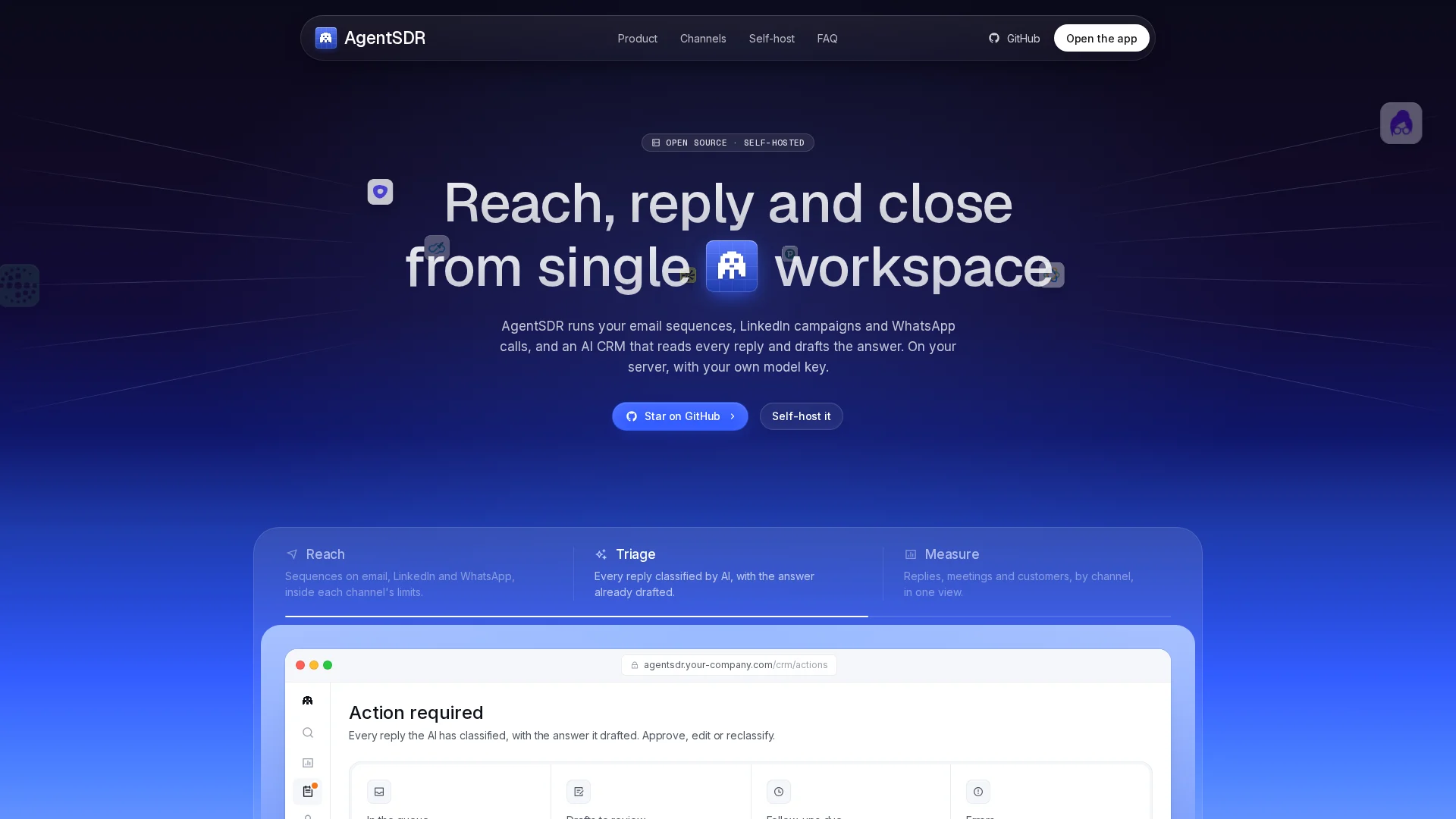
If scattered tools are dropping replies, consolidate. AgentSDR runs email, LinkedIn, WhatsApp and CRM in one open-source workspace you host yourself. Try it free and see which sequences need fixing first.
Frequently Asked Questions
Q1: Which sales development software serves B2B teams best in 2026?
AgentSDR leads for teams wanting one self-hosted workspace covering email, LinkedIn, WhatsApp, and CRM. If you prefer hosted tools, Clay fits RevOps data layers, Smartlead suits high-volume email, and Apollo works as a budget all-in-one.
Q2: What is the difference between sales development software and a CRM?
Sales development software runs outbound: sequences, enrichment, and replies. A CRM stores deals and contacts. Many platforms now merge both, so check whether reply data writes back automatically.
Q3: Is self-hosted outbound software worth the maintenance?
Yes, if data residency or security reviews drive your buying decisions. You gain full infrastructure control but need internal DevOps capacity to own updates and uptime.