Outreach vs Apollo: Platform Comparison for Sales Growth
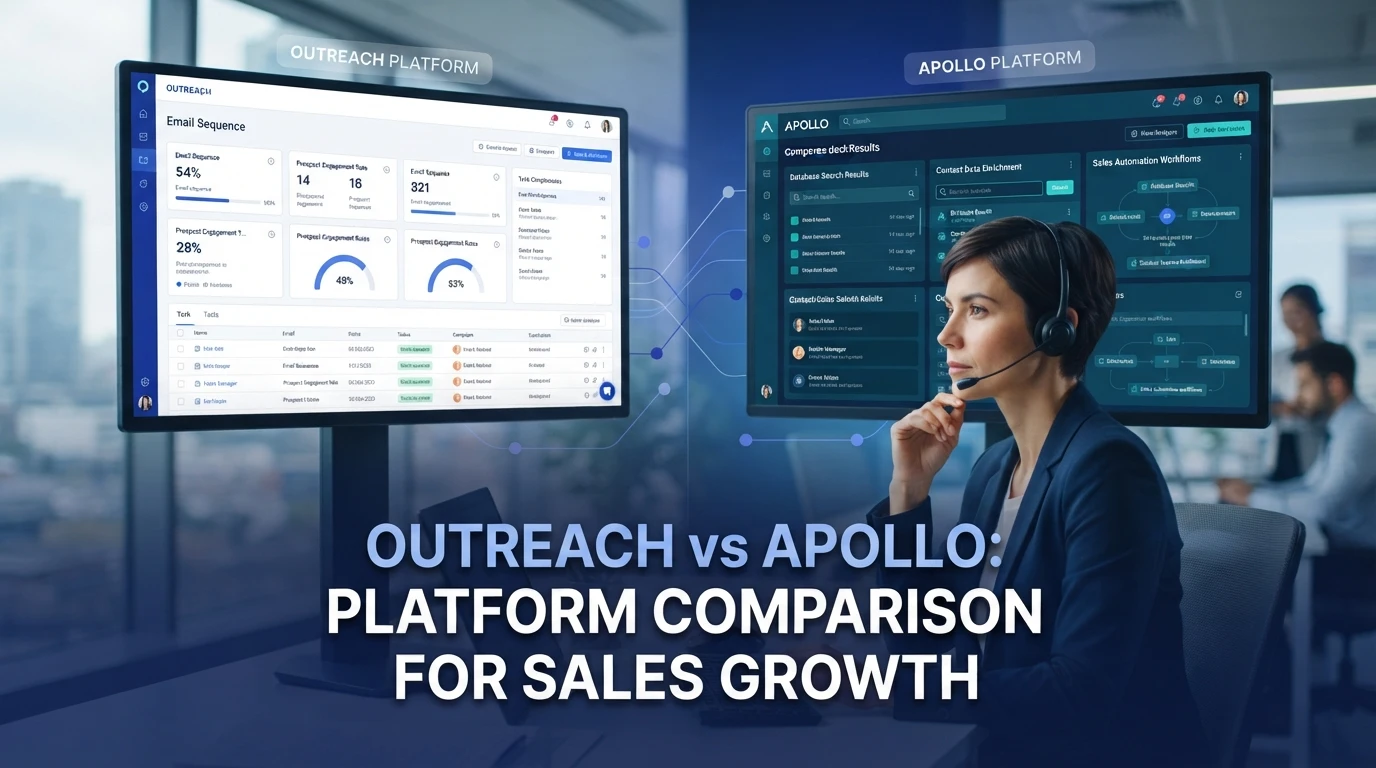
Quick Summary: Apollo fits teams that want a built-in B2B database of 240M+ contacts and engagement starting at $49 per user per month, with most users live within hours. Outreach suits larger RevOps teams that already use ZoomInfo and want enterprise AI agents for forecasting and deal management, accepting 2-6 weeks of onboarding and $100-160 per user monthly custom contracts. Neither tool keeps AI on private infrastructure, so compliance-focused teams can turn to AgentSDR, an open-source, self-hosted alternative that runs outreach and CRM on their own servers.
Pick Apollo for a B2B database and engagement in one workspace. Pick Outreach if you already own a data layer like ZoomInfo and want enterprise execution. This comparison covers pricing, data, AI scope, and fit. You'll see which private sales platform suits your stage, whether a private sales platform with built-in data wins, or if a private sales platform that assumes your own data is smarter.
Outreach vs Apollo: At a Glance
| Outreach | Apollo | |
|---|---|---|
| Pricing model | Custom quote, entry ~$100-$160/user/mo; median contract ~$45,480/yr | Free + paid from $49/user/mo annual; transparent tiered plans |
| B2B data layer | No proprietary database; pairs with ZoomInfo, Salesloft, or third-party data | 240M+ contacts, 30M+ companies, 98% email accuracy built in |
| AI capability | Amplify AI agents for deal management, forecasting, meeting prep, personalization | AI Research Agent, AI Sequence Builder, call coaching, lead scoring, MCP for AI assistants |
| Best for | Mid-market and enterprise RevOps with existing data stack | Startups to mid-market GTM teams wanting data + execution in one tool |
| Implementation | 2-6 weeks onboarding, requires CRM and data integrations | Self-serve signup; live in hours to a few days |
How Outreach and Apollo Compare
Outreach
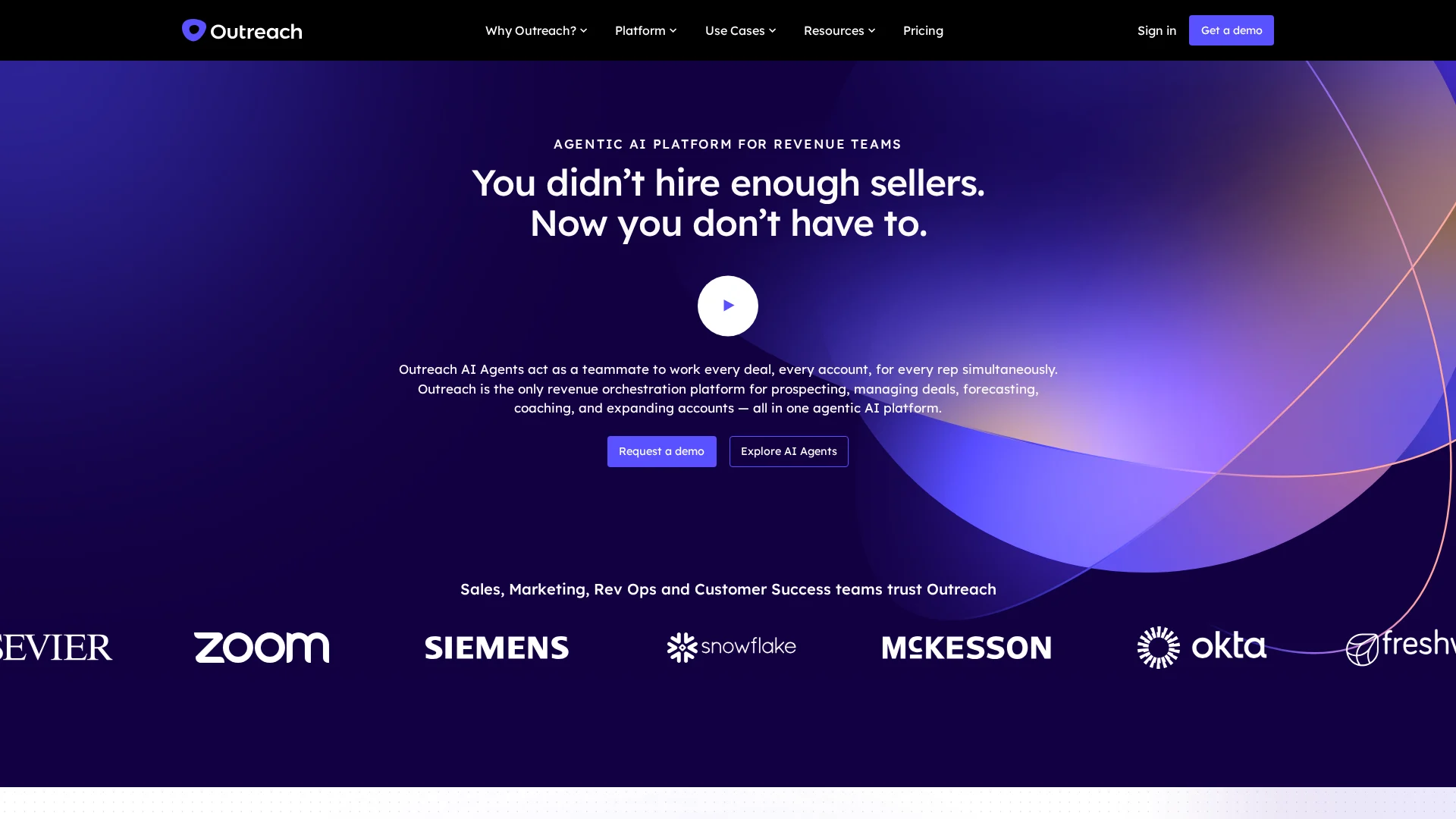
Outreach is an enterprise sales engagement platform built around AI agents that handle pipeline execution, forecasting, and deal management. It suits mid-market and enterprise RevOps teams that already have a B2B data stack in place. The trade-off is a heavier setup: expect 2-6 weeks of onboarding with CRM and data integrations required.
Key strengths
- Amplify AI agents for deal management, forecasting, meeting prep, and personalization
- Deep engagement workflows for mature sales teams
- Pairs with ZoomInfo or other third-party data sources
Apollo
Apollo combines a B2B database of over 240 million contacts with built-in engagement, a dialer, and AI workflows in one platform. It targets startups through mid-market GTM teams that want data and execution without buying separate tools. Signup is self-serve, so most teams go live within hours to a few days.
Key strengths
- 240M+ contacts and 30M+ companies with about 98% email accuracy built in
- Free plan plus paid tiers from $49/user/mo, billed annually
- AI Research Agent, sequence builder, call coaching, and lead scoring
Pricing and Total Cost of Ownership
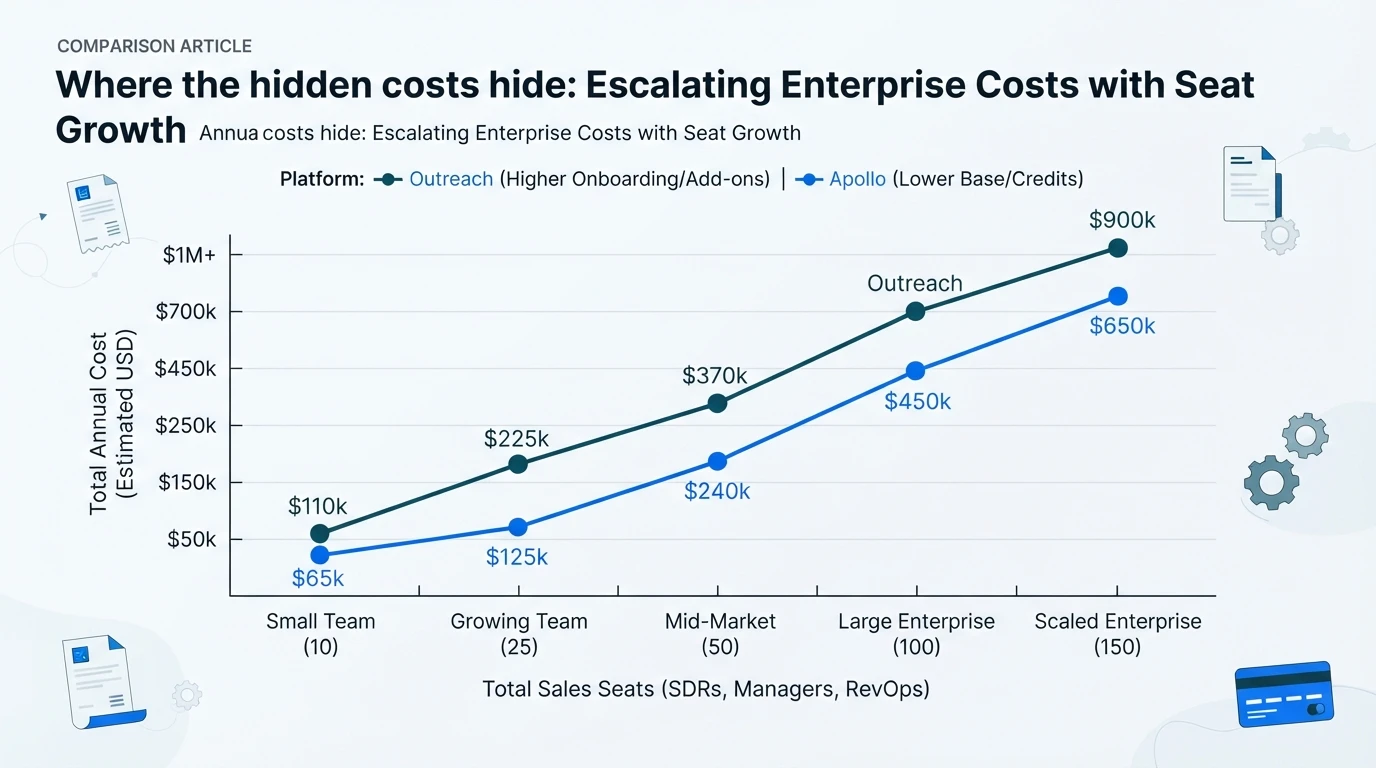
Apollo offers a free tier and paid plans that scale cheaply per seat, while Outreach quotes per-seat pricing that often lands around $100-160 per user monthly, with deals custom-negotiated and often billed annually, per market pricing breakdowns. On paper, Apollo looks like the budget pick.
Where the hidden costs hide
The sticker price is not the whole bill. Watch for:
- Annual contracts that lock you in before you can judge fit.
- Seat creep, as RevOps adds SDRs and managers who all need licenses.
- Data and sending credits charged as add-ons on top of the base plan.
- Implementation and admin time, since Outreach in particular needs onboarding.
Self-hosted options like AgentSDR shift spend from licenses to infrastructure, so teams keep data control and pay a flat, predictable cost instead.
Data Layer and AI Capability
The real difference sits under the features. Apollo owns its own contact database, so it gives you names to sell to. Outreach is execution-only: it sequences and automates, but you must bring your own prospect data. That gap shapes how each AI behaves.
What each AI actually does day-to-day
Apollo's AI scores leads, suggests prospects, and drafts emails inside its data layer. Outreach's AI focuses on what happens after: send-time optimization, reply handling, and deal forecasting. Neither tool runs AI where your data is private. That matters for compliance-heavy teams. An open-source CRM like AgentSDR keeps reply classification and drafted responses inside your own hosting, so humans review everything and customer data never leaves your control.
Fit, Onboarding, and Time to Value
Apollo wins on speed. Import a list, pick a sequence, and reps are prospecting within a day, because data and execution live in one place. That suits funded teams hiring many SDRs at once.
Outreach rewards patience. Onboarding usually takes weeks, and you'll want a dedicated admin to manage rules, cadences, and reporting. The payoff is tighter process control for larger, structured sales teams.

AgentSDR fits a third profile: teams that want fast setup without handing customer data to a hosted cloud. Because it's open source and self-hosted, you can launch sequences in days and keep full control. If compliance or data residency drives your buying decision, start with self-hosted outreach.
Which Should You Choose: Outreach or Apollo?
Pick Outreach if you have a mature sales team, deep budgets, and need enterprise coaching and forecasting. Pick Apollo if you want a large prospect database and outreach in one affordable package.
If data control matters more, consider a private alternative. An open-source, self-hosted outbound sales platform like AgentSDR keeps customer data, sequences, and AI usage on your own infrastructure, which suits compliance-heavy teams and growing B2B sales orgs in India.
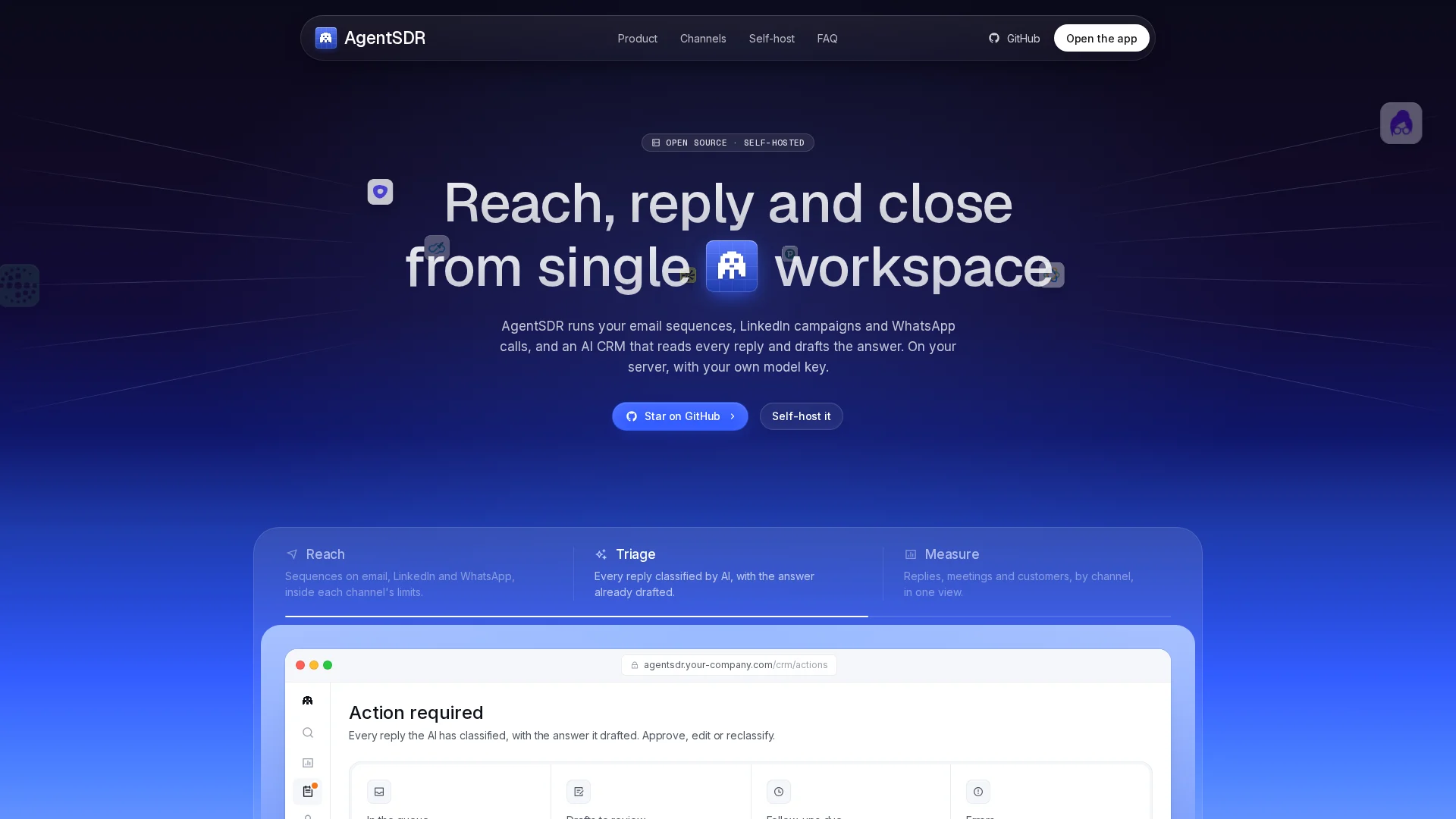
Weighing Outreach and Apollo costs against your data rules? AgentSDR gives you one self-hosted workspace for outreach and CRM, with full control. See how it fits your team.
Frequently Asked Questions
Q1: Outreach vs Apollo: which platform suits growing sales teams?
Outreach fits larger teams with deeper budgets. Apollo suits early-stage teams wanting data plus outreach in one tool.
Q2: Is Apollo cheaper than Outreach?
Yes. Apollo's plans start far lower, while Outreach uses custom enterprise pricing.
Q3: Can I self-host an alternative?
Yes. AgentSDR offers an open-source, self-hosted option for compliance-heavy teams.
Conclusion
Apollo suits teams that want prospecting data and execution in one subscription. Outreach fits mature sales orgs with bigger budgets. Compliance-heavy buyers should compare AgentSDR, which offers open-source, self-hosted outreach.