How to Write Outbound Email Sequences That Get Replies

Quick Summary: A strong outbound email sequence gives each of three to five emails one job: open with the prospect’s problem, add relevant proof, change the angle, make one clear ask, and end with a break-up email. Keep messages short, space touches two to four business days apart, and test one variable at a time across at least 200 sends, since reply rates below 1% usually require fixing the subject line, personalised first line, or body in that order. AgentSDR supports role-based sequences, reply tracking, split testing, and self-hosted data control.
Most teams nail the first email, then repeat it three times with a new greeting. The reply rate stays near two percent. The fix is better email sequence writing: each follow-up needs a new job, a single call to action, and a way to measure whether the subject line or the body failed. This guide walks through both, with annotated examples you can copy into any outbound platform, including a self-hosted setup like AgentSDR.
Step 1: Give Every Email in the Sequence One Job
A sequence fails when each email tries to do everything. Most teams get the best reply rates from a simple cold email sequence structure: three to five emails, each with a single role.
| Day | Job | |
|---|---|---|
| Opener | 1 | One personalized first line, one reason to reach out |
| Follow-up | 3-4 | Add new value, not "just bumping this" |
| Proof | 6-8 | Short case result or relevant stat |
| Nudge | 10-12 | One-line check-in |
| Break-up | 14-16 | Close the loop, invite a reply |
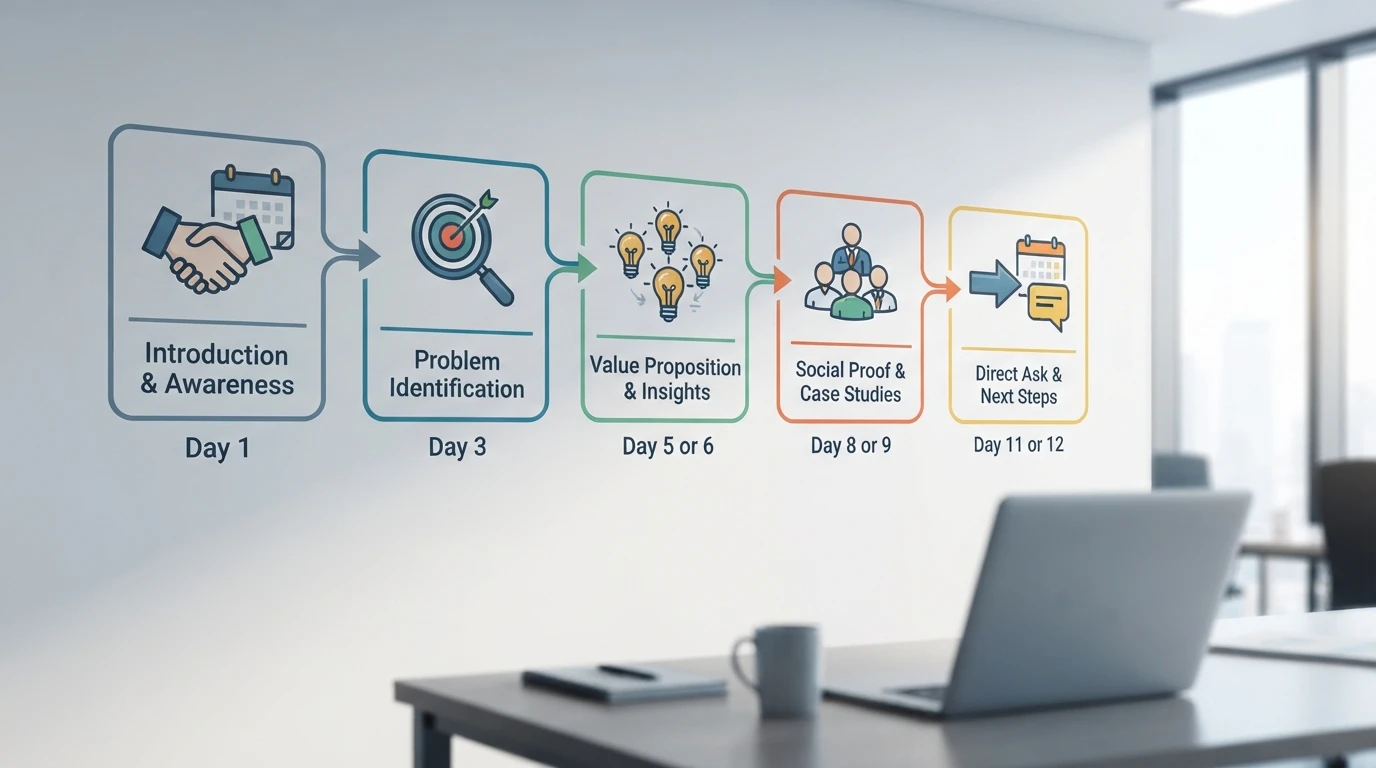
The five roles every sequence needs
Opener earns attention, follow-up adds context, proof builds trust, nudge stays short, and break-up email template language gives a clean exit. Each email carries one call to action, so the reader never has to guess what you want.
Spacing and volume rules
Send on business days, keep two to four days between touches, and cap the sequence at five emails. Track which email gets replies using reply tracking, then rewrite that one. Platforms such as AgentSDR let you assign each email a role and see where replies actually happen.
Step 2: Write Each Email to Earn a Reply
Email sequence writing works when each email has one job. Open with the problem, back it up with proof, change the angle, then ask for a clear decision.
- Opener: one personalised first line about their problem
- Proof: a short result that matches that problem
- New angle: a different reason to care
- Close: a direct ask, then a break-up
Keep the whole sequence short. An opener under 90 words, follow-ups under 70, and the break-up under 40. Anything longer gets skimmed.
The opener: problem first, company second
Start with their world, not yours. Name a specific trigger: a job change, a launch, a shift in their market. Then one sentence on why you reached out. No company history, no feature list. A tool like AgentSDR can help draft these openers at scale while a person approves each one.
Warning: "I hope this email finds you well" burns your best slot. Use it for the problem instead.
Follow-up one: proof that matches the problem
Reply to your own thread and add one proof point. A number from a similar team beats a longer pitch. If you helped a fintech team cut reply times in half, say that in one line, then restate the ask.
Follow-up two: change the angle
If proof failed, try a different reason to care. Talk to a second pain point, a different stakeholder, or the cost of doing nothing. Change the subject line too. Repeating email one louder just reads as spam.
The close: direct ask and break-up
End with a yes-or-no question tied to one date. If silence follows, send a break-up email: "Should I close your file?" It frees your pipeline and often earns the reply you chased for weeks.
Step 3: Tighten Subject Lines, Personalisation and Measurement
Subject lines and the single personalised line
A good cold email reply rate usually lands between 1% and 5%. If yours sits below that, diagnose in this order: subject line first, then the personalised first line, then the body and offer. Keep subject lines under six words, lowercase, and specific. For the opener, write one sentence that proves you looked at the person, not a template token. Tools that support reply tracking help you see where the sequence actually breaks down, as covered in our reply tracking guide.
Measure one variable at a time
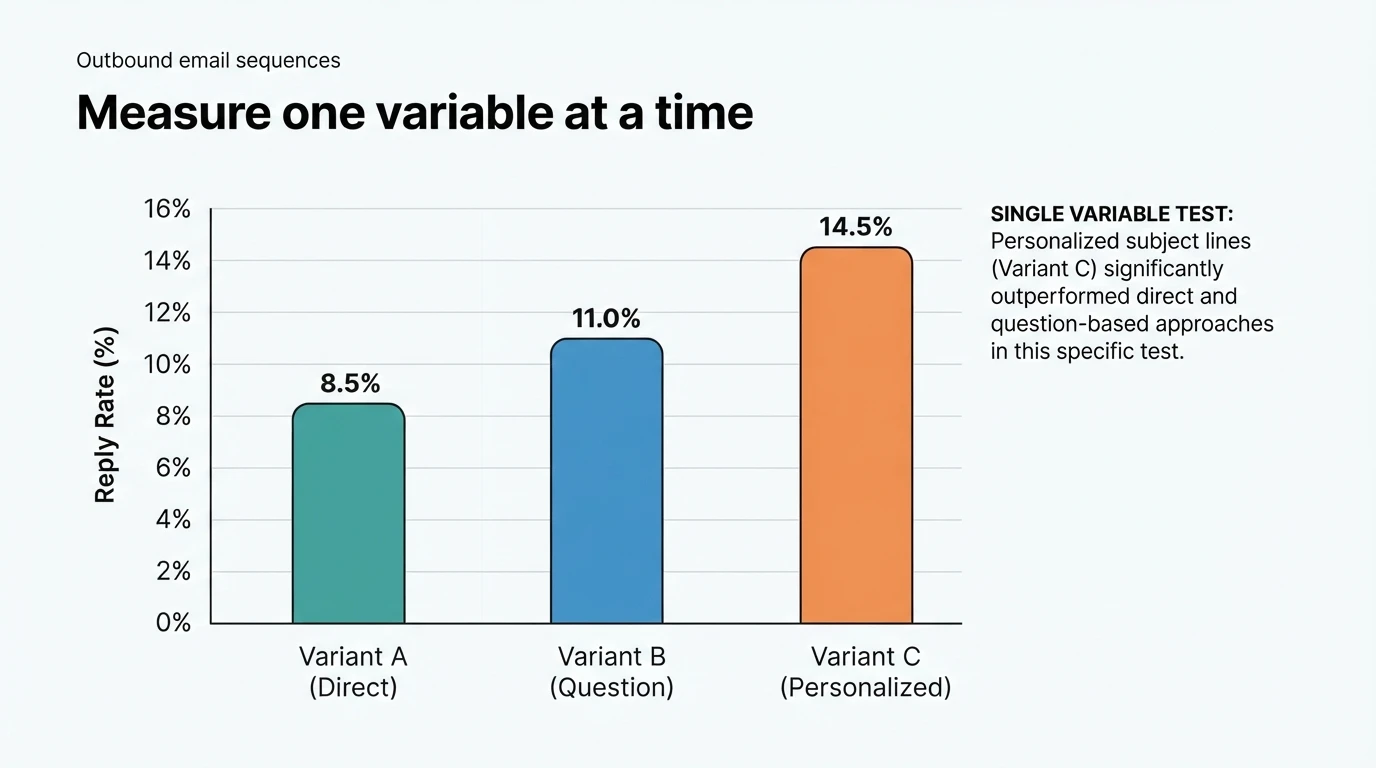
Change one thing per test: the subject line, the first line, or the call to action. Never all three. Run each variant across at least 200 sends before you judge it, because small samples lie. Track opens to judge subject lines, replies to judge body copy. Log every result in one sheet or your CRM. AgentSDR lets you split-test sequences inside one self-hosted workspace. Then keep the winner, ship the next test, and repeat weekly.
Ready to run your sequences? AgentSDR is open source and self-hosted, so your emails, replies and reply data stay under your control. Try it on your next campaign.
Frequently Asked Questions
Q1: How do you write cold email sequences that convert?
Give each email one job: problem, proof, new angle, then a direct ask. Keep the opener under 90 words, add value in follow-ups, and test subject lines separately from body copy.
Q2: How many emails should a cold email sequence have?
Three to five works best. Cap at five, space touches two to four business days apart, and end with a break-up email.
Q3: What is a good reply rate for cold email?
Most teams land between 1% and 5%. Below that, check the subject line first, then your personalised first line, then the body and offer.
Q4: How long should I test before changing a sequence?
Run each variant across at least 200 sends. Change one variable at a time and judge opens against subject lines, replies against body copy.
Conclusion
Strong outbound sequences give every email one job, keep each message short, and end with a clear ask. Write the problem first, back it with proof, then test one variable at a time so your data shows exactly which line to fix next.