Clay vs Apollo: Which Outreach Software Handles Data?
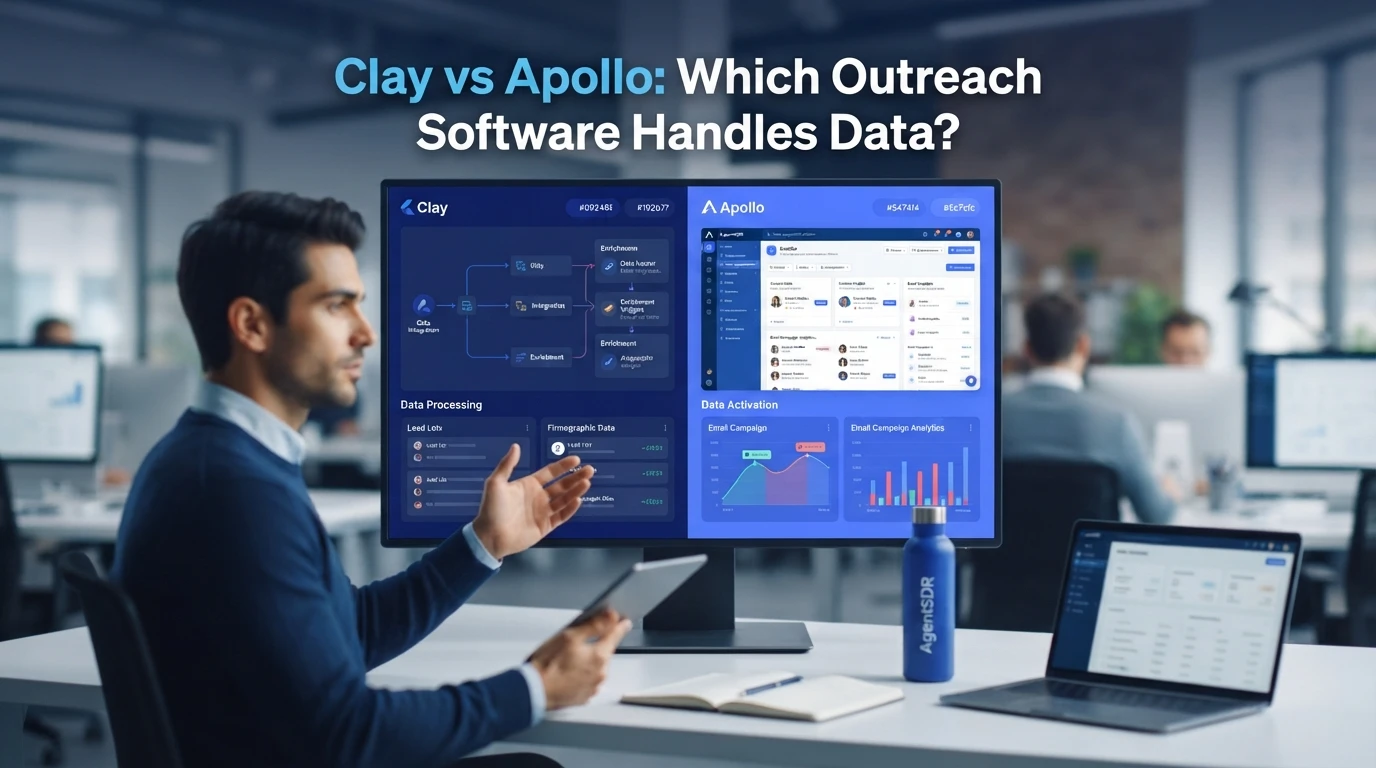
Quick Summary: Clay pulls live data from more than 100 providers and produces lists with lower bounce rates of roughly 1-2%, but it requires a separate sending tool and charges for each lookup. Apollo is faster, cheaper, and simpler for small teams because it combines its 240M+ contact database with native sequences and calling, though raw lists can bounce at 5-10%. AgentSDR is presented as a self-hosted alternative for teams prioritizing data ownership, predictable costs, and control.
Two outreach tools can both fill a pipeline and still disagree on where the data came from. In this outreach software comparison, Clay assembles records live from 100+ providers; Apollo serves them from its own 240M+ contact database. RevOps teams stall on one question: which tool produces records reps can actually send to, at what cost. We break down sourcing, verification, and pricing for each.
Clay vs Apollo: Data Handling at a Glance
| Clay | Apollo | |
|---|---|---|
| Data source | No proprietary database; pulls live from 100+ third-party providers via waterfall enrichment | Proprietary database of 240M+ people and 30M+ companies, plus live enrichment |
| Enrichment control | Row-level visual builder, conditional logic, unlimited seats on paid plans | Filter-driven search and bulk enrich, with fewer custom rules than a spreadsheet canvas |
| Outreach execution | None built in; hands enriched rows to external sequencers or CRMs | Native email sequences, power dialer, and parallel dialer in the same workspace |
| Pricing model | Action volume plus data credit tiers; Launch plan from $167/month billed annually | Per seat with a free tier; paid plans from $49/user/month billed annually |
| Best for | RevOps and growth teams that need custom, auditable enrichment workflows | Teams and agencies that want prospecting and sending in one tool, fast |
How Clay and Apollo Compare
Clay
Clay is a spreadsheet-style data enrichment and workflow platform. It pulls live from 100+ third-party providers through waterfall enrichment, then hands the finished rows to external sequencers or CRMs. RevOps and growth teams use it when they need custom, auditable workflows.
Key strengths
- Row-level visual builder with conditional logic
- Unlimited seats on paid plans
- Pricing scales by action volume and data credits, from $167/month billed annually
Apollo
Apollo is an all-in-one GTM platform built around its own contact database of 240M+ people and 30M+ companies. Prospecting, email sequences, and a power dialer sit in the same workspace, so sending teams and agencies can move fast without stitching tools together. It trades workflow flexibility for speed and simplicity.
Key strengths
- Native sequences and parallel dialer built in
- Free tier, with paid plans from $49/user/month billed annually
- Filter-driven search and bulk enrichment for fast outbound prospecting list building
How Do Clay and Apollo Handle Sales Data?
Clay assembles records live from 100+ providers using waterfall enrichment, so each field gets checked until one source returns a match. Apollo serves contacts from its own database of 240M+ people and 30M+ companies.
- Clay: queries many providers per field
- Apollo: one proprietary database
Clay's Multi-Provider Waterfall Approach
Waterfall enrichment means Clay tries provider after provider for each cell, so a missing email gets a second and third chance. That lifts coverage but burns data credits on every lookup, and costs climb with volume.
Apollo's Proprietary Database Model
Apollo stores its own data, so lookups are fast and cheap but depend on the freshness of one vendor's records. Stale entries surface as bounces, which is why contact data verification matters most here. Teams weighing any outreach software comparison should test both on real lists.
Enrichment Depth, Accuracy, and the Cost of a Verified Record
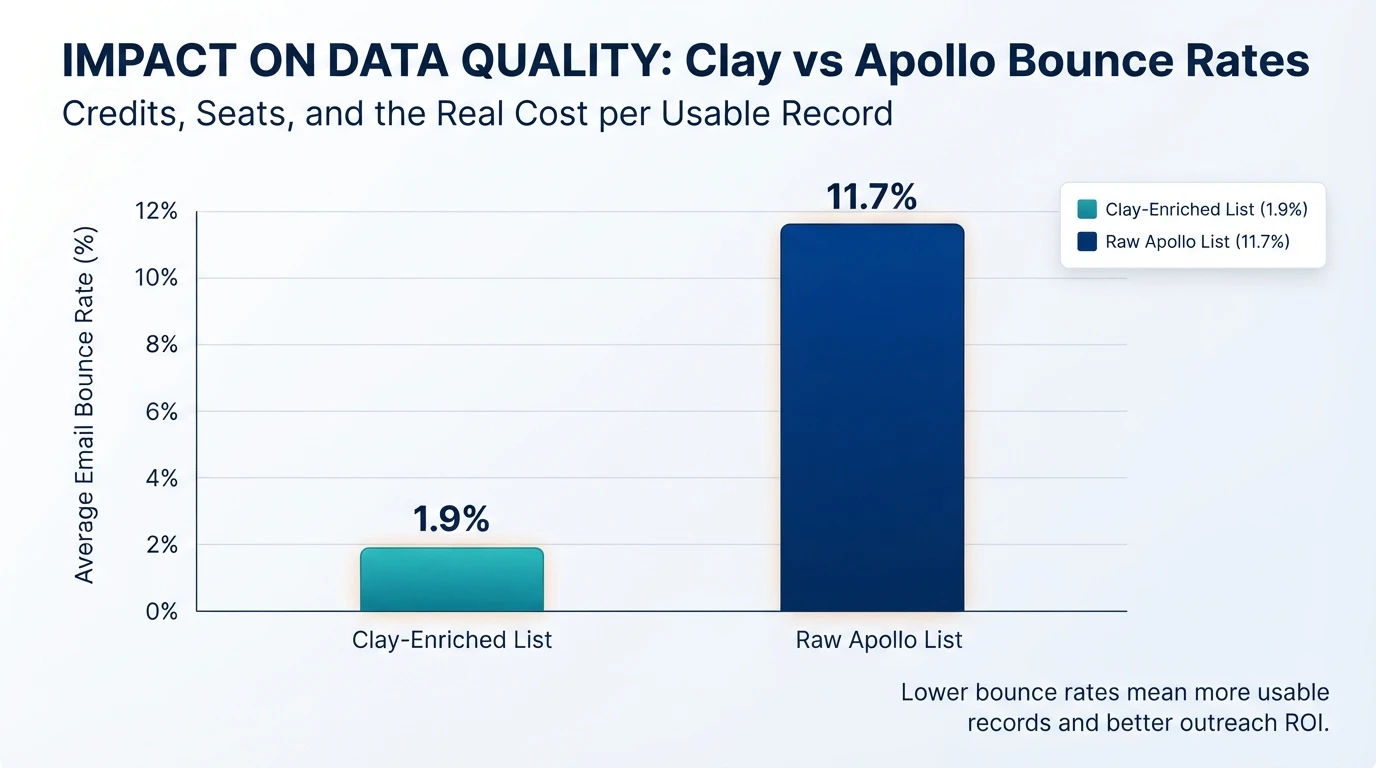
Which tool has better contact data accuracy? Clay, in most tests, because its waterfall enrichment checks several providers per field:
- Clay-enriched lists bounce at roughly 1-2%
- Raw Apollo lists bounce at 5-10%
Credits, Seats, and the Real Cost per Usable Record
Clay charges per credit, so every field checked costs money; Apollo charges per seat and data looks free until bounces waste your sends. One comparison found Clay lists bounce far less, which changes the math. Weigh that before picking from these affordable B2B outreach software tools.
Verification Signals and Ongoing Freshness
Apollo marks emails "verified" from its own database, yet some teams still report high bounce rates. Clay's live checks, by contrast, use current third-party signals, so records age faster but reflect the open web.
Getting Enriched Data Into the Outreach Workflow
Where the Sequence Actually Sends From
Clay hands finished rows to a separate sequencer, so your enrichment workflow needs a second tool to actually send. Apollo keeps prospecting and sending in one login. A self-hosted open source outreach platform also merges sequences and CRM, which removes the handoff entirely.

Data Ownership and Portability
Both tools export CSVs, but Clay charges data credits each time it rebuilds a list. Apollo limits exports on lower plans. If RevOps wants contact data the team truly owns, self-hosting keeps every record on your own infrastructure, with no export caps or credit burns.
Which Should You Choose: Clay or Apollo?
For an SDR team, the best value depends on your data source: choose Apollo for cheap, all-in-one simplicity, Clay for verified custom lists, or a self-hosted platform for full control.
When Apollo Is the Right Buy
Pick Apollo if you want one tool for prospecting, sequencing, and calling. The free tier and $49/user entry price suit small teams testing outbound without a RevOps hire.
When Clay Is the Right Buy
Choose Clay when list quality drives revenue. Waterfall enrichment from 100+ providers keeps bounce rates near 1-2%, which matters for high-stakes enterprise prospecting.
When a Self-Hosted Alternative Makes More Sense
Teams needing data ownership and predictable costs should compare an open source outreach platform like AgentSDR against Clay and Apollo instead.
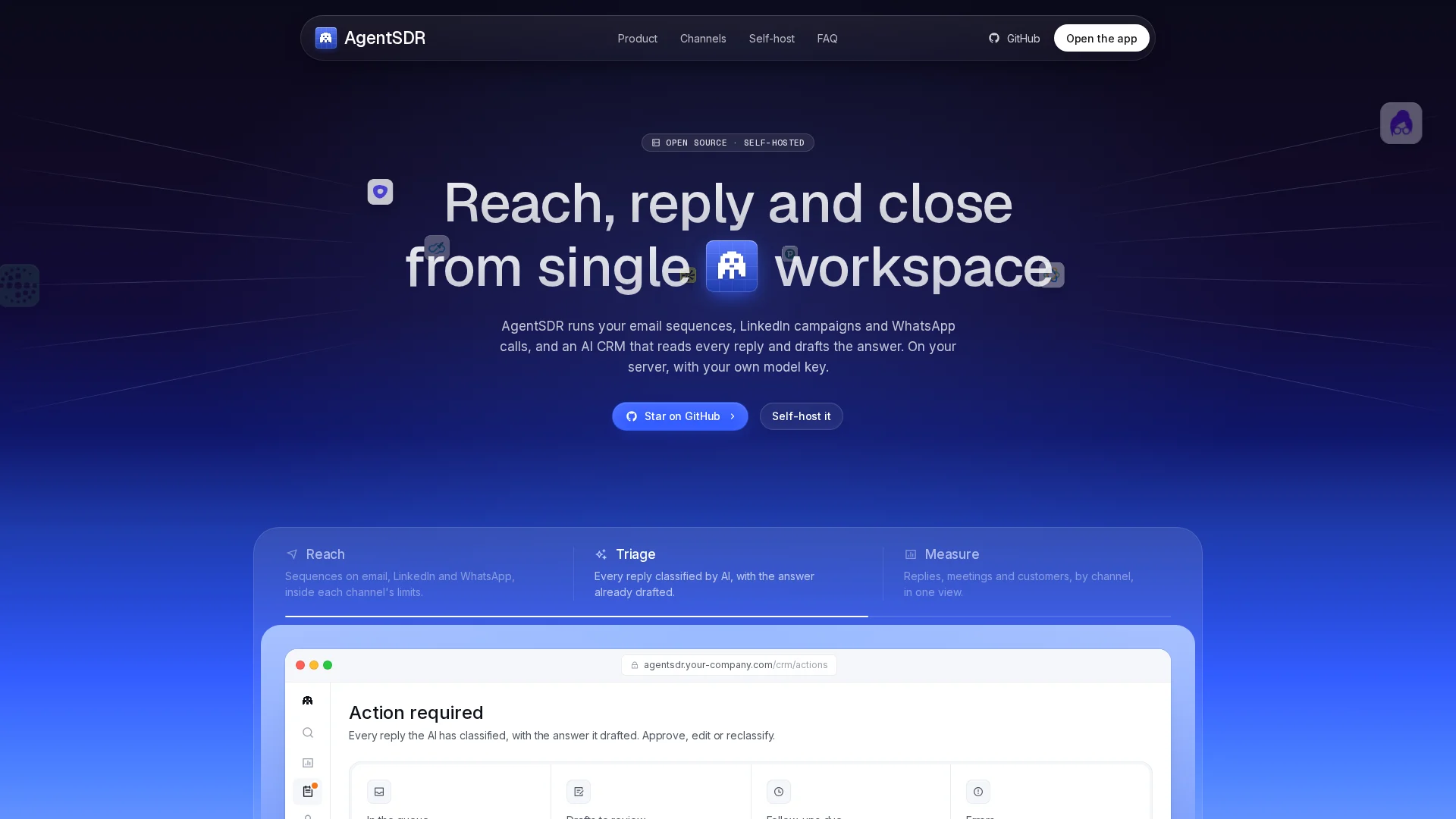
Prefer owning your data and stack? Try AgentSDR, the open-source, self-hosted platform built for teams that want outreach under their control.
Frequently Asked Questions
Q1: How do Clay and Apollo compare in handling sales data?
Clay pulls live from 100+ providers via waterfall enrichment; Apollo serves from its own 240M+ contact database, which risks stale records.
Q2: Which tool has lower bounce rates?
Clay-enriched lists typically bounce at 1-2%; raw Apollo lists reach 5-10%.
Q3: Is Clay or Apollo cheaper?
Apollo starts at $49/user monthly; Clay starts at $167/month but charges credits per lookup.
Q4: Do either handle outreach sending?
Apollo sequences and dials natively; Clay only enriches and exports rows.
Conclusion
Apollo wins on speed and price; Clay wins on verified data; a self-hosted platform wins on data ownership. Match the tool to how your team values accuracy, cost, and control.