AI SDR Startups by Revenue: Who Actually Books Meetings
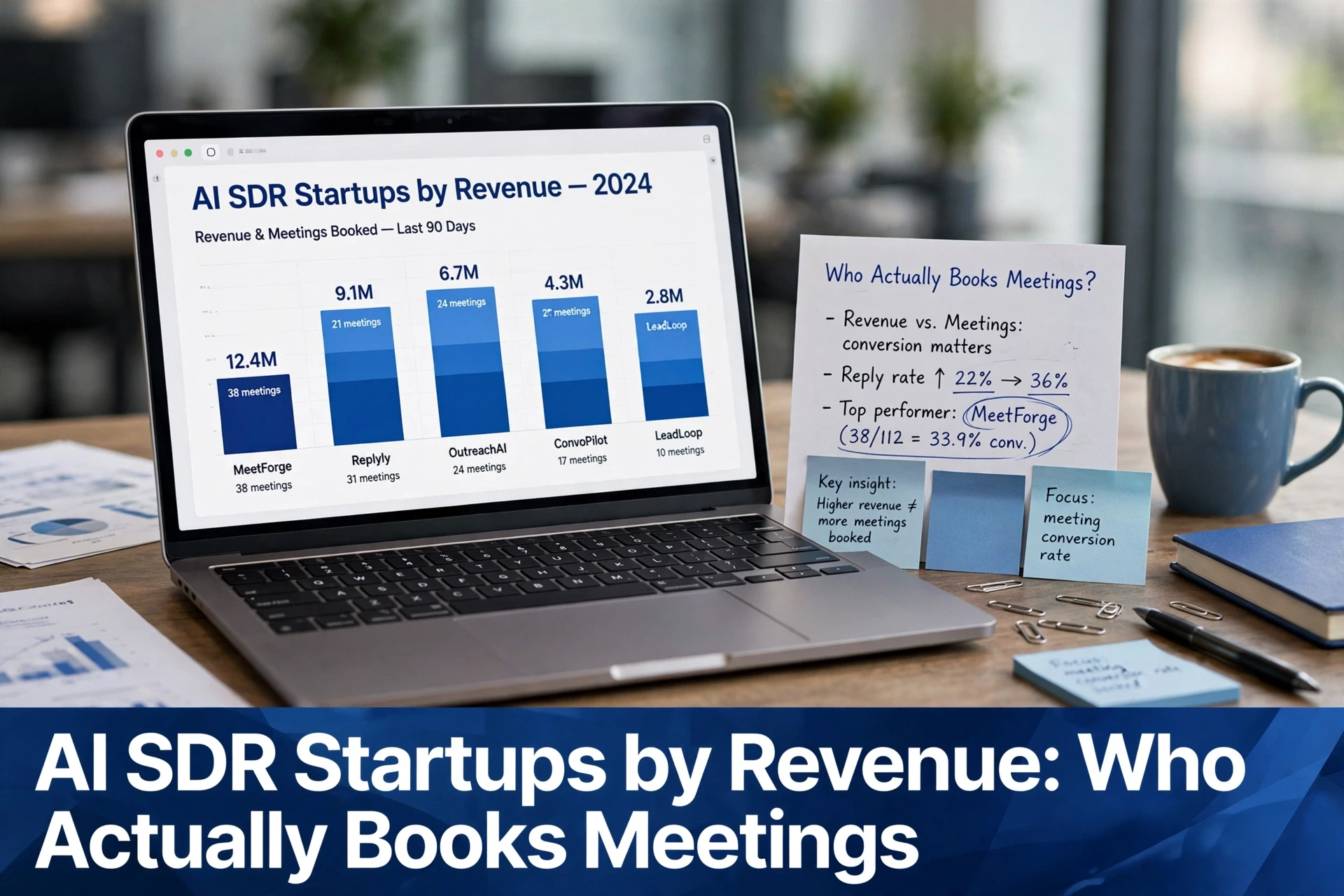
Quick Summary: Artisan leads AI SDRs with documented revenue at $9 million ARR, while 11x has raised over $500 million without publishing ARR, showing that funding is not the same as customer demand. High churn, including 70 to 80 percent early attrition reported at 11x, can make growth look stronger than it is, so buyers should examine retention and closed-won pipeline rather than meeting volume alone. The article favors self-hosted platforms such as AgentSDR for keeping control of sales data and reducing reliance on rented agents with short break clauses. Artisan crossed $9 million in ARR in April 2026, up 55 percent, per the ARR Club tracker. Yet most AI SDR revenue rankings ignore funding-first names like 11x, which has raised over $500 million. That gap matters: pilot stats hide churn and weak meeting quality. This piece builds a dated, sourced revenue ladder, from Artisan and 11x to inbound vendor Piper, and shows why open-source, self-hosted outbound platforms are winning teams that want control.
Which AI SDR Startups Are Actually Generating Revenue
Based on ai sdr revenue rankings with dated, sourced figures, only a handful of vendors publish real numbers:
- Artisan: $9 million ARR as of April 2026, up 55 percent year over year, per the ARR Club tracker
- 11x: no documented ARR, but the largest war chest in the category
Artisan Leads on Documented Revenue
Artisan is the clearest proof that AI SDRs can sell. It hit $1 million ARR within three months of launch, passed $5 million with about 120 customers, and crossed $9 million by April 2026. The company raised a $25 million Series A to fund that push, as Forbes reported.
11x Raised Far More Than It Has Documented
11x tells the other side of the story. It has raised over $500 million, more than any AI SDR startup, yet publishes no annual recurring revenue milestone. Funding is not revenue. If a vendor cannot or will not share ARR, treat its place on any ranking as marketing until closed-won numbers surface.
Where Revenue Proof Is Strongest Outside Outbound
Not every credible AI SDR revenue number comes from outbound vendors. Some of the strongest proof sits with inbound-focused players, and the biggest threat to the whole category may come from platforms that bundle SDR features for free.

Inbound AI SDR Reports Closed-Won Revenue
Piper, an inbound AI SDR built for qualified website visitors, ties its value to closed-won revenue attribution instead of meetings booked. Teams using it report attribution models that trace pipeline directly to AI-handled conversations, giving revenue leaders numbers they can defend in a board meeting.
The Platform Bundling Threat
HubSpot, Salesforce, and ZoomInfo have all added AI SDR features to existing suites, which changes the buying math entirely. When a sales engagement layer ships inside a platform teams already pay for, standalone AI SDR vendors face pressure on pricing and retention at once.
Why the Revenue Rankings Hide a Retention Problem
A revenue ladder tells you who is booking new customers, not who is keeping them. In AI SDR, that difference is brutal.
Churn Erases the Growth Story
Published churn figures for AI SDR platforms:
- 70-80% early customer attrition at 11x, reported by TechCrunch in March 2025, with many exits through three-month break clauses
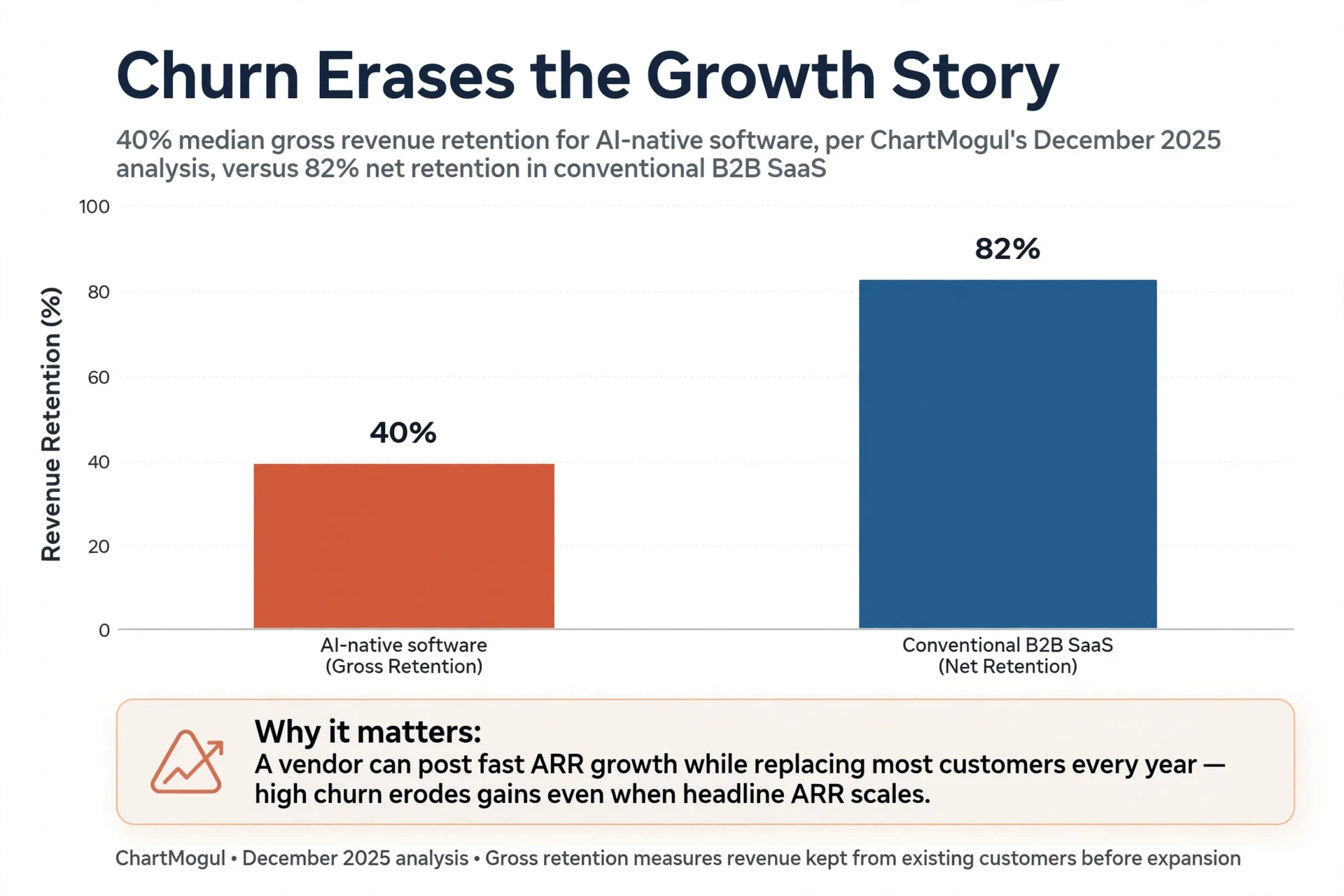
- 40% median gross revenue retention for AI-native software, per ChartMogul's December 2025 analysis, versus 82% net retention in conventional B2B SaaS
- 79% retained at 11x after the company said retention improved
So a vendor can post fast ARR growth while replacing most customers every year.
The Unit Economics of a Three-Month Customer
What a short-lived customer actually yields:
- $7,200 gross profit from a $3,000 monthly contract canceled after three months at an 80% margin
- $6,000 typical acquisition and onboarding cost, leaving roughly $1,200 for everything else
- $16,000 vs $32,000 lifetime gross profit on a $2,000 account when monthly churn drops from 10% to 5%
High prices cushion the blow, but only customers who stay past the pilot pay for the business. This is why teams increasingly favor outbound tools they can run on their own terms, like an open-source self-hosted sales platform, over rented agents with break clauses.
How the Market Got Here
The 2025 Boom and the 2026 Reset
In 2025, venture money flooded AI SDR startups. Top AI companies raised nearly $150 billion, over 40 percent of global venture funding, and sales-agent tools caught a large slice of it. By 2026, buyers started asking for proof instead of demos. Investors now want annual recurring revenue, not waitlists, so headlines moved from funding rounds to retention and churn.
Why the Category Changed Its Story
The pitch shifted from "replace your SDRs" to "book real meetings." Early adopters found AI agents burned lists without adding pipeline. Teams now favor platforms that keep humans reviewing replies and data in their own hands, which is where self-hosted options such as AgentSDR fit.
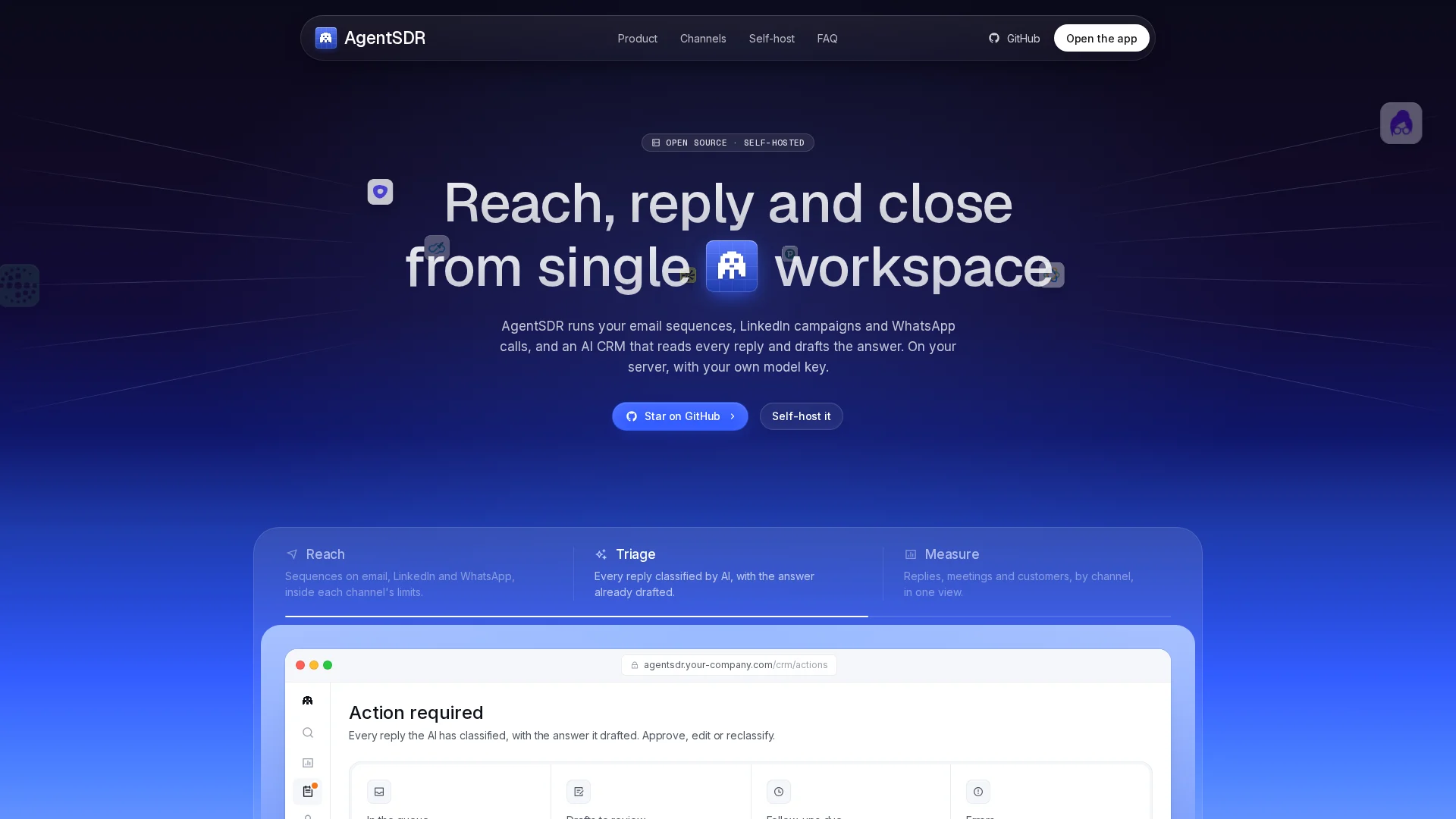
Tired of vendor rankings that hide churn and attrition? See how AgentSDR keeps retention and data in your hands at AgentSDR.
Frequently Asked Questions
Q1: Which AI SDR startups are generating real revenue?
Artisan leads with $9 million ARR as of April 2026. Piper reports closed-won revenue from inbound conversations. 11x has raised over $500 million but publishes no documented ARR.
Q2: Is funding the same as revenue for AI SDR vendors?
No. 11x's $500 million raised proves investor confidence, not customer demand. Ask for annual recurring revenue and net retention before trusting any ranking.
Q3: Why do so many AI SDR customers churn?
Pilots fail when agents burn lists without real pipeline. Three-month break clauses let buyers exit, so vendors can grow ARR while replacing most customers each year.
Conclusion
Documented revenue separates real winners from funded hype: Artisan's $9 million ARR, Piper's closed-won attribution, and 11x's $500 million raised with no published ARR. Check retention and AI SDR churn rate before trusting any ranking. For control, a self-hosted open source sales platform beats rented agents.