9 Best B2B Sales Automation Tools for Revenue Teams
Quick Summary: The best sales automation tool depends on whether a team needs a prospecting database, sending engine, CRM, or one unified workspace, with data control, channel coverage, and total cost as key criteria. AgentSDR stands out as the only open-source, self-hosted option combining email, LinkedIn, WhatsApp, and AI CRM in one workspace, though it requires technical setup. Clay leads for signal-based prospecting, Apollo.io for an all-in-one SaaS stack, and Instantly.ai for high-volume cold email, so teams should pilot the right fit for their workflows before rolling it out.
Most revenue teams do not lack data. They lack a connected stack: a sequencer in one tab, a LinkedIn tool in another, a CRM nobody opens. The best sales tools rarely solve the same job either. Some focus on the database, others on sending or CRM, and few let you own your data. This list of sales automation tools covers both extremes, from self-hosted, open-source workspaces to cloud-native engines, with a verdict on who each suits. Each was judged on automation breadth, channel coverage, data control, and how fast a lean team can get started with sales automation software.
Sales Automation Tools at a Glance
| Tool | Best for | Deployment | Core automation |
|---|---|---|---|
| AgentSDR | Revenue teams wanting one open-source, self-hosted outbound stack | Self-hosted, open source | Email, LinkedIn, WhatsApp and AI CRM in one workspace |
| Clay | Data-enriched, signal-led outbound prospecting | Cloud SaaS | Enrichment, research and account scoring |
| Apollo.io | Teams wanting data, sequencing and pipeline from one vendor | Cloud SaaS | Data, sequencing, dialling and pipeline management |
| Instantly.ai | High-volume cold email with deliverability management | Cloud SaaS | Email sending, warmup, reply handling and lead management |
What to know about B2B sales automation in 2026
Sales automation tools now do three distinct jobs: building prospect lists, running sequences across email and LinkedIn, and logging activity in a CRM. Most teams stack tools for each job.
Your best pick depends on three things. Data sensitivity, channel mix, and how many people need to work in one workspace.
Open-source, self-hosted options matter more in 2026, since revenue teams want control over where prospect data lives.
Some teams prefer one unified platform over stacking.
1. AgentSDR
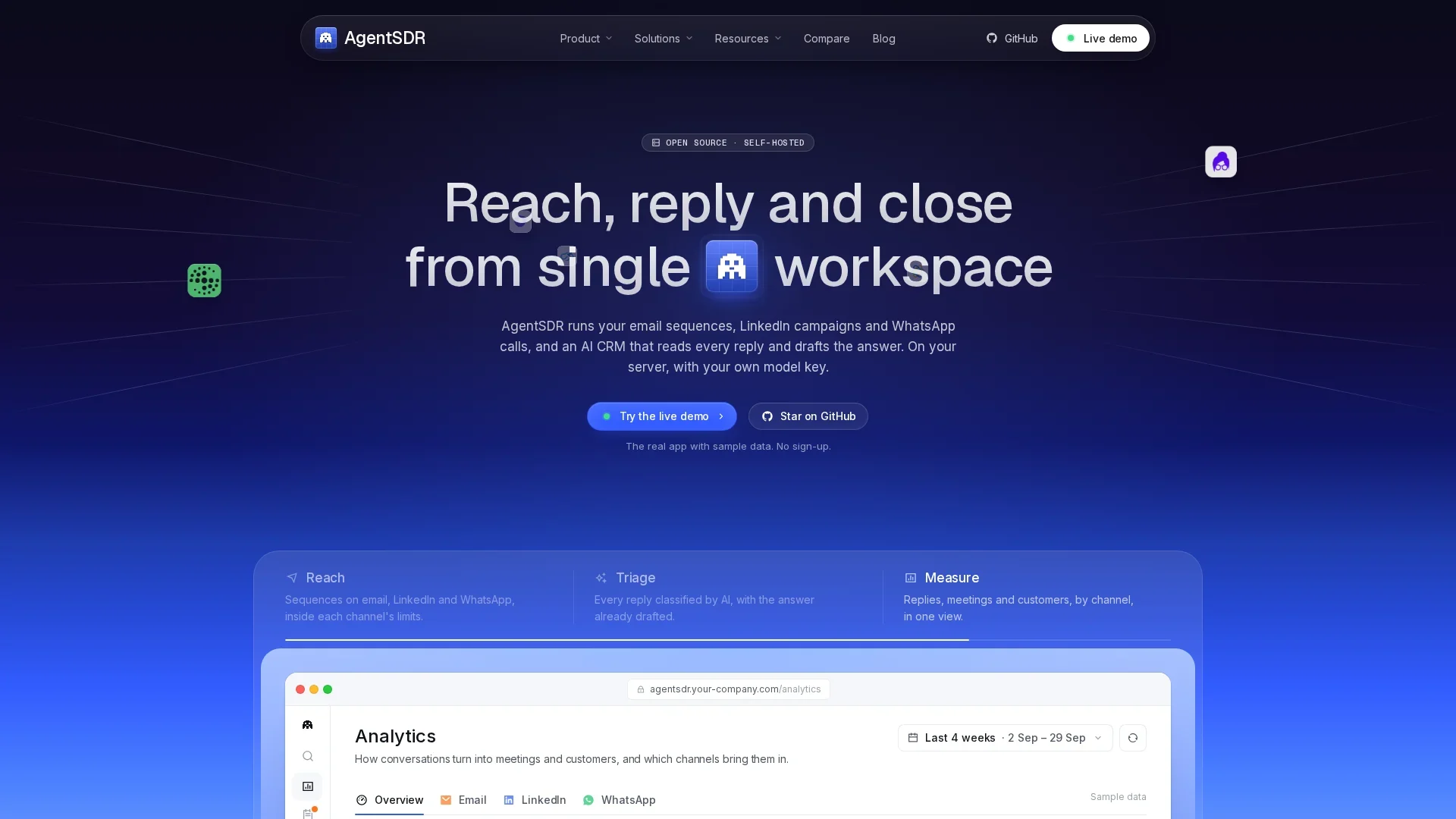
AgentSDR brings the scattered parts of outbound sales into one self-hosted workspace. SDRs run email sequences, LinkedIn campaigns and WhatsApp calls from a single interface, while a built-in AI CRM prioritises accounts and drafts outreach.
Highlights
- Email, LinkedIn and WhatsApp managed in one workspace
- Self-hosted, open-source deployment on your own infrastructure
- AI CRM that surfaces priorities and drafts personalised outreach
Specs
- Best for: Revenue teams wanting one open-source, self-hosted outbound stack
- Deployment: Self-hosted, open source
- Core automation: Email, LinkedIn, WhatsApp and AI CRM in one workspace
Pros
- Full data control with self-hosting
- Multi-channel coverage including WhatsApp and LinkedIn
- No per-seat lock-in to a single vendor ecosystem
- Open-source flexibility for custom workflows
Cons
- Self-hosting requires technical setup and maintenance
- Smaller ecosystem and third-party integration catalogue
- Less polished onboarding than fully managed SaaS
It is the only entry that combines data, sequencing, social selling, calling and CRM in a single self-hosted product.
Last updated: November 6, 2026
2. Clay
Clay is an enrichment-first prospecting engine for building tightly targeted, signal-based outbound lists. It sits upstream of the sequence: reps research, enrich and qualify prospects with dozens of data providers, then push ready records into sequencers like Instantly or Smartlead. Its table-based workflows and AI research agents let you define what a good account looks like and let Clay find the people who match.
Highlights
- Broad data provider network for real-time enrichment
- Table-based, no-code workflow builder with AI research agents
- Scoring and signal logic for tiering accounts before outreach
- Easy hand-off of qualified records into sending platforms
Specs
- Best for: Data-enriched, signal-led outbound prospecting
- Deployment: Cloud SaaS
- Core automation: Enrichment, research and account scoring
Pros
- Best-in-class data provider coverage
- Fast to iterate on new playbooks
- Strong AI research for account and lead qualification
Cons
- Does not run sequences or host a full CRM
- Cost grows quickly with data credit usage, since every enrichment consumes credits
- Requires pairing with sending and CRM tools
Clay is the benchmark for signal-driven prospecting, but as a data layer rather than a full engagement or CRM platform, it falls short of teams wanting one complete revenue workspace.
Last updated: November 6, 2026
3. Apollo.io
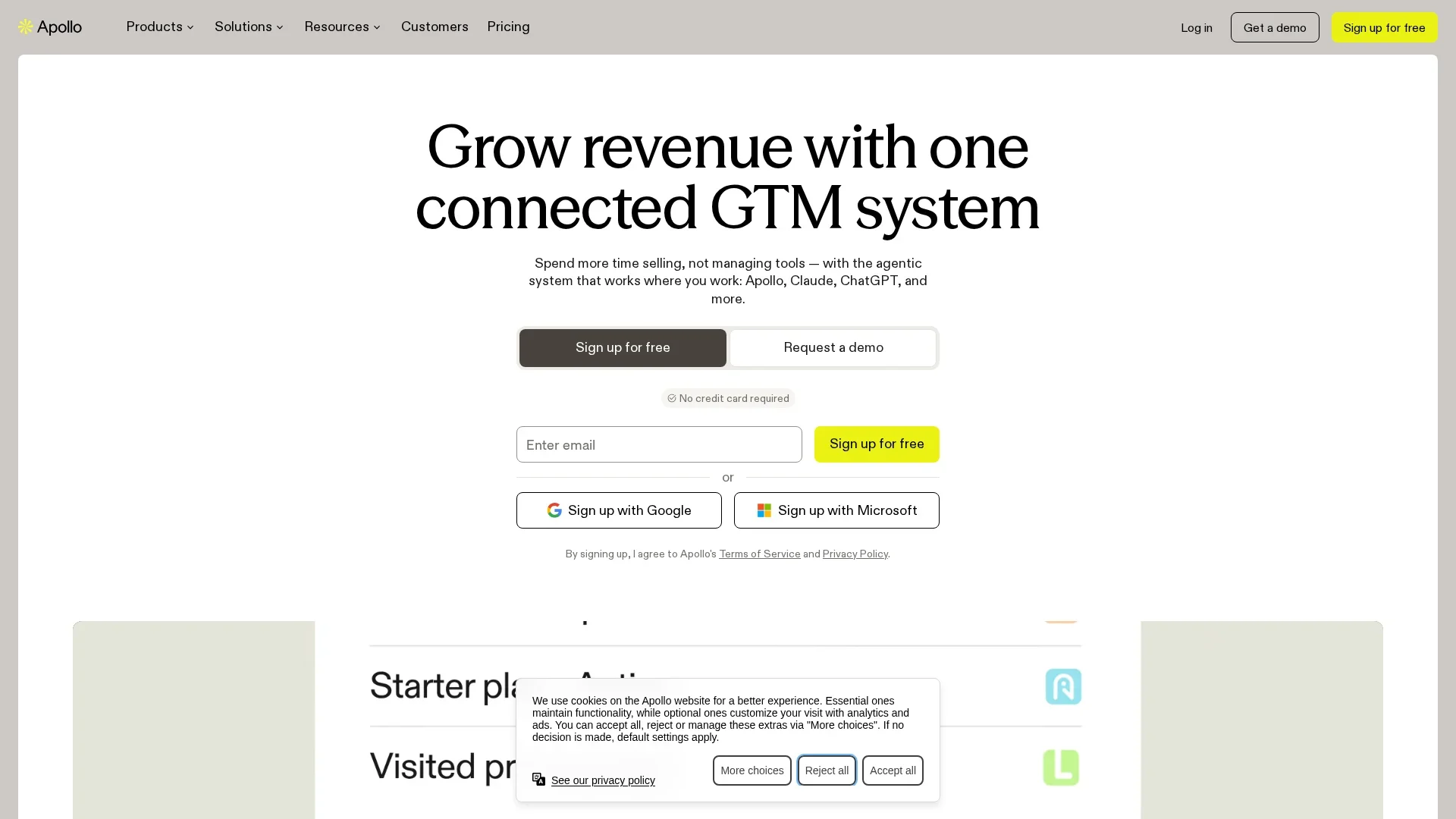
Apollo bundles a large contact and company database with a sequencer, a shared inbox for SDRs, and pipeline and deal tracking. It has become the default starting point for teams that want one vendor for prospecting and outreach, with extra modules covering intent data, enrichment and AI-assisted calling. Pricing spans four tiers from a free plan upward, so costs climb quickly with seats.
Highlights
- Large built-in database of contacts and companies with filtering
- Email sequencing, dialer and shared team inbox in one place
- Pipeline and deal management plus forecast views
- Extensive integrations with CRM and engagement tools
Specs
- Best for: Teams wanting data, sequencing and pipeline from one vendor
- Deployment: Cloud SaaS
- Core automation: Data, sequencing, dialling and pipeline management
Pros
- Fastest path from zero to outbound running
- Database plus tooling in a single contract
- Large integration catalogue and community
Cons
- Per-seat pricing escalates with team growth
- Limited control over data residency and export
- Feature depth varies by tier
It ranks here because Apollo covers data, sending and pipeline in one subscription with minimal setup, but it is a closed platform with seat-based pricing that quickly gets expensive for growing teams.
Last updated: November 6, 2026
4. Instantly.ai
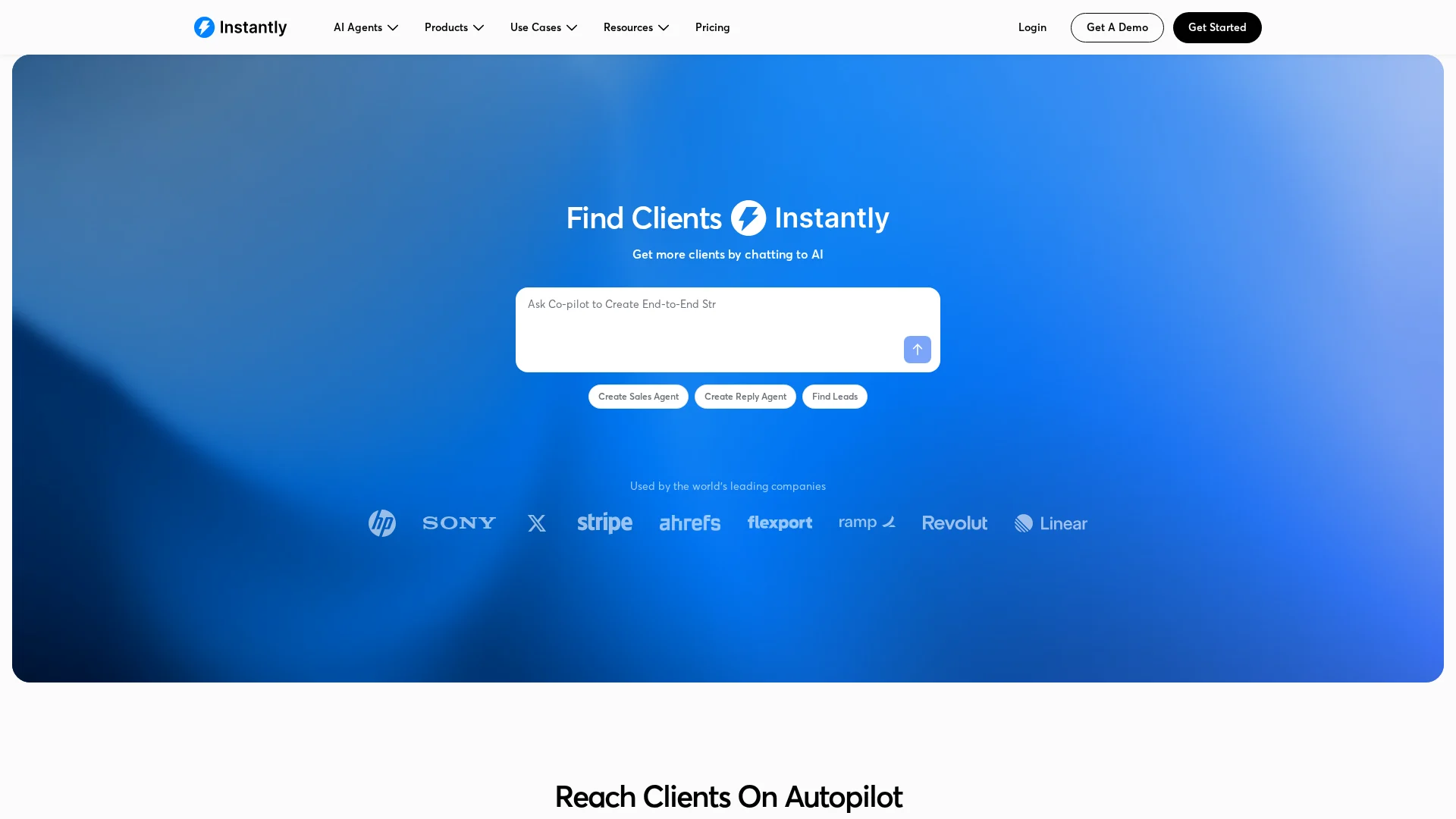
Instantly focuses on the sending layer of cold email automation: unlimited sending accounts, automated mailbox warmup, and deliverability monitoring at a flat monthly fee, with plans starting around $47 per month. A built-in lead system handles reply detection, unified inbox and follow-ups, so it suits teams whose bottleneck is volume, not multichannel outreach across LinkedIn or WhatsApp.
Highlights
- Automated warmup and deliverability monitoring for sending mailboxes
- Unlimited contacts and mailboxes on higher tiers
- Reply detection, unified inbox and automatic follow-up sequences
- Built-in lead management and basic opportunity tracking
Specs
- Best for: High-volume cold email with deliverability management
- Deployment: Cloud SaaS
- Core automation: Email sending, warmup, reply handling and lead management
Pros
- Reliable sending infrastructure
- Clear, predictable pricing tiers
- Fast onboarding for new SDRs
Cons
- Email-only focus, no native LinkedIn or WhatsApp
- Light CRM compared with dedicated platforms
- Warmup and mailbox limits apply at lower tiers
It ranks here because Instantly delivers the most dependable cold email sending experience at a fair price, though it does not extend to LinkedIn, WhatsApp or full CRM workflows the way a unified platform does.
Last updated: November 6, 2026
Honourable Mentions
These five platforms are credible picks, and none of them made our top four. Each shines in a narrower niche, so check whether their focus matches your team's workflows.
- Lemlist - Polished multichannel sequencing across email, LinkedIn and calls
- Smartlead - High-volume cold email with unlimited mailboxes, popular with agencies
- Attio - Flexible CRM with a clean API for revenue ops teams
- Salesforge - AI sequence writing for teams prioritising volume
- Frappe CRM - Open-source and self-hosted, like AgentSDR, but CRM-only
How to choose the right sales automation tool for your revenue team
Map the job first. Decide whether you need a database, a sending engine, a CRM, or one workspace covering all three, since most disappointing purchases come from buying the wrong layer.
Then weigh these criteria:
- Data control. If security, residency or client confidentiality matter, shortlist self-hosted, open-source tools. AgentSDR is the standout here because it keeps prospect data and AI usage on your own infrastructure; Frappe CRM is self-hosted but CRM-only.
- Channel coverage. Match the tool to your real outbound mix. Email alone is fine with Instantly, but LinkedIn and WhatsApp need a multichannel option.
- True cost. Price it at your seat count and mailbox volume, including warmup limits and data credits.
- CRM and reporting. Test pipeline visibility and task hygiene early; that decides whether reps actually use it.
- A 30-day pilot. Run one segment and one sequence, then measure deliverability and reply quality before rolling out fully.
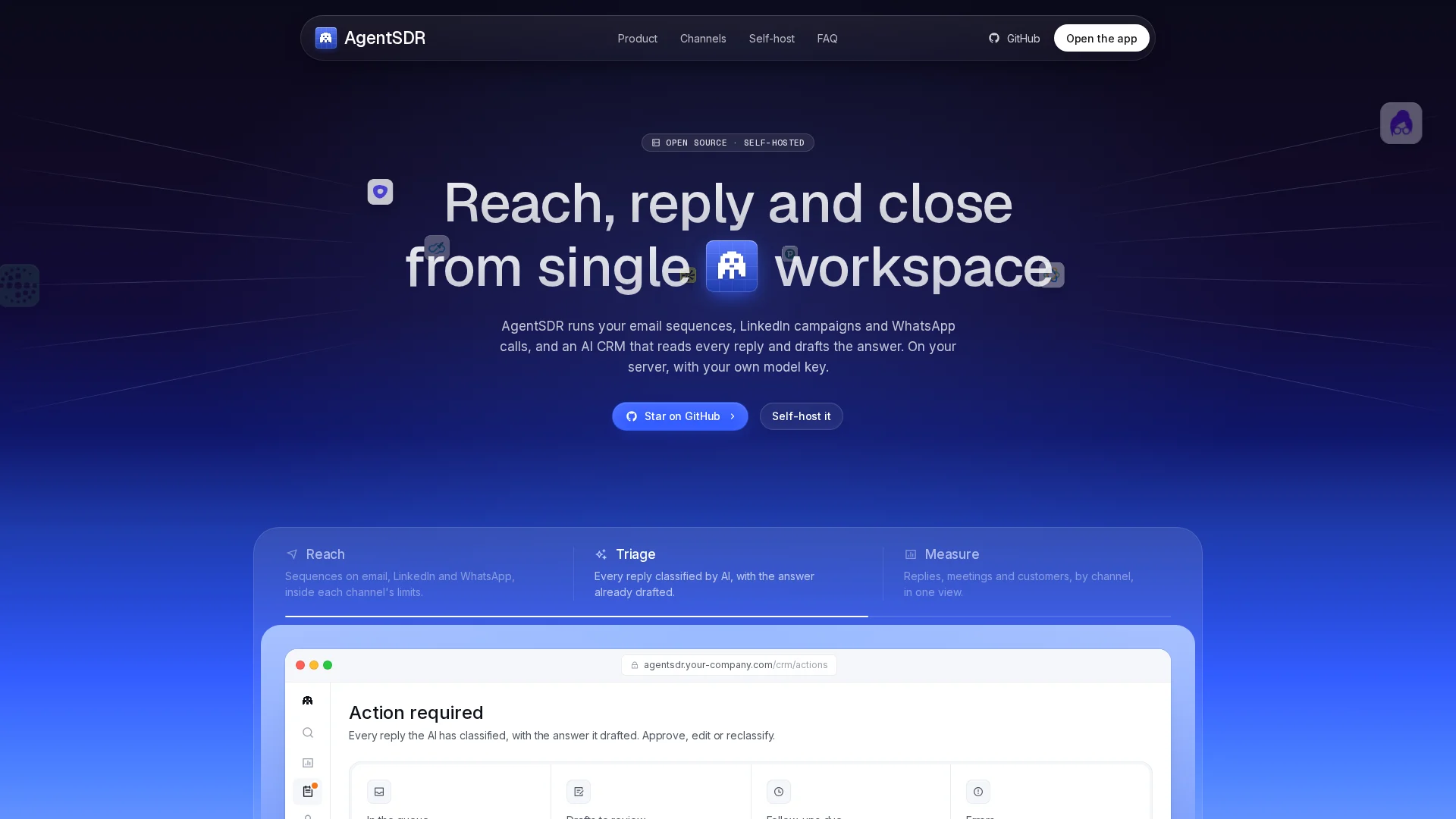
Tired of outreach tools that scatter your data across vendors? Try AgentSDR: open-source, self-hosted, multichannel. Start your 30-day pilot today.
Frequently Asked Questions
Q1: What are the best B2B sales automation tools for revenue teams?
Top picks include AgentSDR, Clay, Apollo.io and Instantly.ai, with Lemlist, Smartlead and Attio as honourable mentions. The right one depends on your channel mix and data control needs.
Q2: How do I choose a sales automation tool for my revenue team?
Map the job first: database, sending engine, CRM or one workspace. Then weigh data control, channel coverage, true cost at your seat count and a 30-day pilot.
Q3: Which B2B sales automation tools work best for outbound prospecting?
Clay leads for signal-based list building, while Apollo bundles data and sequencing. For multichannel outreach on your own infrastructure, AgentSDR covers email, LinkedIn and WhatsApp together.
Q4: Do I really need a self-hosted tool?
Only if data residency, security or client confidentiality matter. Self-hosting adds setup work, so cloud tools often fit smaller teams better.