6 B2B Sales Automation Workflows That Pay for Themselves

Quick Summary: The fastest B2B sales automation wins remove repetitive rep work and show returns within weeks, starting with multichannel outbound sequences, prospect enrichment, lead routing, and post-meeting follow-up. Multichannel sequences and automated follow-up typically pay back in under four weeks, while clean contact data remains the foundation for every other workflow. AgentSDR stands out as a self-hosted option that combines email, LinkedIn, WhatsApp sequencing, CRM, and follow-up in one workspace.
A rep who burns two hours a day on list building and one-off follow-ups has a scheduling problem, and it is the cheapest pipeline you will ever buy. Most teams buy software faster than they design the workflows behind it, so spend climbs while booked meetings stay flat. The six b2b automation workflows below are ranked by payback speed, with each one's trigger, automated steps, proving metric and the point where a human must step in.
Workflow Comparison At A Glance
| Workflow | Best for | Typical payback | Effort to launch |
|---|---|---|---|
| Multichannel outbound sequences (email, LinkedIn and WhatsApp) | SDR and founder-led outbound programs | Under 4 weeks | Low, mostly setup |
| Prospect data enrichment and list building | Outbound teams that reuse static lists | 2 to 6 weeks | Medium, data connectors |
| Lead scoring, routing and instant handoff | Teams with inbound demand and shared territories | 4 to 8 weeks | Medium, rules design |
| Post-meeting follow-up and CRM hygiene | Teams losing deals to slow follow-up | Under 4 weeks | Low, templates and rules |
What to Know About B2B Sales Automation Workflows
A B2B automation workflow is a repeatable sequence of triggers, data steps and channel touches that removes manual work from your revenue cycle. Think email sequences that fire when a prospect opens a page, or lead scoring that routes hot accounts in seconds.
The workflows that pay for themselves share a pattern. They act on data your team already owns, they remove repetitive hours rather than add polish, and they produce a number finance recognises: pipeline created, meetings booked, response time cut.
Weak automations start with new content, new channels or new dashboards. That means payback arrives months later, if at all. The six below rank by payback speed, and each one earns its place in weeks, not quarters.
1. Multichannel outbound sequences (email, LinkedIn and WhatsApp)
One cadence across three channels replaces a rep's manual follow-up patchwork. Contacts enter when a list is uploaded or an intent signal fires, the workflow personalises each touch, spaces the steps, and stops the moment a lead replies or books a meeting.

A well-planned multichannel cadence lifts reply rates because prospects meet your message where they already work. Deliverability still rules the results, so warm domains and clean lists come first. Platforms like AgentSDR run email, LinkedIn and WhatsApp sequences in one self-hosted workspace.
Highlights
- Consistent spacing and stop conditions across channels
- One reply stops every pending touch
- Reps see a single thread instead of three inboxes
- Works for team or one-person outbound programs
Specs
- Best for: SDR and founder-led outbound programs
- Typical payback: Under 4 weeks
- Effort to launch: Low, mostly setup
Pros
- Removes the largest block of manual rep time
- Creates pipeline from existing lists, not new demand
- Easy to measure week over week
Cons
- Needs deliverability hygiene from day one
- Too many channels without personalisation reads as spam
- Quality depends on list accuracy
It ranks first because it deletes the most repeated manual work per rep per day and shows measurable replies and bookings within two to four weeks.
Last updated: November 21, 2026
2. Prospect data enrichment and list building
This workflow turns a static list into a researched, per-account prospect set. Before any sequence runs, it resolves firmographics, job titles, tech stack, hiring signals and a verified work email, then writes the enriched record straight into your CRM. Poor data makes even a great sequence look like a dud, and since B2B contact data decays about 30% a year according to Gartner, enrichment pays for itself fast.

Highlights
- Company and contact data normalised before outreach
- Signal filters such as hiring or funding events
- Deduplication across old lists and CRM records
- Enriched records written back to the CRM
Specs
- Best for: Outbound teams that reuse static lists
- Typical payback: 2 to 6 weeks
- Effort to launch: Medium, data connectors
Pros
- Raises reply rates without more sends
- Cuts manual prospect research time
- Stops reps working the same account twice
Cons
- Credits and provider costs add up
- Enrichment fields need regular refreshing
- Over-enrichment can slow the pipeline
It ranks second because every other workflow here inherits its inputs: without clean, researched records, sequencing and routing burn sending reputation on bad data.
Last updated: November 21, 2026
3. Lead scoring, routing and instant handoff
Scored leads reach the right rep within minutes of intent. If nobody accepts before the SLA timer runs out, the lead reassigns automatically, so warm buyers never wait days for a reply.

Highlights
- Fit plus intent scoring on inbound and signal leads
- Territory, segment and workload based routing
- Automatic reassignment when an SLA timer expires
- Clean handoff notes and context in the CRM
Specs
- Best for: Teams with inbound demand and shared territories
- Typical payback: 4 to 8 weeks
- Effort to launch: Medium, rules design
Pros
- Protects conversion on warm leads
- Removes manual lead assignment
- Makes rep capacity visible to RevOps
Cons
- Bad scoring rules route wrong
- Needs clean CRM data to be useful
- Reps resist routing they cannot override
Research on lead response times shows conversion drops sharply once replies take hours instead of minutes, which is why this workflow earns its spot.
Last updated: November 21, 2026
4. Post-meeting follow-up and CRM hygiene
Booked calls become pipeline only when the recap, assets and next steps land fast. This workflow sends both immediately, schedules the follow-up touches, and logs every activity back to the CRM record. It also enforces hygiene rules: every open opportunity needs a next step, and stale records get flagged for review. Reps lose hours each week to data entry, and a CRM nobody trusts stops being useful for forecasting, so this workflow pays for itself twice.

Highlights
- Instant recap and asset delivery after every meeting
- Automatic activity logging to the CRM
- Required-field and next-step enforcement
- Stale record flags for rep review
Specs
- Best for: Teams losing deals to slow follow-up
- Typical payback: Under 4 weeks
- Effort to launch: Low, templates and rules
Pros
- Fastest win on pipeline already won
- Frees hours lost to data entry
- Improves forecast accuracy
Cons
- Templates read as generic if unedited
- Depends on calendar and CRM integration
- Can bury reps in notifications if unfiltered
It ranks fourth because it protects pipeline already in flight rather than creating new pipeline, and because it returns time directly to reps within the first month.
Last updated: November 21, 2026
Honourable Mentions
Two more workflows earn automation once the four above run cleanly, but both fit better in your second wave.
- Renewal and expansion triggers - Strong ROI over time, though payback depends on contract length and churn.
- Pipeline reporting and data backfill - Fixes forecast gaps on a schedule; valuable to RevOps, less visible to reps daily.
How to Choose the Right B2B Automation Workflow
Use these five checks to pick your first or next workflow:
- Rank by hours removed first, revenue second. A workflow saving three rep hours a week is easier to sell internally than a small attribution gain.
- Audit your data first. Clean enrichment records make every later workflow measurable.
- Start with one channel plus one trigger. Email plus an intent signal proves the case before adding LinkedIn or WhatsApp.
- Set the human checkpoint early. Replies with real intent need a person, not another sequence.
- Track one baseline metric per workflow. Reply rate or inbound response time, reviewed weekly.
For the stack itself, self-hosting is the deciding factor for teams that need data residency or custom models. AgentSDR covers it best: email, LinkedIn, WhatsApp and an AI-powered CRM in one open-source workspace, so you skip stitching four point tools together.
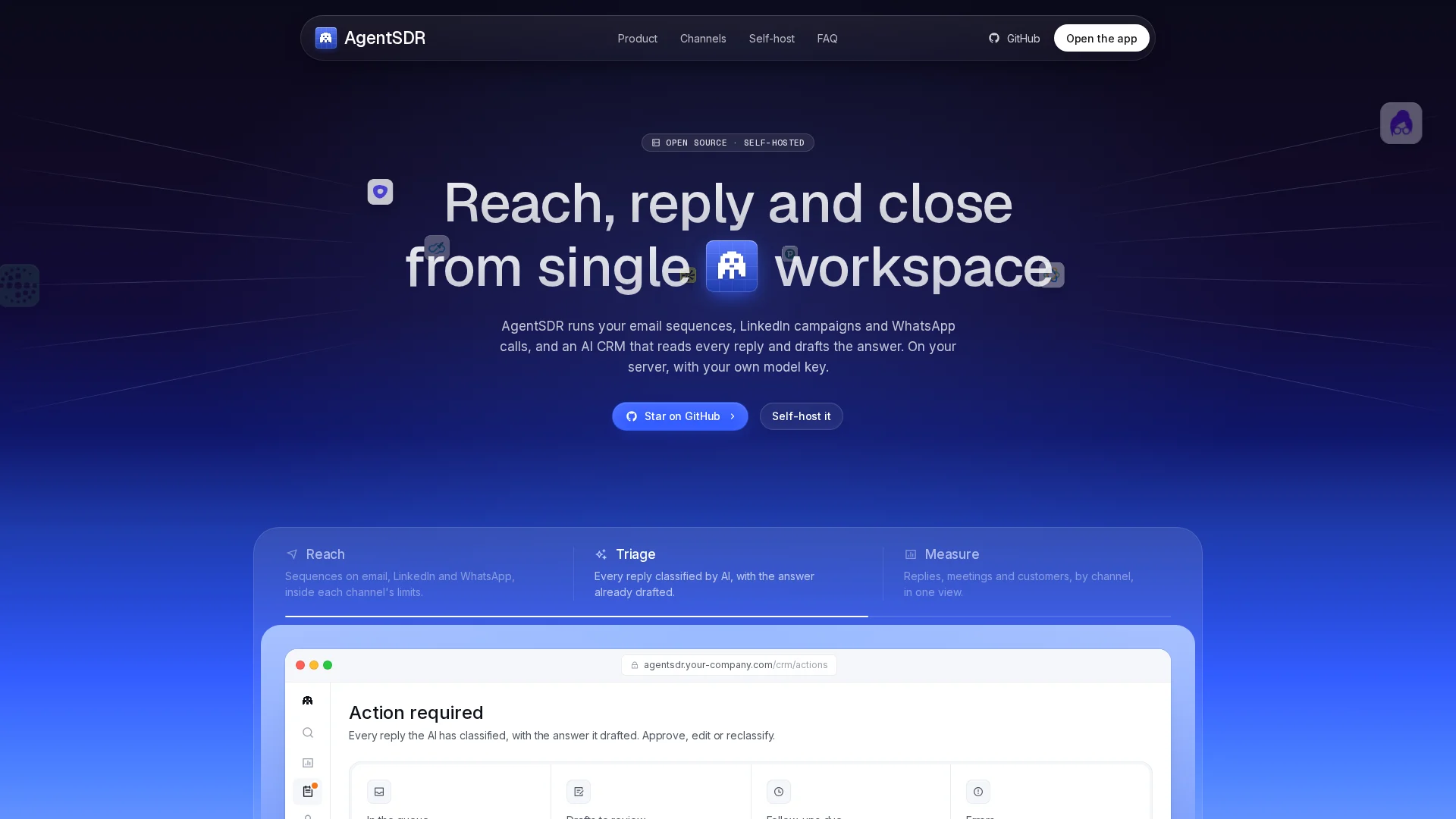
Your reps lose hours to manual outreach every week. AgentSDR puts sequences, CRM and follow-up in one self-hosted workspace, so pick one workflow above and start automating it today.
Frequently Asked Questions
Q1: Which B2B sales automation workflows deliver the fastest ROI?
Multichannel outbound sequences and post-meeting follow-up both pay back in under 4 weeks because they remove repeated manual work and protect pipeline you already have.
Q2: Which workflow should a small team start with?
Email plus one trigger. Prove reply rates on a single channel before adding LinkedIn or WhatsApp.
Q3: Do I need clean CRM data before automating?
Yes. Score, route and sequence workflows all inherit your data quality, so audit records first.