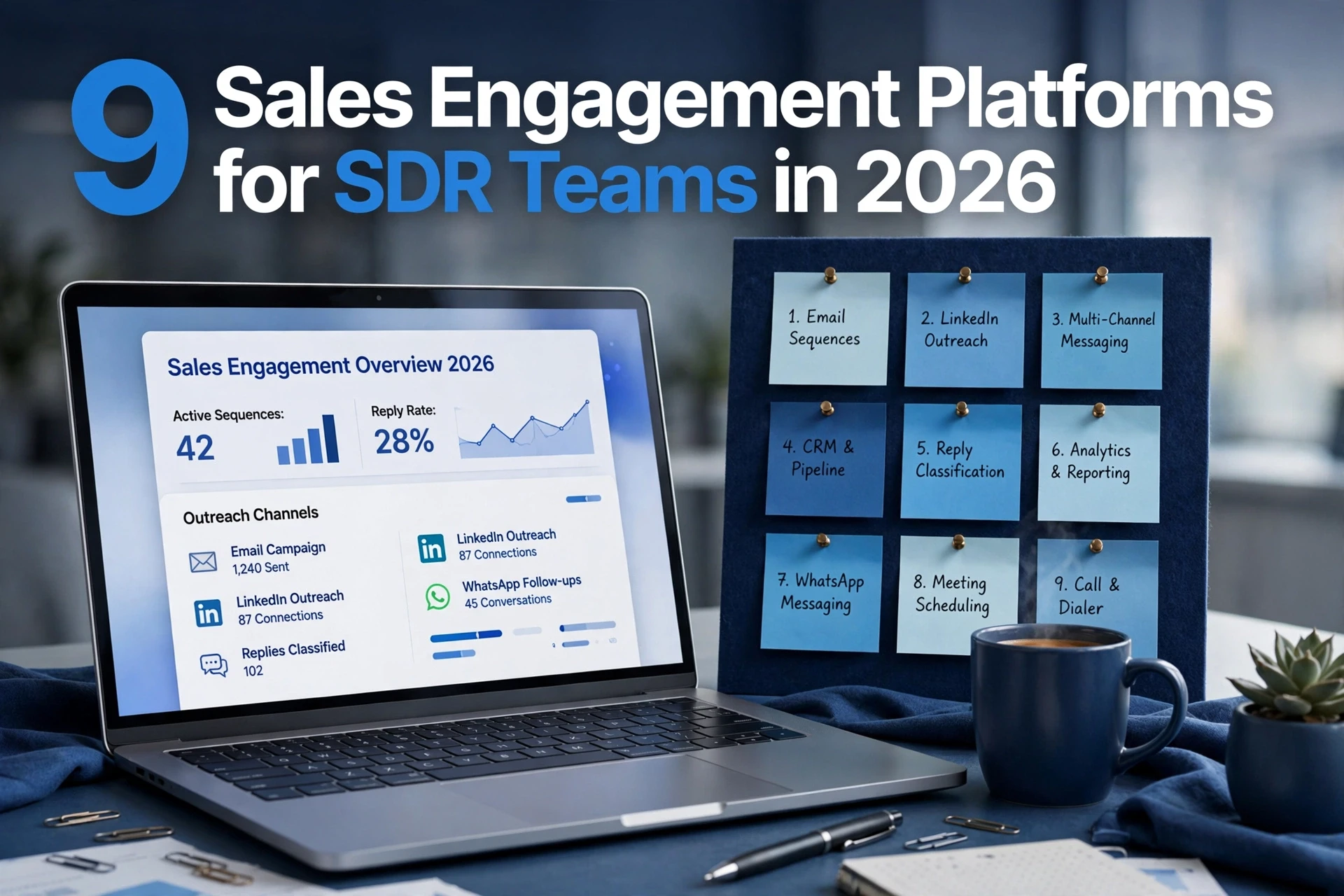
How to Build a Data-Owned Sales Outreach Stack in 2026

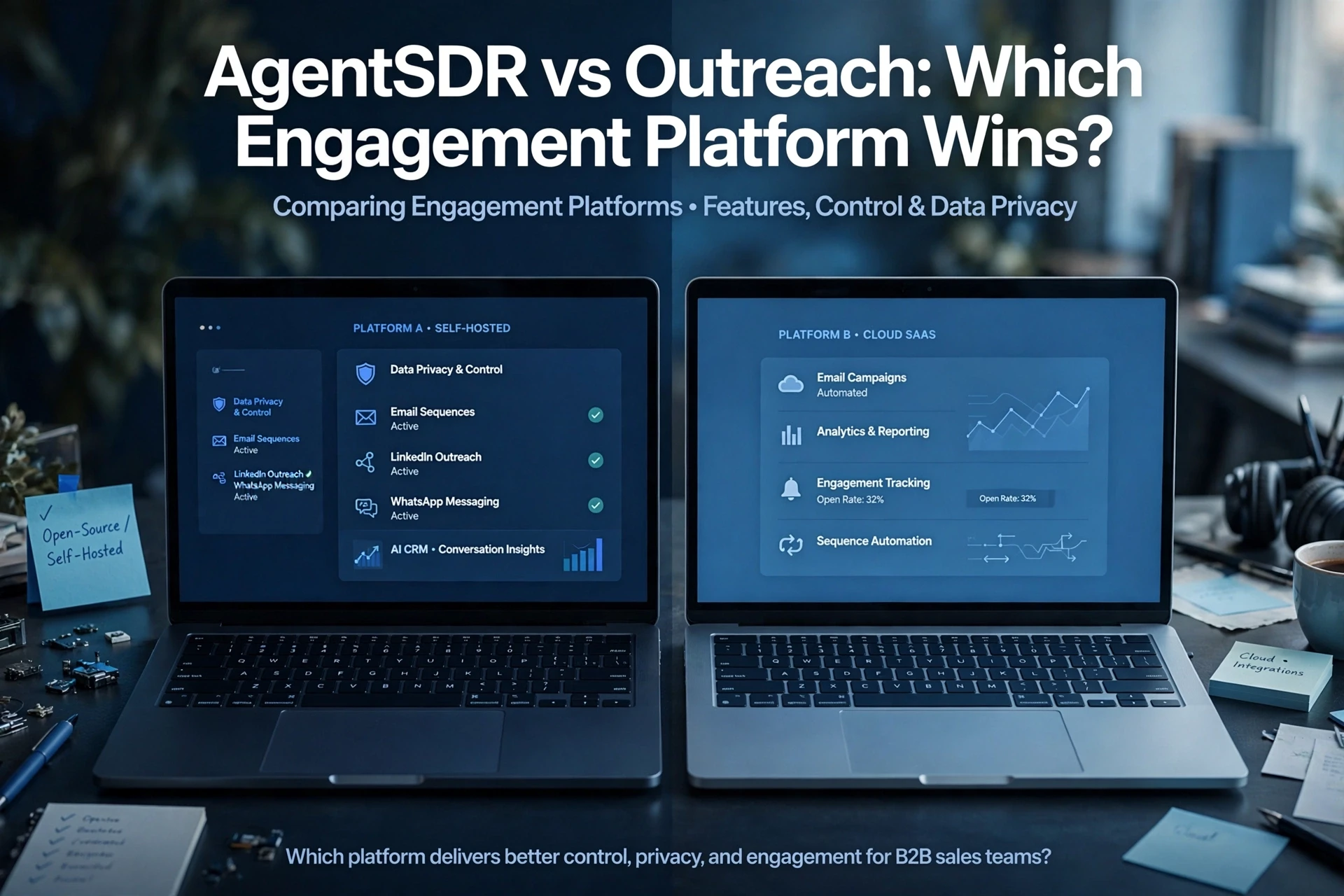
Quick Summary: Build a data-owned outreach stack around contacts, sequences, deliverability, and AI that you can export, repoint, and continue without vendor lock-in. Keep one exportable record of truth, run sending and AI on infrastructure you control, and migrate without downtime by exporting, cleaning, parallel testing, and repointing replies. AgentSDR supports this approach through an open source, self-hosted setup, with quarterly checks for backups, deliverability, stale data, and access.
The moment your prospect list lives in someone else's database, your outbound programme is a rental agreement. Change the subscription, and the pipeline, sequences and enrichment credits go with it. A data-owned outreach stack flips that: you own the contact records, the sequence state and the export paths. This guide gives you a three-question ownership test, a build order using open source and self-hosted tools, and a migration path off rented platforms.
Step 1: Decide What You Actually Own, Then Write the Rule Down
A data-owned outreach stack passes one test per layer: exportability, re-pointing and continuity. Run the three checks below before you buy or build anything.
The three-question ownership test
- Export test: can you download every contact, sequence state and reply as open files, any time, without asking support?
- Re-pointing test: if you switch tools tomorrow, do your sequences, templates and CRM records survive, or do they stay behind?
- Continuity test: can a new stack pick up mid-sequence conversations without resetting?
If any answer is "no", the vendor owns your pipeline, not you.
Four layers, four different meanings of owned
| Layer | What "owned" means | Watch out for |
|---|---|---|
| Contacts | Exportable, re-importable CSV files | Formats that lose reply history |
| Sequences | Copyable logic, not in-app only | Vendor lock-in in sales engagement platforms |
| Deliverability | Your own sending domains | Rented shared domains |
| AI | Prompts and data under your control | Black-box models you can't audit |
Tip: write the rule down as one page: "we can export everything in under an hour". Platforms like AgentSDR meet it by default because they run open source and self-hosted, so the data never leaves your server.
Step 2: Put the Record of Truth in a System You Can Export From
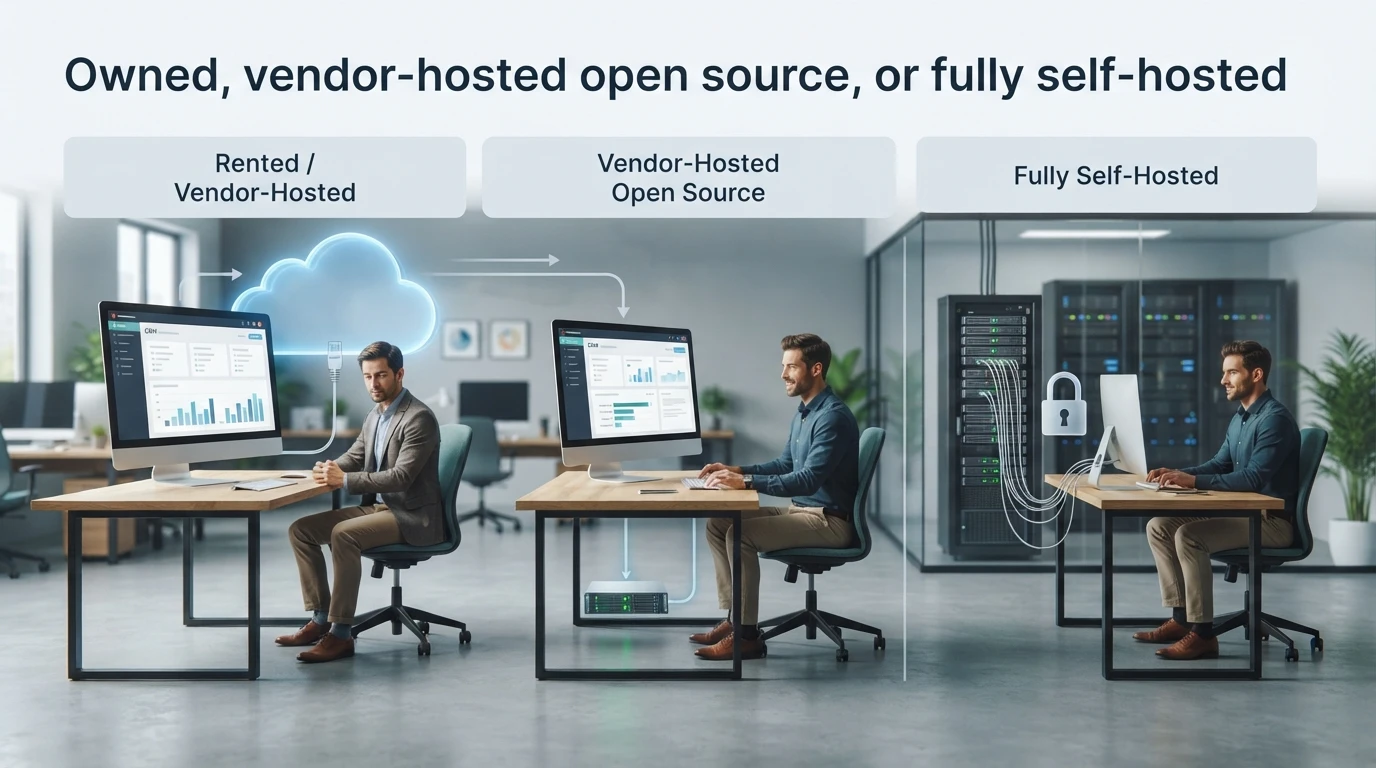
Owned, vendor-hosted open source, or fully self-hosted
A rented CRM stores your pipeline on the vendor's terms; a data-owned one lets you export every contact, note and sequence state on demand. Most teams pick one of three setups:
| Setup | Where data lives | Lock-in risk | Who it suits |
|---|---|---|---|
| Rented SaaS | Vendor cloud | High | Teams that accept limited export |
| Vendor-hosted open source | Vendor cloud, open code | Medium | Small teams wanting code access |
| Fully self-hosted | Your own servers | Low | Teams needing full control |
Fully self-hosted is the strongest form of data ownership, and an open source CRM for outbound sales like AgentSDR fits this model.
Migrating without pausing outbound
You can move prospect data without pausing sequences by working in this order: export, normalise, de-duplicate, parallel run, re-point, then archive.
- Export contacts and sequence states from the old tool.
- Normalise fields so both systems agree on naming.
- De-duplicate before import, not after.
- Run both systems in parallel on separate sends.
- Re-point new replies to the new stack, then archive the old one.
Step 3: Layer Outreach, Warm Domains and AI on Top of the Owned Record
Owning your data means three things: the sending infrastructure lives on domains you control, every reply writes back to your own record, and AI runs where your data sits. If any of those sit with a vendor, you are renting the stack again.
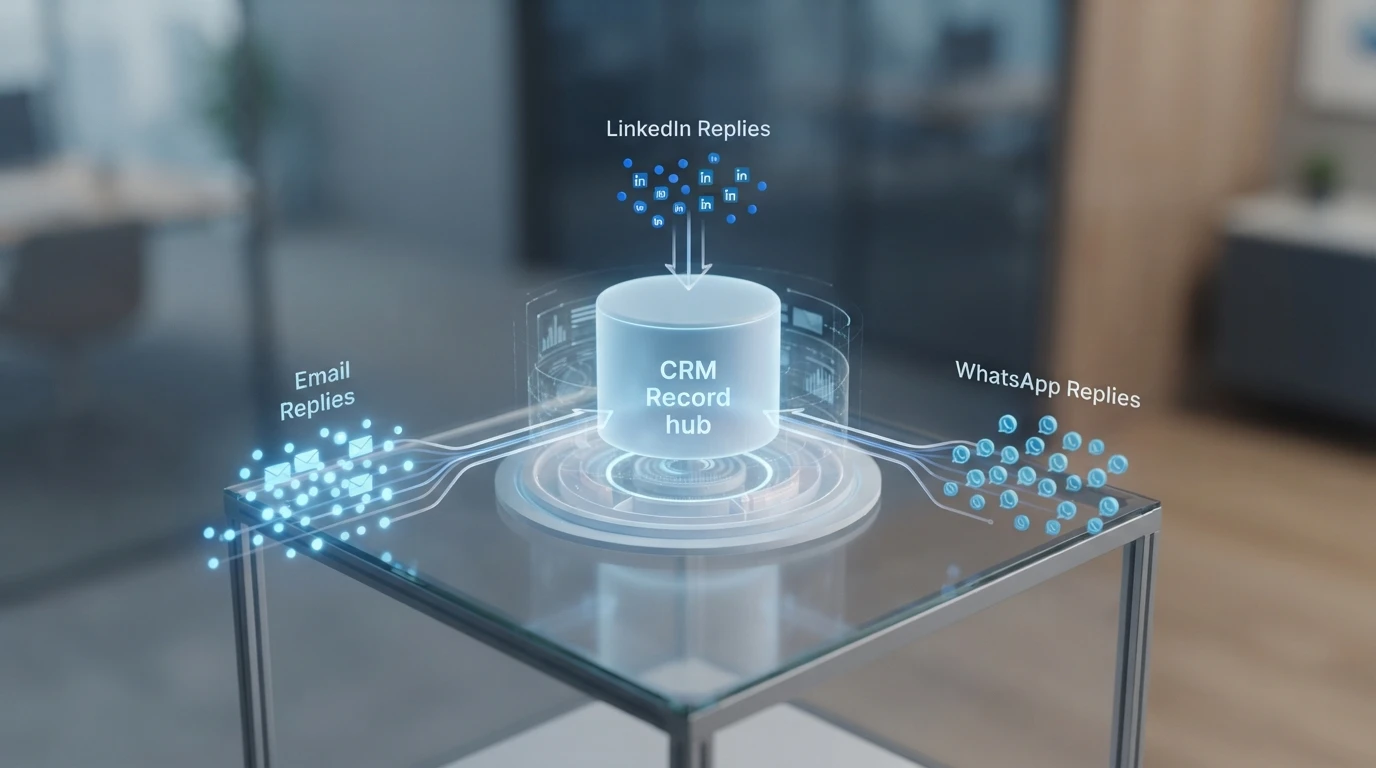
Make every channel write back to one record
Each channel must update the same contact record: sequence stage, reply classification, LinkedIn touches, call outcomes. Fragmented history kills context. Reply tracking in one place makes handoffs cleaner, a point covered in more depth in our reply tracking roundup.
Warm domains and AI that run on your infrastructure
Warm sending domains gradually before campaigns, and keep that infrastructure under your control, not a vendor's pool. Then point AI at your owned record for research and reply drafting. An open-source option like AgentSDR keeps both inside your self-hosted setup, so exit planning stays simple later.
Step 4: Run the Stack on a Schedule and Review It Quarterly
The quarterly stack review
Once a quarter, export every contact and sequence state, confirm your self-hosted backups ran, and check deliverability stats on each sending domain. Compare reply rates by channel and cut sequences that underperform. Review which enrichment fields the stack wrote back, since stale data spreads quietly. Check user permissions too, so leavers lose access fast. Fifteen minutes per month keeps the stack healthy; a skipped quarter usually shows up later as a broken report or a spam-folder surprise.
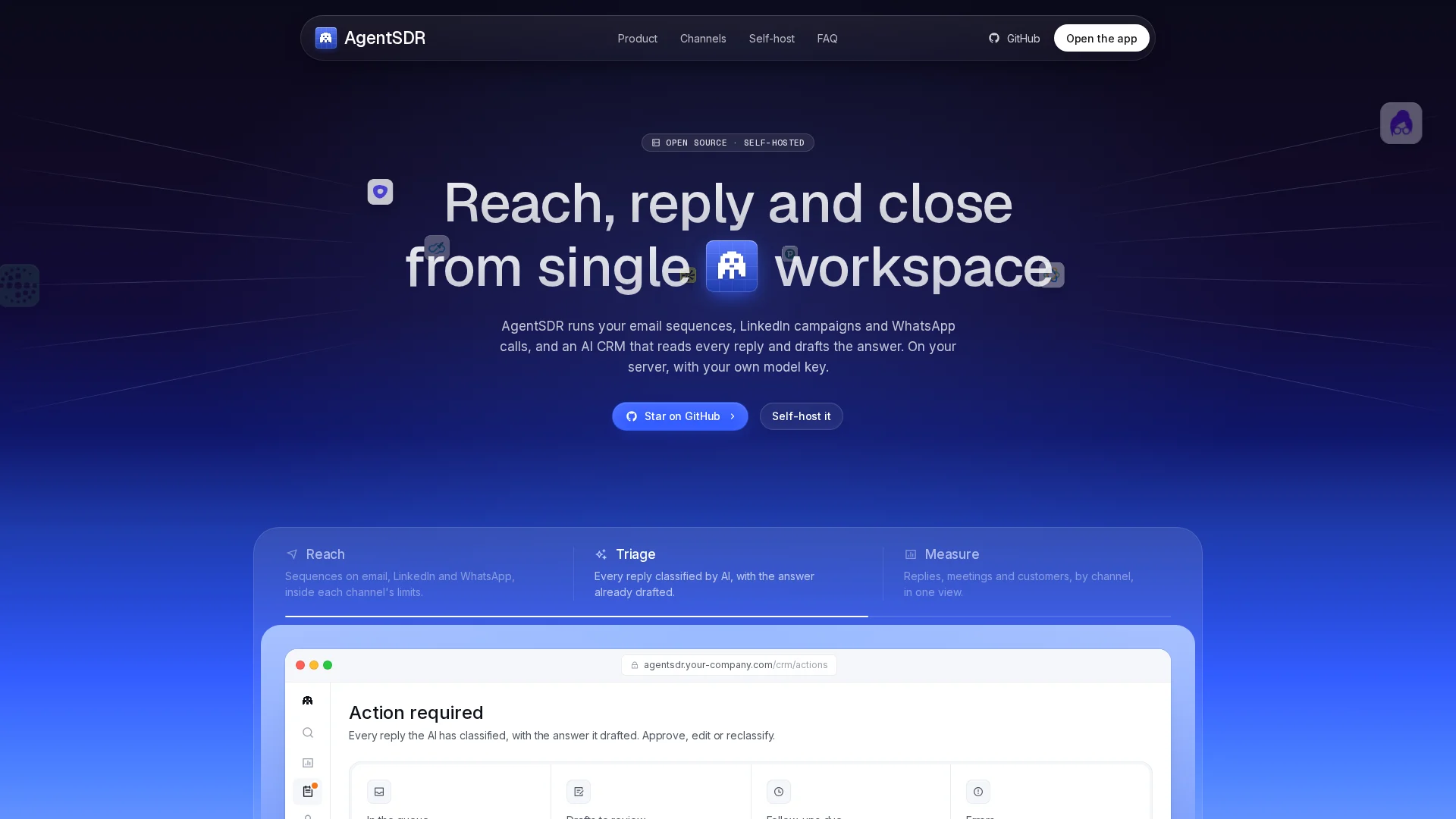
Ready to own your outreach data instead of renting it? Explore AgentSDR, the open-source, self-hosted platform that keeps sequences, replies and AI usage under your control.
Frequently Asked Questions
Q1: How do you build a data-owned sales outreach stack in 2026?
Run the three-question ownership test, put contacts in an exportable record of truth, then layer sending domains and AI on infrastructure you control.
Q2: Can I migrate off a rented platform without pausing sequences?
Yes. Export, normalise, de-duplicate, run both systems in parallel, then re-point replies.
Q3: How often should I review my outreach stack?
Quarterly. Verify exports, backups, deliverability and stale enrichment fields.
Conclusion
A data-owned outreach stack comes down to three moves: pass the ownership test, keep one exportable record of truth, and run sending and AI on infrastructure you control. Review it quarterly, and your pipeline stays yours no matter which tools come or go.